Showing posts sorted by relevance for query expository dump. Sort by date Show all posts

19 April 2023

A Fine Trip to the Dump


 Do you know Thomas Perry?  He writes mostly  thrillers, and one critic described his work as "competence porn," meaning that we follow in great detail as a single man or woman outsmarts and when necessary outfights a whole regiment of villains.

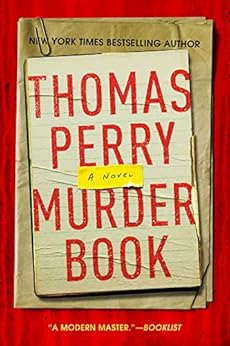
I'm currently reading his newest title Murder Book and I want to discuss one scene.  It consists of a bad guy on the phone with his boss, the even worse guy.

Bad Guy fills Boss in on what's been going on and in the course of doing so he explains part of the conspiracy in which they are engaged.  Boss Man gets irritated.

 "We know." the man said. "Remember the reason you're good at the details.  You're a realtor, not a gangster.  To hear you use slang like you were a Mafia boss  from yesteryear I only feel weary despair."

My reaction to that was: Ooh.  Nice expository dump.

The expository dump, alias info dump, is a problem that most fiction writers face sooner or later.  In short, you need to explain some piece of backstory or plot to the readers without boring them to death.  

The dump is sometimes known as the "As You Know, Bob" speech.  As in:

"As you know, Bob, as accountants you and I are legally required to blah blah blah..."

Why is our character telling Bob something he clearly already knows?  Because the reader doesn't know it.

But here's why I so admired Perry's way of dealing with the problem.  The Bad Guy is actually attempting to flimflam the Boss, avoiding admitting that things have gone badly (because of the actions of the competence porn star who is the book's protagonist).  He is using this extraneous information  as a smoke screen.

In other words, the info dump has become an important element of the drama.  Now, that's clever.

And by the way, the Boss's reply, quoted above, is an example of a different writerly technique: lampshade hanging.  That is: Perry is smoothing over the rough spot by (paradoxically) calling it to the reader's attention.

I had a bit of an info dump problem in  story I just sold to Alfred Hitchcock's Mystery Magazine.  My Delgardo tales are set in 1958 and I had found a really cool historic fact from that time I wanted to slip in.  

How do I include it without making it look like I'm showing off my research?  I turned it into a vital clue, which only my clever beat poet detective would recognize.  Seems to have worked.


By the way, I went to the ever-helpful website TV Tropes to see what they had to say about the info dump and they parsed it several different ways:

Infodump: A particularly long and wordy bit of exposition.

Mr. Exposition.  A character whose only purpose is to provide the info.

Exposition Fairy.  A recurring character whose job is always to, well, you know.

Exposition Already Covered.  "You must find the Sacred Kumquat.  If you fail--" "The world will end.  Yeah, I get it."  

Exposition Cut.  "Well, that's a long story..."  "Gosh," the newcomer said, after hours of discussion we won't bore you with.  "It certainly was."

So, how do you deal with trips to the dump?  And which ones bother you the most?

05 November 2024

World Builders


The November/December issue of Alfred Hitchcock's Mystery Magazine proves good to SleuthSayers. Rob Lopresti graces the cover while Stephen Ross, Michael Bracken, and I help to fill the pages behind him. Simple math tells me we have a third of the titles in this edition. 

My story, "From Above," is the latest in a series about the 16th-century French attorney Bernard de Vallenchin. His challenge in "From Above" is to defend, in an ecclesiastical court, birds charged with disrupting a Catholic mass.

And yes, that was a thing. Animals could be accused of violating laws and punished in both church and secular courts. They could be imprisoned or executed. As I've mentioned in an earlier blog, while researching a different topic, I stumbled into a 1906 book, The Criminal Prosecution and Capital Punishment of Animals by E.P. Evans. He documents the work of Bartholome Chassenee, a 16th-century French jurist who described his own work in defense of accused animals. The Evans' book explores this forgotten world. 

I think of writing the de Vallenchin stories as akin to creating science fiction. The world of animal prosecution in 16th-century France is an alien place to which readers must be introduced. The age had a top-down cosmology that began with God and continued through the great chain of being to the lowest slugs. There was a patchwork of courts--royal, manorial, and ecclesiastical--that may have been involved, depending on the offense. To tell an understandable tale, a good chunk of information had to be delivered in order for the reader to know why a bird might be on trial. I needed to quickly build a different world from the one the readers inhabit. There stands the challenge. How do writers create an distant environment while avoiding a dreaded information dump. Or, in the alternative, how do writers camouflage an information dump so that it doesn't take the reader out of the story?

The standard advice is to feather the facts into the tale. With the limited word count of a short story, however, the slow accretion of details is often impossible. What then might the writer do? 

A few suggestions follow: 

Pare down the information.

In researching Europe's animal prosecutions, I acquired many fascinating pieces of trivia, odd bits that seemed really cool to me. Social historians have used GIS programs to map out the variety and overlapping jurisdictions of courts across France. But I'm not writing a dissertation. My goal was to craft an entertaining tale about fictional characters. To do so, I wanted to keep the information at the minimum level to make the story understandable. I remembered the lesson Barb repeatedly tries to teach me, in a short story, every word matters. I tested my accumulated facts and separated them into what was necessary and what proved merely interesting. The unused facts might one day become central to a future story, but they remained in the nest for this avian tale. 

Consider where to begin.

"From Above" starts in media res. From the first words, the readers find themselves in an ongoing conversation between the lawyer and a barmaid. I trusted that the readers would catch up quickly. By beginning in the middle and then going back, a writer can draw the reader into the conversation and engage their interest in the topic. The goal is to have a shared experience. If the characters were attracted to the subject, hopefully, the readers will also become interested. 

Incorporate the information into the action.

Action doesn't have to be car chases or gunfights. It may be a more subtle personal contest between two people. Bernard de Vallenchin is a libidinous drunkard and a cheap braggart. (I hope you like him in spite of his faults.) His high opinion of himself is sometimes challenged. To accomplish some earthly aim, de Vallenchin boasts about his courtroom mastery and the complexities of the subject matter. He uses his exploits to achieve an end, perhaps bedding a barmaid. In an earlier story, the scheme was to extract free food from the hotelier. The lawyer used an elaborate discussion on courts to serve as a distraction. The information became part of the action. The current story works the necessary details into the process of two characters learning about one another. 

Incorporate the information into character development.

Fans of the Harry Potter books know that Hermione Granger is the brightest witch of her age. She constantly dispenses obscure facts. These nuggets of information often prove necessary later in the story. She is an expository character. She'll tell you the things you need to know. The information dump becomes incorporated into her character development. Similarly, Bernard de Vallenchin's description of the complexities of his legal challenges helps to show readers that he is a self-absorbed trumpeter but perhaps posseses courtroom skills. The technique aids in establishing his character. 

Consider making the expository character a drinker. Who hasn't met an intoxicated person who didn't over-explain, or tell you something you already knew? Adding alcohol can allow a character to state what should be obvious to the people in the room. The writer can educate the reader not only about the necessary details but also demonstrate that the character is a sloppy drunk. 

Conversely, a writer may say something about the recipient's character, the person in the story tasked with receiving the information dump. This character acts as the portal. She is the doorway into this world. If, for instance, the listening character is drunk, she may not object to the bloviating protagonist reciting what should be commonly known information. 

As a circuit-rider, Bernard de Vallenchin travels to new cities and villages in each story. He knows little to nothing about the area's details. He is a fish out of water. Listening as another describes the local jurisdiction or corrects one of his assumptions is a necessary part of his effective advocacy. He needs to learn these details in order to succeed. The fish out of water offers another opportunity to world build and give information to the character and, also to the reader. 

Alfred Hitchcock's Mystery Magazine published the second story of the de Vallenchin series in November 2022. I can't assume that anyone will remember the details of the world from that story. Every reader, therefore, needs fresh facts to  imagine a place far outside their own experience. Pouring the essential details into a brief short story required a strategy. As I consider future de Vallenchin stories, I face the same question. How might I deliver the necessary information quickly and in a way that will hold the reader's attention? 

As a writer, your issue may not be 16th-century cosmology. Every storyteller, however, needs to craft a setting. That world-building requires dropping information eggs. The challenge is to find new and different ways to open up that fictional realm. 

What strategies do you like to use? 

It's Election Day in the USA. Go vote. 

Until next time. 

06 March 2019

A Textbook Case: Advice For Fiction Writers


Courtesy Western Libraries
You can call this my good deed for the day, or an act of flagrant narcissism.  Possibly it is both.

A while back a friend asked if I had ever written any tips on writing short stories and I had to answer yes and no.  Or rather, no and yes.  I had never written any formal advice on that subject but in ten years of blogging I had covered a lot of related topics.

So here is my informal textbook, selected from several different blogs.  It leans heavily toward mystery fiction, naturally, and some of it is about novels rather than short stories.  But hey, you can't beat the price.  New pieces from 2026 appear in red. 

 I hope some of you find it useful.  Enjoy.


CHAPTER 1: THE WRITER'S MIND

How It Works.  Creativity requires two parts of your brain.

How to Make It Work.  Getting the parts of your brain to cooperate.

From The Shiny New Desk.  Applying the thoughts above to some advice from Ken Rand.

The Four Seasons.  An author's mental year.


CHAPTER  2: THE WRITING HABIT

Dominating the Submission.  Five tips for people about to submit stories for the first time.

A Page A Day. Finding time to write.

Working Vacation.  Time off gives you a chance to think about your work habits.

Have Suitcase, Will Plot.  More about writing on the road.


CHAPTER 3: INSPIRATION

Time to Accessorize. Five sources for story ideas.

The Devil You Don't Know.  An exercise to develop story ideas.

Missed Connections. Getting (or not) story ideas.

Seventeen Minutes.  Do something with that idea!

Light Bulbs, A Dime A Dozen.  A great idea is not enough.

Gutter Dwellers and Chair Thieves.  When is plagiarism legitimate?


CHAPTER 4: PLOTTING

The Hole Truth. Creating conflict.

Telling Fiction From Fact. Stories based on true events.

Two Plots, No Waiting. A complicated entwined plot.

The Rising Island Method.  Writing a long story out of order.

Unlikely Story.  The power of foreshadowing. 

Unreal Estate.  Should you use a real place as a setting or fictionalize it?

The Two-Sentence Trick.  A useful way to outline a story.


CHAPTER 5: PLOT PROBLEMS

New Choice! Avoiding plot cliches.

Get Off The Premises.  An unbelievable premise can kill your story.

Time Warp.  What year do you think you are writing about?

http://criminalbrief.com/?p=1061Refrigerator Questions.  Which plot problems don't need fixing?

Enter the Villain.  One way to ruin a mystery novel.

It's so Crazy it Might Just... be Crazy.  How to deal with an unlikely plot element.

How to Kill Your Story.  Some easy problems to solve. 
 
Farewell My Coastline.  How to talk about Something Important without boring the reader.

A Fine Trip to the Dump.  Dealing with the expository dump.
 
Waving at Plotholes. Another method for dealing with improbabilities. 


CHAPTER 6: STYLE

Common Senses.  An easy way to add that telling detail.

Suddenly I Got A Buzz.  Words to avoid.

There's Only One Rule. How experimental or mainstream should you be?

See If I Care.  How do you make the reader care what happens?

Good Cop Story, Bad Cop Story.  The old rule: show, don't tell.

Would You Rather Be Framed or Flashed?  Structural devices.

Salute To The Unknown Narrator.  A method of creating suspense.

Filling In The Landscape.  Use a real place, make one up, or compromise?

The Pain of Others.  Great stories tend to have at least one of these three characteristics.  (I have since added a fourth.)


CHAPTER  7: CHARACTERS

The Motive Motif.  About characters and their motivation.

Rosencrantz and Guildenstern Want Something.  Every character needs a motive.

The First Two Pages: The Chair Thief.  Using dialog to establish personality.

Naming the Detectives.  Selecting names for your characters.

Backtalk.  Taking advice from your characters.

Necessary Evils.  Turn a plot necessity into a great character.

Who Do You Trust?  Unreliable narrators.

Who is Guarding Your Threshold? Reaching back to the classics for a character type.

The Man Who Almost Wasn't There.  Matching a protagonist to your plot.

Main Character Energy.  Not always a good thing.

CHAPTER 8: TITLES

Insert Clever Title Here.  How to choose one.

Title Fight.  Examples of great titles and what makes them so.

Beat Cop.  A long title should scan.


CHAPTER 9: BEGINNINGS, ENDINGS

Opening Bottles and Books. The purpose of opening lines.

The First Two Pages: Greenfellas.  Introducing many characters early. (PDF)

The First Two Pages: Underpass. Taking the Five W approach to beginning. (PDF)

With A Twist.  The power of twist endings.

By Way of No Explanation.  How much explanation does a twist ending need?

Right Way To Do The Wrong Thing.  Good and bad endings.

CHAPTER 10: SERIES

The Story I Said I Would Never Write.  About writing a sequel to a (supposed) standalone.

But I've Told You This Before.  How to deal with backstory in a series.

I Need A Scorecard.  Keeping track of series characters.

A Plea For Unity.  In what ways do a series of stories need unity?


CHAPTER 11: EDITING

Get Me Rewrite! The joys and pains of editing.

Flunking the Oral Exam.  Why you should read your work out loud.

Send Me In, Coach!  Working with a first reader.

The Joy of Rewriting.  No, Revision.  No...  How to polish your work without killing it.

Last Rites.  The final edit.

The Second Time AroundMy favorite draft.  


CHAPTER 12: IF YOU CAN MEET WITH TRIUMPH AND DISASTER...

Ten Things I Learned Writing Short Stories:  Nine, actually.  See below.

The Last Lesson: Comparing Ellery Queen and Alfred Hitchcock Mystery Magazines

 An Hour In Purgatory.  It can't be said too often.  It can't be said too often.

 Lost Weekend. The inevitable.

Beautiful Day.  The preferable.

Smile!  Your Story Has Been Rejected.  Ten doses of lemonade.

29 February 2016

Rules?


While teaching classes over the years on how to write a mystery, I've come across other people's rules for how to and how not to write. And there are some fine rules out there. But, let's face it, as writers we are already dancing to the beat of a different drummer. Is it okay to bend some of these rules? Break one or two? Or totally ignore them? To screw up a wonderful quote, “Rules? We don't need no stinky rules!”

Now a man named Resnicow wrote some charming rules on how to write a mystery. He didn't specify – but I must – that these rules are only for the classics, or cozies, or drawing room mysteries.

Number one I agree with, unless you're writing under the name of Carolyn Keene:

1. You're writing a mystery: so kill someone.” That's mostly a keeper.

2. All clues should be presented clearly and preferably more than once.” Unless you're writing a police procedural, hard-boiled, or suspense.

3. The information given the reader must be accurate. Do your research.” Okay, another keeper.

4. All questions must be answered, all loose ends tied up.” Unless, of course, the book is going to have a sequel, or the whole point of the story is unanswered questions.

 That's just some of Mr. Resnicow's rules. But he's not the only one with a list. Back in the day, I found an interesting publication by a group of sci-fi writers out of Houston. They called their opus “The Turkey City Lexicon,” and they divided their rules into groups: Words, Sentences and Paragraphs, Background, and Plot. I'll just recount some of my favorites.

From Words:

“Said” Bookism: Artificial, literary verb used to avoid the perfectly good word “said.” “Said” is one of the few invisible words in the language; it is almost impossible to overuse. Infinitely less distracting than “he retorted,” “she inquired,” or the all time favorite, “he ejaculated.”
And on that subject, my own pet peeve, no identifiers in a discussion involving more than two people. For God's sake, it's two extra words, people! (Now putting soap box away.)

 Tom Swifty: Similar compulsion to follow the word “said” with an adverb. As in, “We'd better hurry,” said Tom swiftly.” Remember, the adverb is a leech sucking the strength from a verb. (I love that last line!)

“Burly Detective” Syndrome: Fear of proper names. This is when you can't call Mike Shayne “Shayne,” but substitute “the burly detective” or “the red-headed sleuth.” It comes from the entirely wrong-headed conviction that you can't use the same word twice in the same sentence.
From Sentences and Paragraphs:
Laugh-track: Characters giving cues to the reader as to how to react. They laugh at their own jokes, cry at their own pain, and (unintentionally) feel everything so the reader doesn't have to.
Hand Waving: Distracting readers with dazzling prose or other fireworks to keep them from noticing a severe logical flaw.
Fuzz: Element of motivation the author is too lazy to supply. The word “somehow” is an automatic tip-off to fuzzy areas of a story: “Somehow she forgot to bring her gun.”
Background:
 
Info Dump: large chunks of indigestible expository matter intended to explain the background situation. This can be overt, as in fake newspaper of “Encyclopedia Glactia” articles inserted in the test, or covert, in which all action stops as the author assumes center stage and lectures.
As you Know, Bob: A form of info dump in which the characters tell each other things they already know, for the sake of getting the reader up to speed.
I've Suffered for My Art And Now It's Your turn: Research dump.
I call this my personal favorite because, if I do the research, by damn, I'm gonna use it! Okay, half the time I have to go back and delete the boring stuff I learned, but please, ask me about it! I'll give you all the details!
 
And my favorite under Plots:
 
God-in-the-Box: Miraculous solution to an otherwise insoluble problem. “Look, the Martians all caught cold and died!”
Like I mentioned earlier, rules are meant to be used, edited, adapted or broken, but sometimes it's fun to see what other people think good writing is all about.