09 September 2013

Of Love and Sardines and Chocolate


by Fran Rizer

Leigh Lundin reminded us that SleuthSayers will be two years old on September 17, 2013, and asked each of us to write about the anniversary of its birth.   </


What should I write about?

How about the unusual birthday customs of other lands?  I know a lot about that because I taught ESL classes and frequently bought birthday cakes for students who'd never had one before.  To be honest, writing about that idea fell flat because it was too much like writing a lesson plan.


SleuthSayers is "A criminally compelling website by professional crime writers and crime fighters," but there's more to this spot than that. We've had posts about authors, explosives, undercover police procedures (some funny, some scary), writers' seminars, swimming in the ocean, book reviews, computers, publications and awards, movies, lists, and more. I even wrote about bras near Christmas last year.  As Robert Earl Keen, Jr., wrote "The road goes on forever."

Sometimes the blogs are about specific problems encountered by writers.  One of my difficulties relates to similes and metaphors.

The problem is two-fold.  I over-react to writers who don't know the difference between a simile and a metaphor because that's taught in fourth grade, and I don't use as many metaphors as others because, quite simply, mine seem weak and I generally delete them before reaching my final revision.  

A gentle reminder, dear reader:  Both similes and metaphors are comparisons with the primary difference being that a simile uses the words like or as.  Examples:  "The clouds are like cotton candy in the sky" is a simile.  "The clouds are cotton candy in the sky" is a metaphor.


When I taught fourth and fifth grades, I always taught similes around Valentine's Day and introduced the topic with Robert Burns's "My love is like a red, red rose."  The students loved hearing about Burns's life. (What other teacher discussed pubs with them?)  Then they wrote poems beginning with "My love is like..."  Their homework was to find an example of a simile.

By far the most common example given on homework papers was the quote that Forrest Gump attributed to his mother:

Life is like a box of chocolates.  You never know what you're going to get.


Allan Rufus gave us this:

Life is like a sandwich                   
Birth is one slice 
and death is the other.
What you put in between
the slices is up to you.

My delight with the student who brought in the next one can be attributed to what many of my friends call my "quirky" sense of humor.


                               Alan Bennett wrote:

Life is rather like a tin of sardines--we're all of us looking for the key.

My absolute favorite though is from the late Leo Buscaglia in one of my favorite nonfiction books, Living, Loving, and Learning:
Leo Buscaglia

I love to think that the day you're born, you're given the world as your birthday present.  It frightens me to think that so few people even bother to open up the ribbon!  Rip it open!  Tear off the top! It's just full of love and magic and joy and wonder and pain and tears.  All of the things that are your gift for being human.

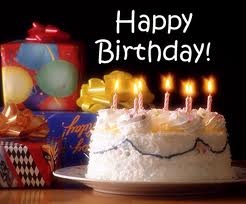
In its two years' of life, SleuthSayers has become, in its own way, like both a box of chocolates and a beautifully wrapped gift. You never know what you'll find when you open it, but you can depend on finding something good. 

I'm proud to have been part of it!  

Until we meet again...take care of you!

08 September 2013

The Kemper Case


If I were to blame someone for my interest in a life of crime, it would be my Aunt Rae, Rachel Kemper. She devoured mysteries leaving them for this impressionable child to read– Rex Stout, Ellery Queen, John Dickson Carr… she seemed to prefer male authors. By the time I was ten, I would discover the detective stories of Dorothy Sayers, Ngaio Marsh, and of course Agatha Christie.

John Kemper
John Kemper
My cousin, John Kemper, has also been doing detective work in libraries and on the internet, researching our ancestors, a passion of our mothers and grandmother. John is exacting and meticulous. If he can’t nail down each and every particular, a questionable link won’t fly with him.

He turned up the fact at least one ancestor floated over on the Mayflower, Stephen Hopkins. Hopkins is the only person to appear in both Jamestown and Plymouth. A contentious hard-head with authority issues (yes, the bloodline tells), he damned near got himself hanged for mutiny in Bermuda. Shakespeare may have modeled the character Stephano in The Tempest after our Stephen.

After Jamestown, this true adventurer signed up to come to the New World a second time, bringing his family to what would become Plimoth Plantation, Plymouth, Massachusetts. Indeed, Hopkins contributed majorly to the success of Plymouth.

In choosing to battle Indians rather than live with and learn from them, the Jamestown colony provoked a disaster, worsened for the Indians by the arrival of a despicable historical character, Lord De la Warr (Delaware), with a genocidal mandate to wipe out Indians altogether.

The surname Kemper is considered either a Dutch-German place name from the Kempen regions or a Germanic occupational name meaning peasant farmer or hemp grower, the latter of considerable interest to some. It may also be an English corruption of the French Camp or Champ from the Latin Campus, a military field.
In Plymouth, Hopkins and Indians cooperated. Before leaving England, Hopkins had purchased gifts and offerings for the natives. The Pilgrims repaid Indians for caches of corn they’d discovered and filched upon arrival. The colony tried and executed at least one man for killing an Indian. Hopkins’ house became a regional meeting place between Indians and the Europeans. The result was a peace and partnership that lasted half a century.

But wait, there’s more!

Years ago, I remember mailings from a company that promised to research one's royal lineage and produce a book, complete with history, heraldic symbols, and the opportunity to buy wall plaques and coffee mugs with your coat-of-arms. Turns out they had ways of surmising royal connections for just about everyone. The book, titled something like The Snerdsbottoms of America, turned out to be generic, mostly a history of heraldry itself, great houses of Europe, and finally a few paragraphs about the Snerdsbottom family, their supposed connection to the Duchy of Snerdly, and their "painstakingly researched" coat-of-arms. That and a £5 or €10 ticket will get you into Versailles or the Tower of London to view your Crown Jewels.

Plantagenet
Plantagenet Coat-of-Arms
1198-1340
It turns out we’re also descended from another rascal, Edward III, son of the failed Edward II. Thus we bear the burden of the Battle of Bannockburn, the Hundred Years War, not to mention the death of Jean d'Arc and that whole French Templar debacle. Ah, the chains of history.

I may not be a monarchist, but everyone likes to think they have royal blood, don’t they? Excuse me for a moment whilst I polish my brassy snob appeal.

But how meaningful is such a claim? Those who follow my articles know I enjoy math puzzles, so let's assume thirty generations of descent, and if you graph the numbers on n children to the 30th power or n30, it becomes obvious you, you, possibly you and millions of other people can brag of their distant royal ancestry. It's called 'pedigree collapse', a phrase I picked up from John and apparently discussed in a Stephen Fry QI episode. But for an instant or two, we can enjoy those few strands of regal DNA.

When Good Kempers Go Bad

A column on crime wouldn’t be complete without villainy. I’m not talking about an unfortunate character in the 2003 Texas Chainsaw Massacre remake (glad I didn't see either), but I couldn’t help but admire a girl so taken with the character’s name Kemper, she tenderly named her baby after him. I hope that’s the last we hear of him in this context.

John also researched Edmund Emil Kemper III and determined, much to his relief, that Edmund Emil is not related. This Kemper is the sort of character the television program Criminal Minds focuses on– bad childhood, badder adulthood. He was one sick… well, rather than the word that comes to mind, let's say malefactor.

With high IQ and low resistance to his mother’s depravations, Edmund’s become a poster boy for the belief murderers aren’t born, they’re made. His older sister threw him in the deep end of a pool and may have tried to push him under a train.

The word ‘necrophilia’, literally ‘love of corpses’, isn’t capable of expressing the depth of Edmund’s sickness and frankly neither am I. Suffice to say it’s a stomach-churning read. The only positive note after ten murders– three of them relatives– he realized he was one sick, well, miscreant and turned himself in to police. Until that point, authorities hadn’t a clue who the perpetrator was.

Thus I’m happy to report, thanks to the laudable work of John Kemper, we’re not related to Mr. Edmund Kemper III.

07 September 2013

SleuthSingers? Who Knew?


by Elizabeth Zelvin

Four of the regular bloggers on SleuthSayers are songwriters: Rob Lopresti, Fran Rizer, Jan Grape, and me. (Am I missing anyone?) What are the odds? SleuthSayers was created a couple of years ago as the successor to the highly successful mystery short story blog Criminal Brief. Most of us write mystery short stories, though some of us, including me, also write novels. Our tag line is “Crime writers and crime fighters.” Some of us (not me) share law enforcement and military professional interests and have been known to blog about weapons, explosives, and spycraft. Not surprising. But what about all those songwriters? Is it a coincidence? Or does it make perfect sense?

Fran lives in Nashville and has sold songs to the commercial country market, if I’m not mistaken. Rob has published a mystery about the folk music scene in Greenwich Village in 1963 that took me on a delightful stroll down Memory Lane. Jan has set a series in Austin, TX, another country music town. And I have an album out, Outrageous Older Woman, in a category best described as urban folk; it’s the best of fifty years of singing and writing songs.

I can’t speak for my blog brothers and sisters (though I hope they’ll comment), but when I write a song, I’m telling a story. It horrifies me when someone says, “Oh, I never listen to the lyrics.” To me, much as I love music, the lyrics are the point—one reason I’m so fond of country music, even the New Country, often disparaged by purists. Although I’m a child of the Fifties and Sixties, most rock, with its repetitious or worse, unintelligible lyrics, leaves me cold. I want to engage with a song in the same way I engage with a work of fiction: to delight in the language, fall in love with the characters, and experience a burning desire to know what happens next.

We mystery writers pride ourselves on the fact that in our stories, something happens: crime, investigation, solution in the traditional mystery; unexpected encounter or stumble into danger, impending catastrophe, ticking clock in the classic thriller. While many commercial songs have no more theme than what I’ve heard the great Jimmie Dale Gilmore call “boy girl boy girl,” plenty of them have a narrative structure that resembles that of a short story. They can deal with serious themes, such as ambition, loss, and alcoholism. And there are plenty of songs about murder. My favorite is still “Long Black Veil” (written in the 1950s and covered many times), but I’ve been singing the traditional Appalachian ballads, “Pretty Polly, “Banks of the Ohio,” et al. my whole life. Rob made me chuckle when one of his characters referred to the folk-revival crossover hit “Tom Dooley” (in which the eponymous protagonist is hanged for murder) as “more cheerful” than some of the other high lonesome tunes.

You can listen to several of my songs below. Each one tells a story.
"Outrageous Older Woman" - A woman reflects on a lifetime rich in experience.
"Online Loving" - A woman gets impatient with virtual romance.
"All She Ever Wanted" - A young woman pursues her creative dream.
"The Rain Came Down" - A man and a woman reach a turning point in their separate lives.
"The Mayor of Central Park" - The true life story of a legendary New York character.
"Prayer (Next Year in Jerusalem" - A vision of a better world.


06 September 2013

Black-Clad Avenger


by Dixon Hill
Image credit: sad444 / 123RF Stock Photo

For today's blog, I simply can't think of ANYTHING that could top this story from the L.A. Times.  So, without further adieu, I suggest you click on the link below.  I couldn't make this stuff up (though I wish I had).

http://www.latimes.com/world/la-fg-wn-mexican-border-city-avenger-20130903,0,4220840.story

See you in two weeks,
--Dix

05 September 2013

Regrets, I've had a few....


by Brian Thornton

(After a month-long hiatus it's nice to be back. And I don't regret skipping one of my turns in the least!)

While wrestling with the middle of my current WIP, and putting in some hard work to keep up the tension and the plot moving along during the portion of the book that by many accounts is most likely to be where "the doldrums" can set in, it occurred to me that there's one tool in the writer's toolbox that frequently gets misused.

Regret.

This is not to say that writers don't use it. I'm saying that "regret" as a character-defining aspect of a character's personality is something most writers tend to either over-use or under-use. Regret is one of those aspects of a character's personality that is really easy to get wrong, and damned hard to get right.

But when it's done wright, it can work wonders character exposition and moving plot along.

Because regret is a foundational emotion. It undergirds and enhances other emotions. Envy, fear, sorrow, guilt, even greed, are all made more palpable, more vivid by being coupled with well-demonstrated and carefully delivered (by the writer) regret.

Take one of the touchstone pictures of the 20th century, Casablanca. If ever a story was about a mountain of regret, and how it drives the actions of the characters within the framework of the narrative, it's Casablanca. The trick is in the nuance.

We all know the "Of all the gin joints in all the towns in all the world" scene where Rick Blaine drunkenly demonstrates his profound regret at having loved and lost Ilse Lund. And the next day when he's sober he expresses regret what he said the night before while drunk.

For her part, Ilse is the definition of regret. It fuels her guilt and indecision at loving loving two very different men.

Her husband Victor Laszlo regrets not being able to guarantee his wife's safety, to the point of asking Rick to take her with him out of town, because "I want my wife to be safe."

Even Captain Renault, the calcuating French collaborationist prefect of police allows regret to work on him to the point where he betrays his own instincts and throws in with Rick, who has just shot and killed the top nazi in Casablanca.

Director Michael Curtiz, better know for his command of light and shadow that of his ability to get the most out of his actors, nailed the nuance here. His command of just how much to show and how much to let simmer below the surface is dead on. It's one reason why Casablanca has remained a classic for so many years.

And it all comes down to one word.

Regret!

Today's question for the readers: how much regret is too much for you? Whether you're writing it or reading it, at what point does a character stop being interesting and start seeming like a whinier version of a Woody Allen protagonist?


04 September 2013

Suddenly, I got a buzz


It is September and almost time to kick the little one out of the nest and tell it to find its own home.

I am referring, of course, to my novel.  I am doing the last ritual dances before sending it off in the hopes of finding an agent/publisher/bestseller list.

And that means I am currently going through a file on my computer labeled buzz.  This is my private file of buzzwords, the ones I tend to use over and over again.  I am checking each example of them in my book to see if I can replace any of them with something stronger.  Here are some examples.

Suddenly.  The late great Elmore Leonard said never to write suddenly or all hell broke loose.  In  this book  my omniscient narrator says " In the park building things were going to hell at supersonic speeds."  I like it; it stays.

I agree with Leonard that you shouldn't say "Suddenly the door burst open," or the like, but I still use the word occasionally to describe a  realization: "Sal suddenly realized he couldn't see the gun."

Very.  A weak word.  I permit it in dialog.  (People do use it, after all).  Otherwise, it has to fight for its life.

Got.  Michael Bracken, author of many hundreds of stories, hates this word, as I discovered when I was lucky enough to have a story in an anthology he edited.  He doesn't even want it in dialog.

I don't feel so strongly about it, but I agree it is worth a look.  Often got is a hint that you could say the same thing in a better way.  "They got out of the car."  Nah.  "They left the car."  You just saved three words.

Ly.   Suddenly may be the worst example, but all adverbs should be treated as guilty until proven neccessary.  They are crutches; telling what you have failed to show.

Frown, shrug, sigh, shake head.  These are the bits of physical punctuation I use habitually to separate lines of dialog.  I have been going through the manuscript encouriaging my characters to adjust their glasses, scratch their heads, raise their eyebrows, narrow their eyes, anything instead of the big four above.

Are there any words you try to chase out of your work?

03 September 2013

Sing Me a Siren Song


Dale Andrews' very enjoyable piece on the Hardy Boys from last Tuesday evoked a lot of memories for me.  My first completed story, written in the sixth grade, was an thinly disguised Hardy Boys mystery complete with illustrations.   I still have the one and only copy, and it's conclusive proof that my taste for run-on sentences is a congenital condition.

Motif the First
Motif the Second
Even more evocative than the book excerpts Dale included were the book covers he reproduced.  The Hardy Boys editions published in the 1950s and early 1960s had wonderful covers, siren songs done with a brush.  Those covers were always snapshots of some suspenseful moment, often night scenes.  Two recurring motifs were "Hardy Boys Observing Something From a Place of Concealment " and "Hardy Boys Engaged in Foolhardy Enterprise While Someone Sneaks Up Behind Them."   Examples of both types are reproduced here.

A favorite subject of discussion among mystery book authors is book covers.  I could just as easily have typed "subject of complaint."  Bestsellers can complain about the way their books are translated onto film.  The rest of us have to be content with complaining about how our characters are depicted on book jackets.  That's not to say that every author dislikes his or her covers, but it's a lucky writer who's never been let down once by a cover designer.

When my Owen Keane series started, St. Martin's commissioned covers that were dark, moody, and, I thought at the time, rather artsy.  Keane is a failed seminarian whose investigations often involve metaphysics, so I couldn't exactly blame them.  I liked the covers, but I still felt a nameless void.  I didn't diagnose it until Worldwide began bringing the books out as paperbacks.  Then I realized what I'd been longing for:  Hardy Boys book covers.  With the Worldwide editions, I got them.
 

Compare the two covers for Live To Regret.  They're very similar in subject and composition, but the cover on the right is recognizably from the Hardy Boys school.  The second figure, the follower, is represented only by a shadow.   The implication is that the first figure (a very small one at the top of the boardwalk) has someone sneaking up behind him, as in Hardy Boys Motif #2 described above. 


The sinister shadow would appear often on my subsequent Worldwide covers.  It's an authentic variation on Hardy Boys Motif #2, as the cover on the right demonstrates. 


Hardy Boys Motif #1 (see example on the left) was also represented in my Worldwide editions, by the cover for The Ordained.  That's Keane concealed behind the tree.  It could easily be the cover for The Twisted Claw or The Hooded Hawk.


I had one more brush (no pun intended) with a Hardy Boys cover, and that was when Hayakawa brought out a Japanese edition of The Lost Keats.  Its cover shows Keane leaning against his faithful Karmann-Ghia, which looks showroom new despite being described in the book as being equal parts rusted steel and body putty.  Keane doesn't look like his description, either, but when I saw him, I smiled.  He looks like a close relation of Joe Hardy after Joe had gotten his late '60s makeover.  Come to think of it, Keane is a relation.  Maybe a first cousin, once removed.  

Owen Keane returns to a book jacket this fall.  It will be wrapped round his first book-length adventure to be published in fourteen years.  I'll have more to say about that adventure, Eastward In Eden (and its cover), in a later post.  For now, thanks again, Dale, for the Memory Lane trip.  And, Frank and Joe, look out behind you!