10 June 2013

Smith's Law


Jan Grapeby Jan Grape
 
Bet you've never heard of Smith's Law. Well, don't fret. I'm sure you've heard of Murphy's Law? Well, my late husband, Elmer Grape used to claim that Murphy was an optimist. That whatever did go wrong was going to get worse.

So I had my internet tech out last week & got my desktop back online and then sorta got the laptop going also.  Well, it was working; it just takes thirty minutes plus to load. Since computers were working I delayed buying a new laptop. And today is when Murphy's Law kicked in. Things got worse.

This afternoon while trying to get my article written and posted, I cannot get online with either computer. The desktop is totally hopeless. I managed to get online with laptop but after 40 minutes of the cursor spinning it just would NOT open the sleuthsayer website.  So I'm writing this on my phone. Thank goodness I bought a styles thingy last week. I can't  imagine trying to type this much with a fingertip.

And so things won't be a total crying towel, pitiful Patty, I'll give you an idea of what my original article was about.  I've had people say that my policewoman sounds exactly like me. Or that this character or that character is Aunt Whosit or Uncle What's his name. In reality none of that is so. The characters I make up are just that "made up."

If Zoe Barrow sounds like me...it's probably because you give her a Texas accent because I'm from Texas.  Like most writers say, there's a little bit of me in several of my characters. But Zoe is younger, thinner, prettier and braver than me. (I got that one from Sue Grafton about comparing Kinsey to her.)

However, I take bits and pieces of people I know or see to compose a character. I've gone to a mall to people watch. To note gestures, walks, body language.   You may take a trait of Aunt Whosit and marry it with Cousin Whom.  When you do that you do need to be careful they don't recognize themselves. A friend once said she made her mother-in-law into a yippy dog but the MIL never caught it.

Characters are fun to create. But don't just give a list.of hair and eye color. Give us something to their makeup as a person. Thats when characters come to life.

I think this is about all I can type this way . So until next time watch out for Murphy.

09 June 2013

The Digital Detective, Banking part 2


Continued from last week, where we explained the basics of kiting and how banks work

The Crumpled Kite

As mentioned earlier, kiting isn’t as common as it used to be, partly because of stiff penalties, but also because the time it takes to clear a check with another bank has shrunk from many days– sometimes a couple of weeks– to just a day or two. But when I consulted, I witnessed a kiting scheme that could have fooled financial institutions and their computers almost indefinitely.

A bank in Virginia’s Shenandoah Valley decided to invest its excess computer resources in software development and I contracted as their consultant. It was an odd relationship because they feared me as if they’d hired a gunslinger to guard the vault.

One evening I idled, waiting for computer time; in fact, I was waiting for a new guy to finish the night’s reconciliation run. As I sat tapping my fingers, he called the lead operator over and pointed out a worn, battered check. The lead glanced and dismissed it, saying “Just stick it in an envelope, imprint it, and run it through again.”

“But…” said the new guy hesitantly, aware the lead seemed annoyed he didn’t jump to it. “But, we can’t. I mean, it arrived in a carrier envelope and look, it’s not our routing number. And it's really old.”

cheque
Curious, I wandered over and the operations supervisor stepped in, obviously impatient at the delay. He read the check, stared at it, lips moving as he re-read the numbers. He ran his thumb under the date, several months old. Puzzled, he picked up the phone and beeped the operations manager.

It was still early evening when the manager strolled in. He looked at the check and made a phone call. When he hung up, he shrugged and turned to the supervisor, “No matter, we’ll find out in the morning what’s going on.”

But by now, the worn check had captured my curiosity and that of my colleagues. Three of us sat down to figure it out. We discovered a scam, and this is how it worked.

The Endless Kite

cheque numbers

From a common check supply company, our schemer bought checks printed with Frugal Savings & Loan’s name, address, and logo, but with Penury Bank’s routing number. He waltzed into a bank other than Frugal Savings & Loan, cashed his check, and departed without a care in the world.

That evening during the check run, the machine sorted his check into a tray to be delivered to the clearing house. From there on out, the following cycle endlessly repeated:
  1. The check arrives at the clearing house. Its routing number routes the check to Penury Bank & Trust.
  2. During the check run at Penury, the computer accepts the routing number but doesn’t recognize the check’s bogus account number and kicks it into the rejects pocket.
  3. A Penury operator plucks it out of the rejects pocket, notices it bears a Frugal Savings & Loan logo and address on it, and either manually packages it to send directly to Frugal S&L or bundles it to send back to the central clearing house for forwarding to Frugal. Either way, the check winds up at Frugal Savings & Loan.
  4. At Frugal, the MICR reader sees another bank’s routing number, knows that’s wrong, and kicks the check into the rejects pocket. It goes back to the clearing house to repeat the cycle again.
Meanwhile, the bank that cashed the check hasn’t received their money, but neither has the check been denied.

The Kite that Crashed

The cycle eventually broke because constant transit nearly wore out the check and an inexperienced operator questioned why a draft on his bank contained an unfamiliar routing number.

We don’t know how many experienced operators routinely handled the check, seeing the bank name and logo and not the routing number, just as their computers saw the routing number and not the bank name.

Banks (at least at that time) did not have a standardized way of handling a check that forever floated but never cleared. In many cases, the bank software simply left the deposit unresolved with neither the funds transferred nor reserved– it simply stayed on the books, so to speak. In banks that impose holds, their programs might be written to release the hold after a number of days if the check isn’t returned, even if the funds aren’t actually received.

I speculate the scheme might have been harder to detect if non-magnetic digits had been printed over ‘invisible’ MICR ink. In other words, the pigment in MICR ink is for the convenience of people. The computer itself doesn’t use optical recognition (OCR) but senses the microscopic particles in the numbers.

No one’s immune to bunco, not even banks.

08 June 2013

In So Many Words


by John M. Floyd

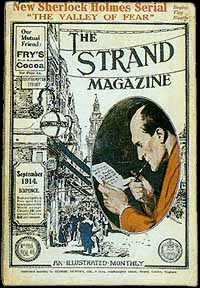
A couple of weeks ago I received a nice surprise: an acceptance from The Strand Magazine. I was informed that my short mystery, "Secrets," will be featured in their summer issue. My friend Rob Lopresti had a story in their winter/spring issue, so I'm pleased to be able to carry the SleuthSayers banner forward into the fall of the year. (Rob, hand it over.) Note to members of our group: one of you must now get a story accepted for the next issue . . .

Here's a quick summary. My story involves two (mysterious) strangers who happen to meet on a ferry between the mainland and an island where one of them has scheduled a (mysterious) meeting. All the action takes place within an hour or so, during which the two characters on the ferry discover things about each other and about themselves and about the suddenly deadly situation they've been thrown into. (Hey, what can I say?--I love that kind of stuff.)

One unusual thing about writing this story is that I had trouble deciding on a title. I liked "Secrets" because there are so many of them in the story--secrets kept from the characters by their bosses, spouses, etc.; secrets that the two keep from each other; even secrets that I try to keep from the reader until certain points in the story. But I almost called it "Secrets: a Ferry Tale." I finally decided not to, for two reasons. First, it sounded a little too cutesy, and second, I'm not crazy about titles that contain a colon.

Now, having said that . . .

I should confess that none of this has anything to do with the reason for today's column. The reason I'm writing this column is that I recently discovered something a little odd about the eight stories I have so far sold to The Strand. The strange thing (besides the fact that they were accepted at all) is this: they were all very close to the same length. About 4000 words. Part of that was because the guidelines said 2000 to 6000, and it doesn't take a genius to realize that hitting that range right in the middle can probably help your chances. Another part of it, though, was coincidence. That length just sort of turned out to feel "right" for those particular stories.

Which brings up a question. Should you try to write stories specifically for certain markets, and of certain lengths, or should you just write the story with no preconceived ideas about how long it should be or where it's going?

I guess I do both. Woman's World mysteries have to be a set length--just under 700 words--so yes, I do write those with that wordcount in mind beforehand. But that's unusual for me. I've always believed that it's better to write the story first, let it reach whatever length it needs to be, and only then--when it's completed--decide where you want to submit it.

Thankfully, there are some good markets, including EQMM and AHMM, where length doesn't matter much. The shortest story I've sold to AH was 1200 words, the longest was 14,000, and a few days ago I sold them one that was 5400. I believe their guidelines now specify a max of 12K or so, but that still leaves authors plenty of leeway. (And I should emphasize here that all Strand stories don't have to be the same length either. Mine just happened to be.)

Marketability

Another question: generally speaking, are shorter stories easier to sell? I think that answer's usually yes, for several reasons. For one thing, it's easier for an editor to fit a shorter piece into a magazine or an anthology than a longer one. Also, if you're not an already established name, an editor might be more apt to hang in there and read your story all the way to the end if it's shorter rather than longer. I honestly think markets these days--both literary and genre, both magazines and anthologies--are more receptive to shorter stories than they used to be. Case in point: many of them, in their submission guidelines, seem to have lowered their maximum wordcount.

Why would this be true? One school of thought says that editors want only what readers want, and since we as readers have so many distractions nowadays, so much competition for our attention, we just won't sit still long enough to read a really long story. I'm a little skeptical of that; after all, we sit still long enough to read novels. But maybe those folks who are already drawn to short stories prefer them shorter now. Who knows.

A mixed bag

I'm one of those people who like to write, and read, stories and novels of all different lengths. My latest collection of short fiction contains thirty stories that range from 500 words to 15,000 words (one might argue that a 15K story isn't a short story at all, but I continue to believe that novellas begin around 20K). I think that kind of variety makes for a more effective collection and a more interesting read, but that's just me. I also believe that shorter is not necessarily better, and that every story seeks its own length. My favorite story that I've written was about 10,000 words. But I also believe, as I said earlier, that shorter stories are easier to sell.

What do you think? Which--shorter or longer--had you rather write, and read? If you're a writer, do you write with a certain length or market in mind? What do you consider the break point to be (in wordcount), between shorts and novellas? Between novellas and novels? Between short-shorts and short stories? Between flash fiction and short-shorts? Do such distinctions even matter?

Perhaps more importantly, how long should a column be? No more than a thousand words? Well, I just checked, and this one is already 996.

So I'll stop here.

07 June 2013

Bottom of the Glass


Several of the Sleuth Sayer bloggers have written about the agony of receiving rejection slips from editors, agents and/or publishers, so now I guess it's my turn to stand up and say, "Hi, my name is R.T. Lawton and I am a writer." And then, after the polite applause that's usually received at these types of meetings in church basements or wherever, I guess I'll have to tell my story. That's the way these things work.

"Well, lately I've received four straight rejections, with personal hand-written notes from the column editor at Woman's World magazine. In the past, this has been one of my bread and butter markets. One of the rejections even credited me for having an original idea which hadn't been submitted to her before....but the story still wasn't quite right for her. Damn.

At this point, I saw two possibilities. One, I was slipping. Nah, that couldn't be. And two, the solution I preferred to accept, was that my friend and fellow blogger, John Floyd, had cornered the market with his engaging series characters. Darn you John, your excellent writing is making for some hard competition for the rest of us. Keep on going though, as I may learn something yet.

So here I am looking at the bottom of the glass. But since those of us who have spent time on the edge, one way or another, usually have a strange sense of humor from operating on the darker side of life, I like to put a little something back in the glass by remembering my most favorite rejection. You see, I am probably one of the few writers who has been rejected by a jail. It went something like this.

When I was vice-prez of the Black Hills Writers Group, a stranger showed up at one of our monthly meetings. This in itself wasn't odd, because we often had some newcomer sitting in for a meeting or more. However, this newcomer said he was the editor of a newspaper for one of the more infamous biker campgrounds at the annual Sturgis Motorcycle Rally, and he was looking for biker stories to purchase for his rag. He didn't know me, but I knew him professionally and it wasn't from the writing side of my profession.

Since I'd had stories published in Easyriders and Outlaw Biker under some of my undercover aliases, I figured I had a good shot at this, a mere campground newspaper. I wrote up a story, submitted it under an alias with a return address to an undercover post office box and awaited the results. Several days later, I received an envelope  from the Pennington County Jail with a rejection  and the request that in the future I not send anything consisting of more than four pages.

While I knew that the editor was on probation for violating the state drug laws, I had no idea that he subsequently violated his probation and got put back inside. At which point, this same editor had all his mail forwarded to the country jail, to include my manuscript. Thus, sad to say, I was promptly rejected by the jail officials who read all incoming mail for prisoners. My manuscript never saw print in the public venue.

Therefore on occasions such as today, I still raise my partially filled glass and toast the fallen editor who never knew my true identity. God bless the idiot. In later years I would ride my Harley out to the infamous biker campground during the rally and watch this same editor as he MC'ed the Miss Bear Butte (Bare Butt) Contest in his white suit, white bowler hat, white spats, white shoes and white cane. You had to be there to appreciate it.

Sometimes, just the memory of this rejection keeps me laughing. To me, it's an inspiration, but then I've led a rather odd life and tend to see the world in a different perspective than most folk.

So, it's on my mind that you should lighten up when you get rejected. Just keep on writing and submitting. Sometimes you have absolutely no control over what happens to your stories. You're a writer though, just go get 'em.

06 June 2013

The $3500 Shirt - A History Lesson in Economics


One of the great advantages of being a historian is that you don't get your knickers in as much of a twist over how bad things are today. If you think this year is bad, try 1347, when the Black Death covered most of Europe, one-third of the world had died, and (to add insult to injury) there was also (in Europe) the little matter of the Hundred Years' War and the Babylonian Captivity of the Church (where the pope had moved to Avignon, France, and basically the Church was being transformed into a subsidiary of the French regime). Things are looking up already, aren't they?

Another thing is economics. Everyone complains about taxes, prices, and how expensive it is to live any more. I'm not going to go into taxes - that way lies madness. But I can tell you that living has never been cheaper. We live in a country awash in stuff - food, clothing, appliances, machines, cheap crap from China - but it's never enough. $4 t-shirts? Please. We want five for $10, and even then, can we get them on sale? And yet, compared to a world where everything is made by hand - we're talking barely 200 years ago - everything is cheap and plentiful, and we are appallingly ungrateful.

Let's talk clothing. When the Industrial Revolution began, it started with factories making cloth. Why? Because clothing used to be frighteningly expensive. Back in my teaching days I gave a standard lecture, which is about to follow, on the $3,500 shirt, or why peasants owned so little clothing. Here's the way it worked:

NOTE:  As of 4/6/16 I have updated the mathematics of this here at this blog post.  It's still astounding.

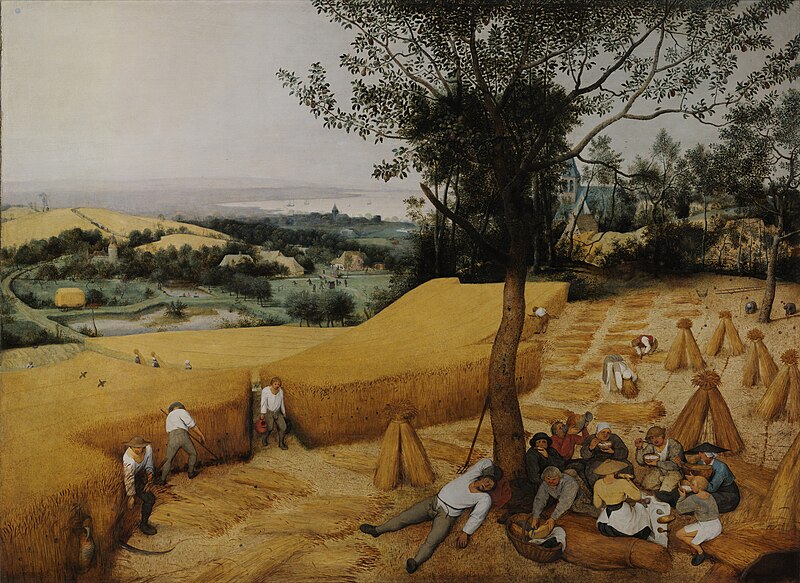
See this guy below, lying asleep under the tree? And the guys still working in the field?  They're all wearing a standard medieval shirt. It has a yoke, a bit of smocking and gathering around the neck, armholes, and the wrists would be banded, so they could tie or button them close.

Pieter Bruegel the Elder- The Harvesters - Google Art Project.jpg


Oh, and in the middle ages, it would be expected that all of the inside sleeves would be finished. This was all done by hand. A practiced seamstress could probably sew it in 7 hours. But that's not all that would go into the making. There's the cloth. A shirt like this would take about 5 yards of cloth, and it would be a fine weave: the Knoxville Museum of Art estimates two inches an hour. So 4(yards)*36(inches)/2 = 72 hours. (I'm a weaver - or at least I used to be - so this sounds accurate to me.) Okay, so hand weaving and hand sewing would take 79 hours. Now the estimate for spinning has always been complex, so stick with me for a minute: Yardage of thread for 4 yards of cloth, one yard wide (although old looms often only wove about 24" wide cloth), and requires 25 threads per inch, so:

25 threads * 36" wide = 900 threads, which each needs to be (4 yards + 1 yards for tie-up = 5 yards long), so 900 * 5 = 4,500 yards of thread for the warp. And you'd need about the same for a weft, or a total of about 9,000 yards of thread for one shirt.

9,000 yards would take a while to spin. At a Dark Ages recreation site, they figured out a good spinner could do 4 yards in an hour, so that would be 2,250 hours to make the thread for the weaving.  Now, A lot of modern spinners disagree with this figure, saying they can spin much faster than that.  So let's say they're right.  And we'll say that the spinner is in a hurry to make this thread because the shirt's for her or someone she knows (all spinners were female in medieval times), so we'll say she worked her tail off and did it in 500 hours.

So, 7 hours for sewing, 72 for weaving, 500 for spinning, or 579 hours total to make one shirt. At minimum wage - $7.25 an hour - that shirt would cost $4,197.25.
And that's just a standard shirt.
And that's not counting the work that goes into raising sheep or growing cotton and then making the fiber fit for weaving. Or making the thread for the sewing.
And you'd still need pants (tights or breeches) or a skirt, a bodice or vest, a jacket or cloak, stockings, and, if at all possible, but a rare luxury, shoes.

NOTE (1/30/15) - Please see a further commentary on this piece at:  Is Time Money or is Money Time?

NOTE: Back in the pre-industrial days, the making of thread, cloth, and clothing ate up all the time that a woman wasn't spending cooking and cleaning and raising the children. That's why single women were called "spinsters" - spinning thread was their primary job. "I somehow or somewhere got the idea," wrote Lucy Larcom in the 18th century, "when I was a small child, that the chief end of woman was to make clothing for mankind." Ellen Rollins: "The moaning of the big [spinning] wheel was the saddest sound of my childhood. It was like a low wail from out of the lengthened monotony of the spinner's life." (Jack Larkin, The Reshaping of Everyday Life, p. 26)

Anyway, with clothing that expensive and hard to make, every item was something you wore until it literally disintegrated. Even in 1800, a farm woman would be lucky to own three dresses - one for best and the other two for daily living. Heck, my mother, in 1930, went to college with that exact number of dresses to her name... This is why old clothing is rare: even the wealthy passed their old clothes on to the next generation or the poorer classes. The poor wore theirs until it could be worn no more, and then it was cut down for their children, and then used for rags of all kinds, and then, finally, sold to the rag and bone man who would transport it off to be made into (among other things) paper.
File:KellsFol032vChristEnthroned.jpg
And speaking of paper, that was another thing that had to be invented for our society to exist: cheap paper. Good rag paper (made literally with expensive cloth rag) was always pricey, just not as pricey as parchment which was goat, sheep, or calf skin. (This is why medieval manuscripts were so few and why they were often kept chained up for fear of theft. It took at least a whole herd of animals to make the Book of Kells, for example. On the other hand, well-kept parchment can last thousands of years.) In fact, paper remained expensive long after clothing got cheaper, because it took a long time to figure out how to make paper out of nothing but wood pulp, without all that expensive rag content. It wasn't until the production of wood pulp paper was perfected in the mid-1800's that books (schoolbooks, fiction, non-fiction), magazines, and newspapers became available to the general public. Including pulp fiction - the first was Argosy Magazine in 1896 - a genre that was named for the cheapest of cheap fiber paper that it was published on. And without that pulp paper, where would our entire genre be?
File:Argosy 1906 04.jpg        

05 June 2013

George Jetson, to the white courtesy phone


Last week I demonstrated my new webcam with a tune, but I didn't actually purchase it to fill your lives with the glories of music.  I had an ulterior motive, which I shall now reveal.

There is a group of folk  music fans in New Jersey called the Folk Project, and they have retreats twice a year where people go to a camp and play music together.  Good times.

Well, recently they added a new feature to these weekends: a book club. The coordinator chooses a book related to folk music and you can guess the rest.

A few months ago the title was announced for the spring retreat: SUCH A KILLING CRIME, a mystery set in Greenwich Village during the great folk music scare of 1963. 

One member of the Folk Project is Lori Falco, and she and I have been friends since we met while waiting for a bus on the first day of high school. quite a few years ago.  Lori asked the coordinator: "Do you know the author of that book used to be a member of the Folk Project?"

The coordinator had not known that.  But I was promptly invited to come to the retreat for the discussion.  That wasn't possible but I got a webcam and a skype account and made a virtual appearance.

It was a lot of fun.  Oh, the usual technical hiccups (no matter how long Lori and I spent prepping before the show started).  Interested people asking good questions.  My favorite: "What was it like putting words in Phil Ochs' mouth?"

My answer: not as scary as putting words in the mouth of Tom Paxton.  After all, Tom is still alive.  Therefore I was extremely careful to make him a sympathetic character.  (Even though he offered to be the murderer.  And he graciously gave me the following blurb:  "Spooky. If I'd have known he was watching us so carefully, I would have been MUCH  better."

Well, I had a good time and I would like the chance to chat with ALL the folk music book clubs in the world.  Unfortunately, I suspect I just did.

On a related note, Kearney Street Books informed me this week that SUCH A KILLING CRIME is now available on Kindle, for those who don't care to read their books, uh, acoustically.  

Not the future anyone was expecting in 1963, huh?

04 June 2013

The Death of Laura Foster


Today's article will interest both followers of American music and true crime, an investigation into the hanging of a folk figure, Tom Dooley, as researched and written by a descendent of parties involved.

John Fletcher and I began corresponding following an investigative article I wrote about Tom Dooley titled (with a nod to Twin Peaks), "Who Killed Laura Foster?" He was just beginning his research, which has become a new book, The True Story of Tom Dooley, published by History Press. It's a must for those interested in this legend.

Today, John shares the genealogy with us. Follow along with this tale from yesteryear…

Leigh Lundin


John Edward Fletcher
The Death of Laura Foster

by John Edward Fletcher

The Legend of Tom Dooley is an enduring mystery in western North Carolina even a century and a half after the incident occurred. Why is that the case? In part, the 1959 ballad hit by the Kingston Trio, “Hang Down Your Head Tom Dooley,” has helped to keep the story alive.

However, an examination of the existing records of the case raise many questions. For example, the original arrest record names Thomas Dula, Ann Pauline Dula, Granville Dula, and Ann Pauline Melton as the suspects in the disappearance of Laura Foster. The Court records, in contrast, name Thomas Dula and Ann Melton as the defendants and name Lotty Foster, Pauline Foster, and several others as material witnesses for the Prosecution. Who were these individuals and what was their relationship to the Murder of Laura Foster?

The murder Indictment charged only Tom Dula with Laura Foster’s murder, but it also indicted Ann Melton as an accessory before and after the fact. The “after the fact” charge was later dropped from Ann Melton’s charges, and her trial was separated from Tom Dula’s trial. This separation was made because if Tom were not guilty of the murder, then there could be no valid charge against Ann Melton. But, who were the other two suspects, Ann Pauline Dula and Granville Dula; and, what was their involvement in the murder of Laura Foster? Furthermore, who were the witnesses, Lotty foster and Pauline (or “Perline”) Foster in the local vernacular?

A search of census records from 1850 to 1870 reveals a curious result. Lotty Foster, Ann Melton’s mother, turns up as Carlotta “Lotty” Triplett in some records, but as Lotty Foster in other records. Her daughter, Anne, turns up as Angeline Pauline Triplett in some records, but as Ann or Anne Foster in other records. The other Dulas, mentioned in the arrest warrant, turn up as the children of Tom Dula’s uncle Bennett J. Dula II. That is, Ann Pauline Dula, age 16 and her brother, Granville Dula, age 13 appear in the 1860 Census. They are Tom Dula’s first cousins as their father is Thomas P. Dula’s (Tom’s father) brother. The question naturally arises, “Why are they never mentioned again in court records?

A second unknown is the mysterious person, Pauline (“Perline”) Foster who is not found in census or other records. She is identified in the court records only as a young woman from Watauga County who is a distant relative of Ann Melton. She reportedly came to Wilkes County to visit her (unidentified) grandfather and to see the local doctor to be treated for a venereal disease that she had contracted in Watauga County. Looking for local work to pay for her medical treatments, she was hired by the James Meltons to work for them during the summer of 1866 while receiving medical treatments for her disease. The Meltons were not aware that she was undergoing treatments when they hired her.

The court records show that Tom Dula’s cousins, Ann Pauline Dula and Granville Dula had nothing to do with the Laura Foster murder, and the person who was arrested with Ann Pauline Melton was actually Pauline Foster, not Pauline Dula, but why Granville Dula was arrested has not been explained. Possibly, he was a suitor of Laura Foster’s at the time of her disappearance.

Laura had many suitors, and was known locally to have “round heels,” meaning she was easily moved onto her backside by her suitors. Three of the persons named in the arrest warrant were arrested, but provided alibis for the time that Laura disappeared, thus were released as “not guilty”. The central question remains, “Who is this Perline Foster and how is she involved in the murder case?”

A search of Watauga County records turns up two census records in the years 1850 and 1870.

In 1850, a Levi F. Foster, age 25, is found with a daughter Anna age 4. In the 1870 census, the same family is found but is missing the daughter Anna. However, living next door to Levi is a John Scott with wife Anna P. Scott, who is possibly the missing daughter Ann Pauline Foster, age about 26. If ‘Perline’ Foster is a distant relative of Ann Foster Melton, then the connection must be through her Foster father. That means that the relationship of Levi Leander Foster must be traced to Ann Foster Melton’s Foster family. Levi Foster does not appear in the 1860 census of Watauga County; however, a careful search of the 1860s tri-county censuses for the first names, turns up a Levi F. Dula with exactly the same family members as Levi Foster’s family in the 1850 census of Watauga County. Living next door is the family of John ‘Jack’ Dula of Kings Creek, Caldwell County, NC.

To make a very long genealogical story short, Levi Foster turns out to be the illegitimate son of John ‘Jack’ Dula with a daughter of Robert Foster and Mary Allison, also residents of King’s Creek in Caldwell County. Robert Foster was the brother of Thomas Bell Foster of Wilkes County and he was the father of Wilson Foster, Laura Foster’s father, and Carlotta Foster, Ann Foster Melton’s mother. That explains Pauline Foster’s relationship with Ann Melton.

In fact, Pauline turns out to be the fourth cousin of both Ann Melton and Laura Foster. Also, Laura Foster is the first cousin of Ann Foster Melton. John “Jack” Dula is the grandfather that Pauline Foster is visiting there in Caldwell County, and also makes her a second cousin of the defendant, Thomas Dula.

In 1860, the Levi Foster family are using the surname of Dula, his father’s name and Ann Pauline Foster is actually known locally as Ann Pauline Dula. That is why Wilson Foster named Ann Pauline Foster as Ann Pauline Dula in the arrest warrant. That was the name he knew her by when they were living near him in the 1860s. By 1866, her family had moved back to Watauga County, but she returned to Wilkes for medical treatments. These relations also explain why Perline knew and was fond of Tom Dula; she was his second cousin, and probably knew both him and Laura Foster well from the time she lived near them while growing up in Caldwell County.

That brings us back to “Lotty” Foster, aka Carlotta Foster Triplett. The 1860 records list her as Lotty Triplett, with her three children, Pinkney Andrew Triplett, Angleine Pauline Triplett, and Thomas Triplett. Why are they listed with the Triplett name if all her children were illegitimate as other authors have written? A detailed genealogical search of the Thomas Bell Foster family lists the first name of her husband as ‘Francis’, but no last name is given. One easily then surmises that his surname must have been Francis Triplett.

Who was Francis Triplett? A detailed search of period records does not reveal anyone by that name. However, there is a clue in Carlotta Triplett’s census records from 1850. She is living in the household Of James and Nancey Brookshire Brown, who are in their 70s. Why is she living with them? It turns out the Browns have two daughters, Nancey Brown and Adeline Minerva Brown. The first daughter, Nancey, was married to a Martin Triplett in 1820. The second daughter, Adeline, was married to Bennet J. Dula II, and they were the parents of Ann Pauline Dula and Granville Dula.

Martin Triplett was divorced from Nancey Brown by 1822, but they had two children, a daughter Irene and a son. After the divorce, the son remained with his father and a stepmother Mary Winifred Hall, the daughter of Thomas Hall and Judith Dula. The daughter remained with her mother after the divorce. The son, Francis Triplett, married Carlotta Foster about 1839-40 and he fathered, at least, the first three of Carlotta’s children. By 1850, Francis is absent from their household, and Carlotta with her three children, are living with her mother-in-law’s parents. In other words, her children’s great-grandparents.

What happened to Francis is unknown. One might speculate that he left for the 1849 Gold Rush and may not have returned. Sometime after that, about 1859, Carlotta Foster Triplett changed her and her children’s surname to Foster, her maiden name. Exactly why she did this is unknown, but it must have had something to do with her husband’s disappearance. Thus, we now know why Lottie Foster, Pauline Foster, and Ann Foster Melton each had two different surnames. Carlotta’s children, at least the first three, were not illegitimate as is popularly believed, and Ann Pauline Dula who was named in Wilson Foster’s arrest warrant was actually Levi Foster’s daughter, Ann Pauline Foster.

Perline Foster, the principal Witness for the Prosecution, may not have been of high moral character, but her objective during the summer of 1866 was to be cured of her venereal disease so she could complete her marriage bond with her fiancé, John Scott. For that reason, she was not a paramour of Tom Dula, who was her second cousin, and was not a romantic rival with Ann Melton and Laura Foster and others for Tom’s romantic attentions. She did not transmit her disease to Tom Dula, who in turn, passed it on to Ann Melton. That disease transmission became the primary motive for the murder of Laura Foster. The evidence is that Laura was, in fact, the source of Tom’s infection.

Pauline Foster may have slanted her testimony during the trials to protect Tom Dula and to implicate Ann Melton. Pauline certainly had no love for Ann Melton who had treated her quite badly during the summer of 1866. However, others testified that her testimony was very consistent during both Tom Dula’s trials. She implicated Tom and Ann Melton in the events leading up to the disappearance of Laura Foster and to the subsequent discovery of her burial site. Her testimony coupled with the other circumstantial evidence clearly defined Tom Dula as the likely murderer and that Ann Melton was fully engaged in its planning and the instigation of Tom Dula to commit the murder.

Tom’s final heroic act was to take sole responsibility for the murder of Laura Foster and to absolve Ann Melton from her involvement. Because of his final written confession, the Wilkes County Jury had little choice, but to set her free.

Angeline Pauline Triplett Foster Melton lived another seven years after her final trial. She bore a second daughter, Ida V. Melton, in 1871 with her husband James Melton. She died a very painful death in about 1875 from internal injuries received in a buggy accident. Justice was apparently finally served.