11 August 2013

PINs and Passwords, Part 2


The Saint
The Saint
Today’s message, bottom line first.
  1. Users spend more time thinking up names than they do passwords.
  2. Worry less about the variety of characters you use in a password (or P@$$w0rd) and opt for long passwords, which offers far more security.
  3. You’ll find examples of the most common passwords at the end of the article.
Now, if you’re in the mood as a writer or reader to learn how passwords are created, stored, and broken, read on.

Good Book, Bad Passwords

In managing programmers and a computing center, I was responsible for the final line of security. Although networked, our machines faced fewer threats than computers do now. They wouldn’t pass muster today, but I leaned on Biblical and historical words, such as that original password, shibboleth. Our discs required separate access passwords to read, write, and multi-write, so I not-so-cleverly chose Shadrach, Meshach, and Abednego. Naturally you see a problem: If someone cracked one, they should be able to figure out the other two.

Biblical passwords still flourish throughout the internet, albeit in the form as first names: Angel, Daniel, David, Faith, Grace, John, Jordan, Joshua, Michael, and the most often appearing name: Jesus. Let me tell you, folks, you shouldn’t rely on Jesus (the name at least or that ever-popular jesus1), to protect your private information. As Leslie Charteris's The Saint might say, the ungodly never sleep.

Deep and Wide

I can’t seem to get away from Biblical allusions today.
passwords

We can look at a password in two dimensions, depth and length. A simple PIN number is 10 characters in depth (0-9) and typically 4-digits wide, although PIN lengths up to 10 digits and passwords over fifty characters aren’t unheard of. We might say an alphanumeric upper case only password is 36 characters deep, for example: AARDVARK. Computer scientists use the fancy term ‘entropy’ in reference to ‘uncertainty of a random variable,’ usually considered in code-breaking. Mixed case greatly increases the ‘entropy’ or difficulty in guessing it, e.g, AaRdVaRk. Allow any character of a keyboard, and you run up the difficulty again, i.e, /\år∂vårk. Conversely, rely only on numbers or single dictionary words (or puerile swear words), and you seriously compromise the security of your account.

The ‘aardvark’ example at right shows passwords represent a two-dimensional array. From a Chinese menu, you pick one character from column one, another character from column two, etc. The greater variety of characters allowed, the greater the difficulty of cracking. But entropy increases even faster if you type longer passwords.

So, pardon me for restating the cliché, but longer is better. Thus you can radically harden your password by increasing its length, i.e, Tough_nut_to_crack, assuming your provider allows passwords that long. The lesson here is you potentially gain more strength from longer passwords versus short ones with special characters. Pick anything you privately know and like, perhaps a quotation or phrase that sticks in your head and go with that.

Cracking the Code

How do crackers break passwords? They know the frequency of passwords like we show below, so normally they take a few stabs at the obvious, ‘123456’ or ‘password’. If they’re serious about cracking your account, they use a script to run through the possibilities in the ‘aardvark’ table at right, a character at a time, just like an odometer. I encourage you to make life as difficult as possible for them.

But the ungodly have other ways. If a malicious party can trick you into downloading a tiny piece of code, they can monitor your keystrokes. This works in a way similar to child monitoring software, but it transmits your keystrokes– all of them– to a third party somewhere else in the world.

Soft and Hard

While we’re on the subject of nanny monitoring software, you might want to check nobody’s monitoring you! You’re vulnerable to anyone who has access to your computer.

Eli Lilly
A client had a problem of files being deleted. Eli Lilly thought someone was logging onto and vandalizing machines after hours, but couldn’t figure out how. After advising the client to make personal backups of everything, I went on the hunt for two possibilities: either a keystroke monitoring program or a discreet hardware device called a keystroke logger that plugs between the keyboard cable and the back of the computer.
keystroke logger © CNH Tech

The culprit turned out to be an insecure (and in my opinion nasty) little supervisor who didn’t want her subordinates to shine too brightly. Ofttimes a woman’s workplace impediment isn’t men, it’s other women.

In my consulting experience, such micro-espionage tricks are hardly unique. You never know when or where you might be spied upon.

Geekology

Skip, if you wish, the following explanation how letters and passwords are stored, although crime writers might find the techniques useful in a story. Let’s take an easy word, say EASY itself. Normally each letter of the alphabet and punctuation character is stored individually as a number. The letter E stores in binary as 0100 0101. This happens to be 69 in decimal, but programmers look at it in base16, hexadecimal, which works out to 4516 or x45. If a program stored this in ‘plain text’, it would be easily readable by anyone familiar with the encoding, say ASCII or UniCode.
word: E  A  S  Y
dec: 69 65 83 89
hex: 45 41 53 59
#: 1,161,909,081
Normally, companies and government agencies deal with sensitive data in two ways. One is to encrypt it. When you provide a credit card, the program should take a great deal of effort to obscure your card number while allowing it to be retrieved when the time comes.

They could also encrypt passwords, but why store passwords at all? When you think about it, all the computer needs is a yes/no answer whether the password you give now matches the original you made up long ago.

So programs create a different number that represents the password– a polynomial, a hash, or a modulus. Rather than look at EASY as a string of letters or even digits, we view it as one long number, just over a billion or precisely 1,161,909,081. This number looks large, but it’s minuscule in security terms.

To obtain its modulus (remainder), computers divide it by a huge prime number, though we’ll use a small one, say 33,331:
1,161,909,081
       ÷33331
—————————————
34859 r.23752
We don’t care about the quotient, only the remainder, 23,752, which we save as a user key code, rather than the user’s password, which could be subject to hacking. The program then deliberately ‘forgets’ the original password, information too vulnerable to keep around. Thus, a well-behaved database of users won’t contain any passwords, and because the program uses large numbers, especially the prime divisor, it makes cracking the code by anyone other than the NSA or a pimply-faced nerd in Ukraine extremely difficult.

How does it work? When a member logs in, he provides a password. Because the computer no longer remembers the original, it divides the given password by that large prime and if the result matches the stored key-code, it allows the user in.

Adapt and Adjust

Final tip: Use the longest possible password you’re comfortable with. If you have a difficult time with special characters and weird spellings, rely on this simple trick: Use a ‘pass-phrase’, not a password, or better yet, make up a sentence. For example: ’23 Valley of the shadow of death’. If your account provider doesn’t like spaces, then use underscores or omit them. If they severely restrict the length (like my stupid bank), then use the maximum and consider special characters. Adapt and adjust.

Following are the most common passwords harvested from four different internet web sites. Some of them aren't pretty. Learn and avoid!


 MySpace  FaceBook  Singles.org  phpBB
rank % password % password % password % password
1 0.24 password1 1.46 password 1.02 123456 3.03 123456
2 0.16 abc123 1.18 123456 0.61 jesus 2.19 password
3 0.12 password 0.39 12345678 0.41 password 1.45 phpbb
4 0.09 iloveyou1 0.26 1234 0.29 love 0.94 qwerty
5 0.09 iloveyou2 0.25 qwerty 0.20 12345678 0.82 12345
6 0.09 fuckyou1 0.21 12345 0.20 christ 0.60 letmein
7 0.08 myspace1 0.20 pussy 0.17 jesus1 0.59 12345678
8 0.08 soccer1 0.18 monkey 0.16 princess 0.53 1234
9 0.07 iloveyou 0.17 baseball 0.16 blessed 0.51 test
10 0.06 iloveyou! 0.17 football 0.15 sunshine 0.43 123
11 0.05 football1 0.16 letmein 0.13 faith 0.38 trustno1
12 0.05 fuckyou 0.15 696969 0.13 1234567 0.33 dragon
13 0.05 123456 0.15 abc123 0.12 angel 0.32 hello
14 0.05 baseball1 0.15 michael 0.11 single 0.31 abc123
15 0.05 soccer 0.15 shadow 0.11 lovely 0.31 111111
16 0.05 123abc 0.14 111111 0.11 freedom 0.31 123456789
17 0.04 hello1 0.12 master 0.10 blessing 0.30 monkey
18 0.04 qwerty1 0.11 superman 0.10 12345 0.29 master
19 0.04 summer1 0.11 harley 0.10 grace 0.23 killer
20 0.04 monkey1 0.11 1234567 0.10 iloveyou 0.22 123123
21 0.04 password2 0.11 fuckme 0.09 7777777 0.22 computer
22 0.04 nigger1 0.11 fuckyou 0.09 heaven 0.22 asdf
23 0.04 fuckyou! 0.11 trustno1 0.09 angels 0.20 shadow
24 0.04 nicole1 0.10 ranger 0.09 shadow 0.20 internet
25 0.04 cheer1 0.10 buster 0.09 1234 0.20 whatever
26 0.04 asshole1 0.10 hunter 0.08 tigger 0.20 starwars
27 0.04 fuckyou2 0.10 soccer 0.08 summer 0.17 1234567
28 0.04 blink182 0.10 fuck 0.08 hope 0.16 cheese
29 0.04 poop 0.10 batman 0.07 looking 0.16 pass
30 0.04 dancer1 0.10 test 0.07 peace 0.16 matrix
31 0.04 jordan23 0.10 pass 0.07 mother 0.16 tigger
32 0.03 football 0.09 killer 0.07 michael 0.15 aaaaaa
33 0.03 bitch1 0.09 hockey 0.07 shalom 0.15 pokemon
34 0.03 orange1 0.09 love 0.07 rotimi 0.15 000000
35 0.03 soccer2 0.09 michelle 0.07 football 0.15 superman
36 0.03 123456a 0.09 andrew 0.07 victory 0.15 qazwsx
37 0.03 baseball 0.09 sunshine 0.07 happy 0.14 testing
38 0.03 eagles1 0.09 jessica 0.07 purple 0.14 football
39 0.03 volcom1 0.09 asshole 0.07 john316 0.14 1
40 0.03 chris1 0.09 6969 0.07 joshua 0.13 blahblah
41 0.03 monkey 0.08 daniel 0.06 london 0.13 654321
42 0.03 flower1 0.08 access 0.06 superman 0.13 fuckyou
43 0.03 summer06 0.08 123456789 0.06 church 0.13 11111
44 0.03 ashley1 0.08 654321 0.06 loving 0.13 joshua
45 0.03 love123 0.08 joshua 0.06 computer 0.12 helpme
46 0.03 princess1 0.08 starwars 0.06 mylove 0.12 thomas
47 0.03 love 0.08 hello 0.06 praise 0.12 michael
48 0.03 nigga1 0.08 123123 0.06 saved 0.12 biteme
49 0.03 fucker1 0.08 ashley 0.06 richard 0.12 forum
50 0.03 angel1 0.07 666666 0.06 pastor 0.12 secret
• Credit for table: Jimmy Ruska

10 August 2013

Going Clamming


by Elizabeth Zelvin

One of the best kept secrets in the fashionable Hamptons is a beautiful peninsula called Gerard Drive, a narrow road winding its way between the wetlands of Accabonac Harbor and the open expanse of Gardiners Bay. On a clear day, it looks as if you could throw a stone to Gardiners Island, the private domain on which they say the pirate Blackbeard buried his treasure. The Gardiner of the day caught him at it, captured and sent him off to England to be hanged, while the family has been eating off the buccaneer’s gold plates to this day. Or so they say.

If you meet any oldtimers while you’re getting your shellfish permit at the Town Clerk’s office in East Hampton, they won’t tell you where to find the shellfish. But if you run or walk your dog or bike or rollerblade on Gerard Drive, you can’t help seeing clammers, sometimes almost dryshod on the mud flats at low tide and sometimes waist deep and balancing precariously as they reach into the mud under their feet for the makings of a classic chowder. It looks so easy....

I discovered the hard way, ie, by becoming eligible for Medicare one day at a time, that shellfish permits are actually permanent and free to seniors. (You spring chickens will have to get one every year and pay a fee for it.) I kept meaning to go and use it, along with the clam gauge that indicates when a clam is too small to keep legally. But the tide table for Accabonac Harbor is another well kept secret, and since they built dug a channel, letting water from the bay go in and out more easily at a point about a mile from the mouth of the harbor (between the tip of Gerard Drive and the delightfully named Louse Point), the mud flats only get uncovered when low tide is very low indeed.

I run three miles along that drive every day I can when I’m out there. The air is filled with birdsong, wildflowers abound, deer and rabbits dart across the road, and the sparkling air and glinting water demonstrate why artists rave about the East Hampton light. I’m always looking for clues to that extra-low tide, and one day last year, during a three-day stretch of absolutely perfect weather, I found it. Ospreys and herring gulls have no trouble catching seafood, so why should I? I gathered up my gear and permit (couldn’t find the clam gauge) and made ready to hunt the wild clam.

Now came the hard part: getting my hubby to come with me. His idea of paradise is a big chair, an open window with the breeze blowing through it, and a good book. Well, his real idea of paradise is the streets of New York City. But he was there, and I wasn’t letting him off. I had to share the fun, didn’t I? And what are husbands for if not to carry the rake, the bucket, and, one hopes, the clams?

Alas, the clams did not cooperate. We spent a couple of hours stooped over and burrowing in the muck with toes and fingernails. Not a clam. A couple stationed maybe fifty yards from us were literally raking them in. “This is a good spot!” the woman kept exclaiming. Unfortunately, clam etiquette forbids poaching on someone else’s spot. But I kept inching closer. A couple of young women came splashing out, politely avoided the first couple’s spot, and quickly found another that yielded not only clams but a large oyster and a crab or two.

My husband was not a happy clammer. Nor was I—but I didn’t want to go home without clams. It happens that our favorite gourmet farm market, whose clam chowder is a perfect 10, didn’t make it at all last season, and we were both feeling chowder deprived. You need about three dozen good sized clams to make a pot of chowder. That wasn’t happening. Finally, the two young women kindly offered to share their spot. Within minutes, my husband got a clam. One. To make a long story short, we ended up with half a dozen clams, two medium-sized and the other four—well, let’s say it’s just as well we couldn’t find our clam gauge and that the Marine Patrol didn’t happen to come along.

Did I make clam chowder? You betcha. It was kind of like the stone soup of folklore—putting a big nothing in the pot and adding all the other ingredients. But was it good? It was delicious.

A version of this post first appeared on the blog Mystery Lovers Kitchen.

09 August 2013

That Time of Year


by Dixon Hill 

A jeweler in town used to run a radio spot in late August every year, in which a man said: 


Imagine you set out in the morning without your car keys. 

You didn’t have your wallet or purse. You had no ID, and didn’t even know your address or phone number.  

You had to walk to where you were going, and when you got there you knew almost no one. 

Sound pretty scary? 

Would you be willing to do this? 

Well, every year, this is what thousands of brave little children do — on their first day of kindergarten. 


 Things have changed a lot. 

In my neighborhood, at least, not many kindergarteners walk to school. Most get rides from a parent. But it still takes courage.


And … it’s that time of year, again, in Scottsdale. 

This past Wednesday, my son climbed aboard his bike and set off for his first day of 5th Grade. (Thankfully, our kindergarten days seem to be behind us!) 


My daughter will start her classes at the local community college in about a week. 


And I am finally free to sit, in peace, before my computer, without worrying that my office door will burst open any moment so my ten-year-old son can complain about being bored. 


Ahhhh ... a writer, a desk and a cigar.  

I feel I'm in pretty good company.


Of course, I still watch over my dad. So, the phone calls come at inopportune times. 


On the other hand, I just set him up with breakfast, before driving myself back home and coming into the office. 


So…if you’ll excuse me … I’m planning to dredge up all the courage of a kindergartener   and start writing while I can!


See you in two weeks, 
--Dix

08 August 2013

Some General Thoughts on Character


As I mentioned at the beginning of my previous turn in the Sleuthsayers blog's rotation, I've spent quite a bit of time lately prepping for a class on "character" which I will present as part of this coming Saturday's MWA-University Seattle event (an all-day session of writing craft-related classes presented by writers from all over the country). It ought to be a lot of fun. (If the fun-to-prep-work ratio is even close to one-to-one, it ought to be at least as much fun as the first day of vacation, a Rush concert, and winning the lottery, all rolled up in one!)
So, needless to say, I've been doing a whole lot of thinking about the literary/thematic notion of "character."

Which begs the question: just exactly what the hell is "character"?
 
Henry James around the time he wrote The Art of Fiction.

When faced with life questions such as these, I turn to those giants who have come before. In this case I  started with that sage of writing sages, Henry James, and see what he has to say about what constitutes literary "character" in his classic rumination The Art of Fiction (1884):

"What is character but the determination of incident? And what is incident but the illumination of character?"

Sounds a lot like Aristotle's definition of "plot," that it is "character revealed by action." Which makes sense, James being a product of his times and education. And gentlemen in 19th century America were hardly considered "educated" unless they had made a great study of the likes of Aristotle.

So, yes, helpful, but I was looking for something less esoteric. More concrete. So I went a bit more modern. Next I tapped noted writing teacher Dwight V. Swain, who had this to say in his wonderful book Creating Characters: How to Build Story People (1990):

"The core of character, experience tells me, lies in each individual story person's ability to care about something; to feel, implicitly or explicitly, that something is important."

So Swain has a different take on it: rather than tying the question of what constitutes character to how it is revealed (through action), he posits that a literary character is defined and in ways constituted by what that character cares about, its "passion." Again, helpful, but also a bit out there.

I needed something more....succinct and to the point. So who better to consult on this weighty issue than that most succinct of fiction writers, Ernest Hemingway?

Here's what Hemingway had to say about the question in Death in the Afternoon (1932):
Hemingway around the time he wrote Death in the Afternoon.

"When writing a novel a writer should create living people; people not characters. A character is a caricature. If a writer can make people live there may be no great characters in his book, but it is possible that his book will remain as a whole; as an entity; as a novel."

Wow- kinda long-winded for Ol' Papa, there, huh? And believe it or not, I cut that quote off before it got out of hand. Our man Hemingway waved rhapsodic for several long sentences about why characters should not be "fake," but not really on how to keep them from being so. Since to him the point of fiction was to make it as "real" as possible, he even suggests that perhaps the true test of literary realism in a novel is how dull it is? I got news for Papa's ghost: I've read far too many "realistic" novels in that vein. As much as I love a whole passel of his work, I gotta disagree with him on that note.

Plus, you know, his quote is really not exactly on point.

So where to go next? I figured that if Hemingway couldn't get to the point of what "character" actually is, then perhaps his friend, rival and in many ways literary opposite, F. Scott Fitzgerald, might be able to do the trick. I love Fitzgerald's writing. Elegaic, expansive, deeply personal– perhaps he would give me a comprehensive view of what exactly literary character is?

This I got from Fitzgerald's notes for his final novel, the unfinished masterpiece, The Last Tycoon:
Fitzgerald around the time he began The Last Tycoon.

"Action is character."

That's it.

Huh.

Who knew there was actually a topic out there on which Fitzgerald was orders of magnitude more succinct than his terse pal and occasional drinking buddy (during their Paris days), Hemingway? But again, not all that helpful, and kind of harkens back to the beginning with Henry James/Aristotle.

And then I found it. And I found it in, of all places, a wonderful blog published by an editor named C.L. Dyck. In an entry over there she sums up the words of such writing sages as Randy Ingermanson, Jeff Gerke and Rennie Browne on exactly this question, and does so quite well:


"Characters feel like real people. with a past, present, and future, uniquely varied in creative ways and revealed–as with real people–through the things they say and do."

Thanks C.L.! Way to put it all together! If you'd like to read her complete blog post on this topic, you can find it here. And in fact I highly recommend checking out any number of other interesting topics in her blog, which can be found cataloged here.

So there you have it, folks. My first step down the road to teaching a class on character: being able to speak intelligently as to what it actually is!

So how about you? What is your succinct working definition of "Character"? Feel to chime in with a response in the comments section below!

07 August 2013

Separated at Birth III


by Robert Lopresti

This is a little game we played twice back at the old shop.  (Here and here)

Each pair of actors below played the same character,  one well-known in mystery fiction. No character is repeated from earlier quizzes.   The questions get harder as you go down the page. Oh, I admit there is a ringer: one actor only played the character in a failed pilot for a series, but that one is too good  to resist.

Answers are at the bottom. Don't cheat.  Have fun!

1. Morgan Freeman and Tyler Perry.

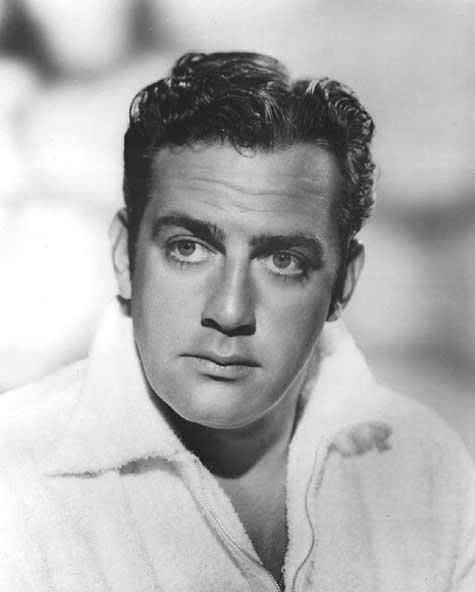
2. Raymond Burr and Monte Markham

f


3.William Shatner and Timothy Hutton
http://www.startrek.com/legacy_media/images/200307/shatner02/320x240.jpg

4.Peter Lawford and Jim Hutton


http://queen.spaceports.com/images/Photo_Hutton_main.jpg

5.Alec Guinness and Barnard Hughes

\\

6.   Shaun Evans and John Thaw


7. Charlotte Rampling and Rachel McAdams
https://blogger.googleusercontent.com/img/b/R29vZ2xl/AVvXsEjEPhvr_4XJZGCCLFcMFQErkgM-PIHUNa788_m3DfqYXGrWFXypwP060Y9MsDiydf-ev4EUnIPFQnXLjnV4XmgCa1ZHpnvmKNfTedOW-vM9Rf5aKdvcLnfFx93YpTZgAzYwnFUvMgYskvFl/s320/600full-charlotte-rampling.jpghttp://www.media-courses.com/blog/wp-content/uploads/2010/12/rachel-mcadams-60.jpg


8.Richard Harris and Michael Gambon.  (No, the answer is not Dumbledore.)


http://www.theastralworld.com/ghosts/pics/richardharrisdumbledore.jpghttp://www.lahiguera.net/cinemania/actores/michael_gambon/fotos/4555/michael_gambon.jpg

9. Carla Gugino and Jennifer Lopez
http://content8.flixster.com/rtactor/40/53/40538_pro.jpghttp://www.billboard.com/files/styles/promo_650/public/stylus/105358-jennifer_lopez_617_409.jpg

10. Ben Kingsley and John Hurt

http://content9.flixster.com/photo/12/30/83/12308343_gal.jpghttps://blogger.googleusercontent.com/img/b/R29vZ2xl/AVvXsEiz8UI4j3sxGh9FZRXCc_J_r0a-p7hjHqQ6ifnV2tSWRDA1ZYoc64m0-xegW9DEmtRppjmevWjkI9zITA1nxe_M9oteDHbVGmbuRRvQ3I2vGRUMlYZLUyU7EmjjOFOIIX0Mt_7tIBxF5uY/s1600/l.jpg

ANSWERS
1.  James Patterson's Alex Cross.  Morgan Freeman in Kiss The Girls and Along The Spider.  Tyler Perry in Alex Cross.
2.  Erle Stanley Gardner's Perry Mason.  Raymond Burr in Perry Mason.  Monte Markham in The New Perry Mason.
3.  Rex Stout's Archie Goodwin.  WIlliam Shatner in the failed pilot for TV series Nero Wolfe.  Timothy Hutton in A Nero Wolfe Mystery.
4.  Ellery Queen's Ellery Queen.  Peter Lawford in Don't Look Behind You.  Jim Hutton in Ellery Queen.
5.  G.K. Chesterton's Father Brown.  Alec Guinness in The Detective.  Barnard Hughes in Sanctuary of Fear.
6.   Colin Deavor's Endeavor Morse.  Shaun Evans in Endeavor.  John Thaw in Morse.
7. Arthur Conan Doyle's Irene Adler.  Charlotte Rampling in Sherlock Holmes in New York.  Rachel McAdams in Sherlock Holmes.
8.Georges Simenon's Jules Maigret.  Richard Harris in Maigret (1988).  Michael Gambon. in  Maigret.(1992)
9. Elmore Leonard's Karen Sisco. Carla Gugino in Karen Sisco.  Jennifer Lopez in Out Of Sight.
10. Fyodor Dostoevsky's Porfiry Petrovitch.  Ben Kingsley in Dostoevsky's Crime and Punishment.  John Hurt in Crime and Punishment.

06 August 2013

Mystery Film Series


by Terence Faherty

In my recent post on obscure and forgotten mystery films, I intentionally omitted any entries from mystery film series, a very popular form of crime film in the thirties and forties.  I did say, however, that I would return to the subject of film series at some later time.  Well, it's hot outside (and inside, my office is under the peak of the roof), vacation is looming, serious thought is even harder than usual, so here are some unserious thoughts about three of the best series from Hollywood's Golden Age.

A Little Background

With one notable exception addressed below, all mystery series were B pictures.  The term "B picture" might make one think "low budget," and most of these films were made for what passed for shoestring spending back then.  But the term also refers to the function of these films in a standard film program of the day.  In addition to an A picture, movie goers in the thirties and forties expected to see some combination of a newsreel, a two-reel comedy or a cartoon, a travelogue or some other informative short subject, and one or more B picture.  (Because of their role in filling out a film program, B's are sometimes referred to as "programmers.")  Being appetizer courses, these films were necessarily brief.  The average running time was just over an hour.

Series were popular with audiences because they were familiar:  same stars, same music, same sets, etc.  This recycling is one of the things that made them inexpensive to produce.  They were popular with the studios because they gave them a place to try out new talent.  So, for example, you can catch early performances of Donna Reed and Jimmy Stewart in Thin Man films, Jean Arthur in two Philo Vance entries, and Ray Milland in a Charlie Chan.  All those actors would go on to win Academy Awards.  Mystery series were also a place where studios could use older stars at the ends of their careers.  Warner Baxter (another Academy Award winner) finished up as the Crime Doctor (ten films) and Richard Dix (Academy Award nominee) in the Whistler series (eight films).

The Thin Man Series

The exception to the B picture rule mentioned above was the Thin Man series, which starred the great team of William Powell and Myrna Loy.  It could be argued that the first film, The Thin Man, based on the Dashiell Hammett novel of the same name, was modestly budgeted by MGM standards.  But it earned a pile of money, ensuring that subsequent films would be unquestioned A products.  They appeared at long intervals for a series; only six films were made over thirteen years.  The closest thing to the Thin Man phenomenon was probably the Road pictures Bob Hope and Bing Crosby made for Paramount:  A picture follow-ups to an unexpected smash hit, released at irregular intervals as special event films.

William Powell, Asta, and Myrna Loy
 on the set of The Thin Man Goes Home 
The Thin Man films depended heavily on the charm and chemistry of their two stars:  Powell, the husband detective repeatedly pulled out of his boozy retirement, and Loy, the detective-wannabe wife who often did the pulling. They may have been the most happily married couple in Hollywood history.  Early on some name confusion arose.  "The Thin Man" actually refers to character from the first film whose disappearance sparks the plot.  The earlier titles in the series reflect this:  After the Thin Man and Another Thin Man.  But soon, probably because Powell was no weightlifter, the Thin Man came to mean the character Powell played, Nick Charles, in the public's mind.  Eventually, MGM gave up the fight (as Universal did when the Frankenstein monster usurped the last name of Dr. Frankenstein).  So the fifth entry is called The Thin Man Goes Home.    

In addition to the drinking and the leads' banter (and the participation of Asta, a fox terrier), a standard feature of the films was the denouement scene that ended each entry, in which all the suspects were brought together and Charles winged a summation of the case, hoping that someone would make a slip ("just one slip").  According to Loy, Powell complained about the pages of dialogue that he had to learn for these scenes, and the scriptwriters probably felt the same way about it.  But as payoff scenes, these really pay off.

The series declined gently after its great start, as the actors aged and the characters were softened (meaning they drank less).  My favorite is After the Thin Man, from 1936.

The Sherlock Holmes Series

My favorite film series when I was a kid was the Sherlock Holmes series starring Basil Rathbone as Holmes and Nigel Bruce as Dr. Watson.  This was actually two series, made by two studios.  20th Century Fox got the ball rolling with two films set in the proper Victorian time period:  The Hound of the Baskervilles and The Adventures of Sherlock Holmes, both released in 1939.  The box office wasn't what they'd hoped for, so they dropped the project.  But Rathbone and Bruce didn't drop the roles.  They began instead what would be a long run playing the famous duo on radio, also in period.  So the public was primed for a return to the big screen.  But when it happened, in 1942 courtesy of Universal, Holmes and Watson were in what was then modern dress, facing off against the Nazis.

Nigel Bruce, Basil Rathbone, and Evelyn Ankers
on the set of The Voice of Terror
This updating has bothered purists ever since, but the Universal series was simply reverting to what had been the norm prior to 20th's Hound.  The strange-but-true fact is that every Holmes sound film prior to 1939 had been updated to the then current period.  This was true of an earlier series, Arthur Wontner's six-film effort, of Clive Brook's two films as Holmes, and of a number of one-offs by various actors.  Unfortunately for the Universal series, all Sherlock Holmes theatrical films that followed it were done as period pieces, making this second Rathbone/Bruce teaming seem like an aberration.  One of the things I like about PBS's Sherlock and CBS's Elementary, which were written about in this space recently by Brian Thornton, is that they again reimagine Holmes and Watson for the modern age, offering the Universal films some retrospective cover. 


Like the Thin Man films, the Sherlock Holmes series banked on the playing and chemistry of its two leads, who, like Powell and Loy, were good friends in real life.  Basil Rathbone's Holmes, perfect in stature, profile, and voice, seems to be enjoying life in the two 20th Century Fox outings.  In the Universal films, he is often serious and even somber.  I'm always grateful for the occasional smile he gets from the carrying on of Nigel Bruce, though my gratitude is not universally shared.  Many Sherlockians deplore Bruce's trademark buffoonery, wishing for something closer to the Watson of the stories.  This wish ignores the reality that Watson's function in the series isn't the same as it had been in the stories.  Here he's comic relief.  With the exception of the Thin Man films, which were basically comedies with mystery relief, all the mystery series had comic relief sidekicks.  Nigel Bruce was the best. 

The twelve Universal films only paid lip service to Doyle's stories, but they always moved along briskly.  Other assets include a stock company of English bit players that almost makes you believe these were shot in England and great title music by Universal's house composer, Frank Skinner (who also scored some of their horror films).    

Many commentators pick The Scarlet Claw as the best of the Universal films, but my favorite is 1942's Sherlock Holmes and the Voice of Terror.  I mean, if you're going to bring Holmes into the forties, he might as well be helping with the war effort.  Plus this one has some strikingly noir photography and the beautiful Evelyn Ankers. 

The Charlie Chan Series

It is not uncommon these days to hear the Charlie Chan films, based on the character created by Earl Derr Biggers, referred to as racist, which is sad and silly in equal measure and says more about our times than it does about this series, the longest running mystery film series of them all.  There were two or three precursor films starring Asian actors as the detective, but the run really began with the casting of Swedish actor Warner Oland as a globetrotting Chan.  (In one four-film stretch, Chan jumped from London to Paris to Egypt and on to Shanghai.)  Oland's claims of Mongol ancestry might have been studio moonshine, though costar Keye Luke, himself Chinese, has testified that Oland wore no special makeup for the part, other than a fake goatee.  But Oland's genetic makeup and his dependence upon makeup are equally beside the point, in this writer's opinion.  Oland was an actor playing someone he wasn't, which is what all actors do.  And he played this particular someone better than any actor before him or after him.

Warner Oland and Keye Luke
on the set of Chalrlie Chan
at the Opera 
Oland's Chan was smiling and genial, much of the time.  This is one of the charges brought against it: that its geniality reflects subservience. For me, it places Chan in the long tradition of detectives who encourage their opponents to underestimate them.  I always loved the moment in the Chan films when Oland would drop the smile and intone "you are murderer."  This phrasing brings to mind another charge against Chan:  his English isn't perfect.  But I don't think Oland/Chan was ever ungrammatical.  He merely dropped the occasional article and struggled with American idioms.  Unless they lived in very small towns, audience members of the thirties probably knew immigrants of many ethic backgrounds who fought the same battles with English.  Many had fought them themselves. 

Moviegoers of the period were also familiar with another part of the immigrant experience reflected in these films:  the conflicts between immigrants and their Americanized children.  This source of comedy relief was introduced to the series when Chan's "number one son" Lee, played by Keye Luke, debuted in Charlie Chan in Paris.  After that, this series, like the earlier two I've described, profited greatly from the chemistry of its costars, in this case a Swedish pretend father and his Chinese pretend son.  

Oland died in harness and was replaced by Sidney Toler, who did depend on makeup and could never be accused of smiling too much.  He received a new sidekick son, Jimmy Chan, played by Victor Sen Yung.  A third son, Tommy, would be played by Benson Fong while Yung was in the service during the war.  Around that time, Toler died and was replaced by Roland Winters.  When the series sputtered to an end, there had been over forty entries and it had proven popular all over the world, including China.

Since I'm picking favorites, I'll name a Chan film, 1936's Charlie Chan at the Opera.  It's from the series' peak period and features Boris Karloff as the skinniest baritone in the history of grand opera.  Plus they hired Oscar Levant to whip up a phony opera for the picture.  How's that for attention to detail?

In Conclusion

I don't have a conclusion; I just needed another heading for balance.  Someday, when it's hot again, I'll write about some of the lesser movie series.  In the meantime, stay cool.

05 August 2013

What R U reading?


Jan Grape by Jan Grape

With the current heat wave in TX there's only one thing you can do to stay cool. Find a comfortable chair and a good book.

For some strange reason, my favorite thing to read is a mystery. Honestly, I don't try to figure out whodunit, I'm more interested in the characters. I have many favorites. If I start listing them, I'll get carried away and even then I'll leave off someone. Then I will get upset with myself because I left off one of my all time favorites, so I won't name names.

However, I recently read an ARC, titled The Last Whisper In the Dark by Tom Piccirilli. The book just came out from Bantam.  Unfortunately, I had not read the previous, The Last Kind Words, I will be purchasing it soon. It's the story of the Rands, a family of criminals...but not your usual criminals. They are creepers, cat burglars, grifters, con artist .It's in their blood and what they do is just their destiny. And to add to the strangeness they're all named after dogs.

Our protagonist is Terrier, father is Pinscher (who is creeping up on Alzheimer's,) grandfather, Shepherd, who is in the latter stages of the disease and who Terry calls, Old Shep. There is a brother, named Collie, who for some strange reason, (if you haven't read the first book you don't know why,) goes on a killing spree and has been executed for his crimes. Terry's sister is named Airedale, he calls her Dale. There are two uncles, Mal (amute) and Grey (hound.)

Terry is in love with Kimmy, who now is married to Terry's one-time best friend, Chub. And I think Kimmy's little girl, Scooter, is Terry's biological child. I don't think I was ever sure about that but it's obvious he loves her and her mother dearly. The locale is Long Island, NY but that is incidental to the story.

Mr. Piccirilli has written an unusual cast of character who slowly become real folks as you continue to read. The mystery is not so much who does what, although there are twist and turns as Terry becomes involved with his estranged maternal Grandfather. Terry's mother was disowned when she married Pinscher and Terry doesn't know any of the maternal side until the man calls and wants to see his daughter before he dies. The old man is on his deathbed. Mother Rand goes but Terry goes with her and it soon becomes apparent the old man wants to talk to Terry too, and he wants Terry to steal something for him.

If that's not complication enough, Terry's sixteen year old sister is involved with some hooligan thugs and looks as if she could be in big trouble almost immediately if not sooner. And Kimmy's husband Chub is involved with some really bad guys and Terry's got to try to save Kimmy and his daughter.

Some reviewers compare the writing to Raymond Chandler and call The Last Whisper very dark. I suppose it is more in the noir category than anything else but it's such an intriguing cast of characters that all I could do was keep turning pages to see what would happen next. It's also probably much better if you read Last Kind Words first because without that background you're a bit lost until about a third of the way into it.  But it is definitely worth your time, especially if you like that sort of thing. Great characters and a well-written story, I mean.

The other ARC I read lately is NOT exactly a mystery. It's A Wilder Rose, by Susan Wittig Albert. It's the surprising true story of Rose and Laura Wilder and the Little House on the Prairie books. I'm not going to review it here as Susan is going to write an article in my place in the very near future and I don't want to step on her toes, but is a fascinating story within a story of the collaboration of a mother and daughter and the blending of facts and fiction unraveling the mystery of these books.

So what are you reading?