10 January 2023

Three Great Books


As reading weeks go, the past one has been pretty good. I'm on vacation (mostly--when you work for yourself, you're never truly on vacation). With the Agatha Award nomination ballot due in four days, I'm reading madly. I read a ton last year, but there was way more published than anyone could possibly read. Still, I'm trying to get in as much as I can before I decide what to list in each category. 

As a result, since January 1, I've read five novels, one novelette, one short story, and I'm in the middle of two more novels. I also started one novel that I decided not to finish, and I'm hoping to get through two additional books by Friday night. If you're thinking I must be a fast reader, I'm not. But I can listen really well, and all but one of these books has been an audiobook. Thank you to my public library system for providing access to so many audiobooks. And Audible, thank you too.

So, today I'm going to share with you three of the books I've read in the past week. I don't usually have such good luck in such a short reading period, but these three reads are all ballot-worthy. (Well, I'm still reading one of them, but if it continues to be as good as it's been, it will be going on my ballot.)

Gone for Gouda by Korina Moss

This is the second novel in Korina Moss's Cheese Shop Mystery series. It's also the author's second published novel. You often hear of the sophomore slump, that the author's second book isn't as good as the first. That's not the case here. I really enjoyed Korina's first book (Cheddar Off Dead), and I liked Gone for Gouda even more. 

The series is set in a fictional small town in California's Sonoma Valley, where Willa Bauer owns a cheese shop. At the story's start, a famous chef is scheduled to give a presentation at Willa's shop. Soon before the event is scheduled to begin, the obnoxious chef is found dead, and one of Willa's employees is a suspect since he was the last person known to have seen her. Willa feels guilty because the employee wouldn't have been in the chef's company if it weren't for her, so she starts investigating--just to ensure the detective on the case has some other suspects, of course. The search for the killer  becomes a group effort, as Willa, her two employees, some close friends, and some others at times, work together to try to figure out whodunit. Among the things I liked about the book:

  • The characters are all different and enjoyable and caring. 
  • Willa has a wonderful friendship with her male next-door-neighbor. There are no sparks there, just friendship.
  • Willa shares information with the detective on the case, and he doesn't treat her like an annoyance.
  • The plot is complex, the writing is often funny, and the story includes a cute dog.
Overall, two enthusiastic thumbs up.

Magic, Lies, and Deadly Pies by Misha Popp

This is an unusual book. The main character, Daisy, comes from a magical family. Each daughter's ability comes in a different form. With Daisy, she can bake pies and infuse them with magic to give the eater what they need. If she thinks you need some confidence, for instance, she can bake some into your pie. And if you're a woman who is in a bad situation with a dangerous man--one you can't safely extract yourself from--she can bake you a murder pie. There's no poison in it. Just magic. If the man can change into a better person, wonderful. The pie makes that happen. But if he can't, then after he eats the pie, he dies. Her company works solely on referrals from previous customers, and it's called Pies Before Guys.

The author's voice is a delight, as is the book's concept. Not just the magic (I love magic) but how Daisy is trying to make a difference in the world at a micro level. As the book progresses, Daisy finds she has an unknown stalker, one threatening to expose her unless she meets his demands. She is determined to save herself, her business, and her fledgling relationship without compromising her principles, which includes not baking pies solely for revenge. I loved her positive attitude and her desire to help others. I loved her friends and the person she grows closest to as the book proceeds. And, big surprise, I loved her dog.

This is the author's first book (!), and the next one in the series comes out next month. I can't wait.

Sinkhole by Davida G. Breier

This is another debut novel. The book has two timelines. In the present, Michelle Miller is driving home to rural Florida--where she hasn't been since leaving for college fifteen years ago--because her mother is hospitalized. While she's driving, she's thinking about her last two years of high school--memories she has tried to forget since she moved away. Michelle grew up poor, but her best friend in high school was rich. She also was manipulative, but Michelle didn't see that then. We see the girls' friendship from the beginning until ... I'm expecting ... the end. (I'm not sure because this is one of the two books I'm in the middle of.)

The book opens with this sentence: "When I was eighteen, I killed my best friend." Early on, we learn how the friend died--at least what the newspaper said. I'm expecting there was a lot more to it. I'm halfway through the book, and I'm eager for what's to come. The characters are complex, the setting is lush, the author's voice is strong, and she can really turn a phrase. Plus, I love all the details about the eighties. Overall, the book is hard to put down, and I'm going to get back to it as soon as I hit publish on this post. 

Happy reading in 2023. And if you're still thinking about your Agatha ballot choices, I'd be pleased if you'd consider including my short story "Beauty and the Beyotch." You can read it on my website by clicking here.

09 January 2023

Weaving the Past into the Present


Leslie Budewitz, my guest blogger today, is one of my oldest mystery writer friends. We met in Sisters in Crime Guppies, of which she was a founding member back when we really were the Great UnPublished. Liz

by Leslie Budewitz

I love curling up with a good historical novel. While most of my work is contemporary, my newest standalone suspense novel, Blind Faith (written as Alicia Beckman), weaves together a contemporary cold case investigation and historic scenes going back nearly fifty years. And I’ve dipped into historical mystery with several short stories set in the 1880s and a novella set in 1910. But the past is always present. Sneaking a bit of history into a contemporary tale can add layers to the plot and setting, and even character, that make for a richer, more textured read. Plus, it’s fun.

One way to use history in a contemporary novel is to weave in the history of place. My Spice Shop mysteries are set in Seattle’s Pike Place Market, which was founded in 1907. It’s a farmers’ market, but also home to locally-based retailers, craftspeople, and restaurants, as well as several hundred residents. It was the first mixed-use residential and commercial property listed on the National Historic Register. History is key to the place and to the experience of it.

And so my main character runs a spice shop and tussles with Market managers over exterior signage (“If it wasn’t there in 1937, there’s no putting it up now”) and funky wiring. She hangs a map showing the origins of her spices over cracks in the plaster that no caulk can fix. She chases baddies down cobblestone streets and up hidden staircases. She curses the place for its quirks and loves it for the very same reason.

When we describe a scene, we’re giving our readers cues and clues that allow them to create it in their own mind. They’ll never see just what we see, unless we’re using a real place they’ve visited. But whether the place is real, like the Market, or entirely fictional, like the historic lodge in my first standalone suspense novel, Bitterroot Lake (written as Alicia Beckman), details that flesh out the characters’ relationship to a place and its history create a deeper connection to the setting and story.

The history of a place can also spark plot. David Edgerly Gates gave a great example of this last month here on SleuthSayers when he discussed the TV series Three Pines, based on Louise Penny’s books. The TV writers added a brilliant (to me) story line about the experience of Indigenous people in the region, rooted in the residential school, a building that still dominates the town. While the murder in the second pair of episodes did not stem directly from that history, the victim’s connection to the school gave the writers an opportunity to tell the story of the horrors inflicted and show how building’s continued existence kept the wounds open. And they were able to show how the townspeople came together to end that.

In Bitterroot Lake, my main character returns to her family’s historic lodge in NW Montana, seeking solace after her husband’s death. A murder the day she arrives ties into a tragedy she and her friends experienced twenty-five years before as new college graduates. While cleaning up damage after a windstorm, she discovers a scrapbook detailing the lodge’s construction a century earlier. Through the photographs, along with letters and journals she finds in an old trunk, she uncovers a mystery about the lodge that answers questions about tensions with a neighbor and eventually helps her unmask the present-day killer. I love old homes, art, and furniture, and had a great time creating Whitetail Lodge, using memories of private and public lodges I’ve visited, and poring over real estate listings, magazine articles, and local history books.

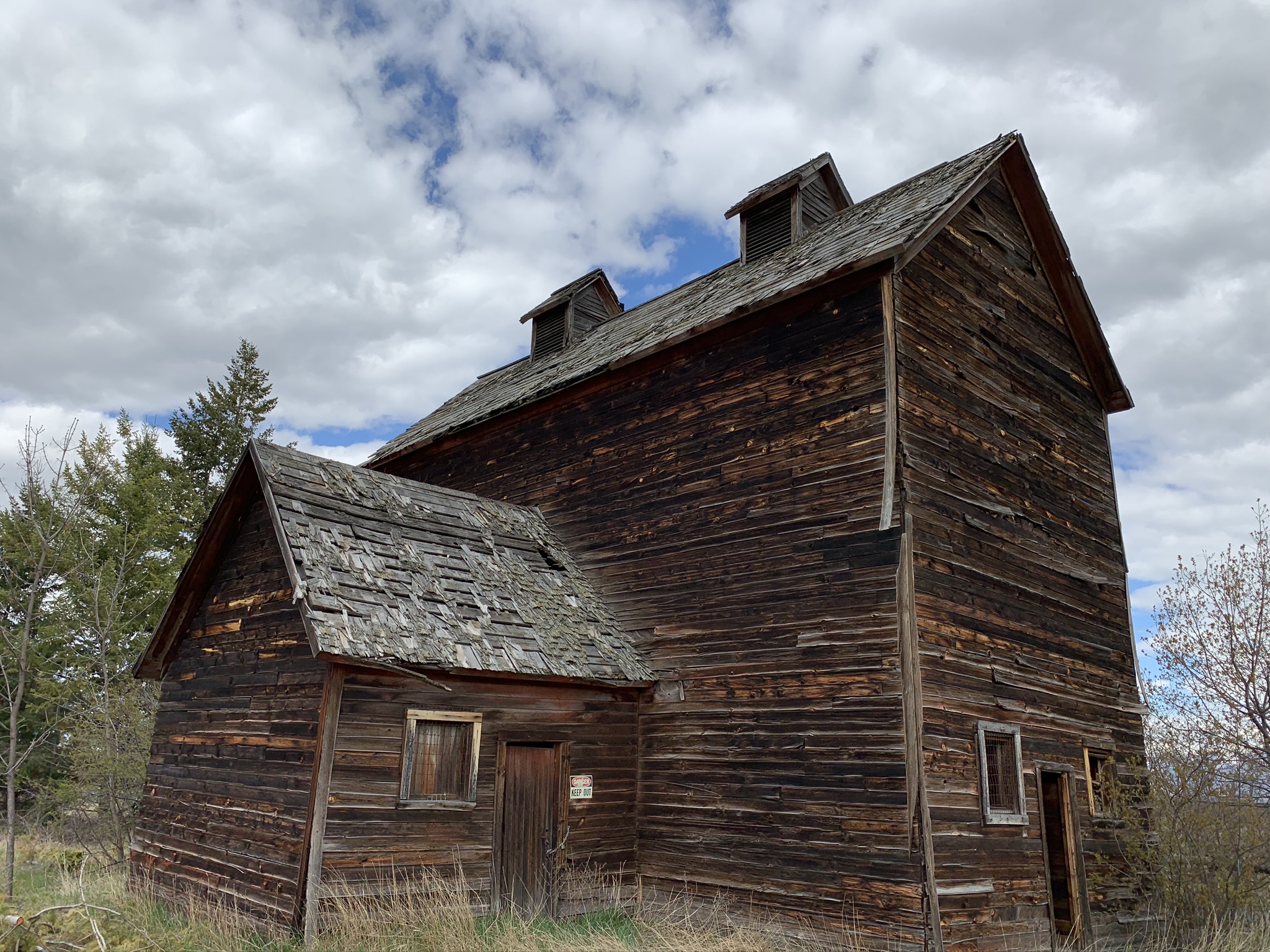
That’s also how I discovered the region’s history of ice houses, including a survivor now in the parking lot of a building supply company in the next town. Closed up but well-preserved, it sits alongside a path built where railroad tracks once ran. With drawings of the plans and my site visit in mind, I staged the novel’s climax in a similar relic. And if I introduced readers to lodge culture, timber and railroad history, and social issues of a century ago, even better.

Every community has inherent tensions, often with origins that are no longer visible. In Six Feet Deep Dish, debut cozy author Mindy Quigley uses her fictional Wisconsin town’s beginnings as a summer refuge for wealthy Chicagoans to illustrate continuing conflicts between the haves and have-nots. She also mines it for humor, decorating her protagonist’s pizza joint with old photographs of mobsters, including Al Capone as a baby. Fortunately, the homicide detective, a direct descendant of the crime boss, takes it in stride.

Crime fiction often involves an incident in the past that triggers a present-day conflict, whether it occurred in 1925 or 1985. In Blind Faith, a cold case investigation draws us deep into the past, untangling the threads that tie a prominent family to the unsolved murder of a priest. Both personal history and stories about the community help us understand the motivations behind a series of crimes that continue to have ripple effects.

Our lives are influenced by the past on every level. And when we use history to explore events in the present, we can tell richer, more meaningful stories.


Leslie Budewitz is the author of the Spice Shop and Food Lovers’ Village mysteries. As Alicia Beckman, she writes moody suspense. She is the winner of three Agatha Awards, including the 2018 Agatha for Best Short Story, “All God’s Sparrows,” set in Montana Territory in 1884 and featuring a real-life figure, “Stagecoach Mary” Fields. A past president of Sisters in Crime and MWA board member, she lives in NW Montana.

08 January 2023

Crime Scene Comix Case 2023-01-020, Red Bull


Once again we highlight our criminally favorite cartoonist, Future Thought channel of YouTube. We love the sausage-shaped Shifty, a Minion gone bad.

Yikes! In this episode, Shifty goes to the dogs.


  © www.FutureThought.tv


That’s today’s crime cinema. Hope you enjoyed the show. Be sure to visit Future Thought YouTube channel.

07 January 2023

Crime Scene Comix Case 2023-01-019, Red Card


Leigh here with a sexist rant: I like watching US women’s soccer. Why? The players are exuberant and serious. When a men’s player (pick a country, any country) stubs a toe over an imaginary slight, he tearfully collapses on the ground, grousing and groaning like a sobbing 3-year-old whilst pointing a quaking finger at his opponent, hoping for a red card. Ooo, boo hoo. When one of the women is knocked down, she gets up and goes back to work. Hey, don’t trash me for telling it like I see it.

This isn’t one of Shifty’s best, but FIFA football fans will watch anything soccer related. Let’s have a look.


  © www.FutureThought.tv


That’s today’s crime cinema. Hope you enjoyed the show. Be sure to visit Future Thought YouTube channel.

06 January 2023

Illusions


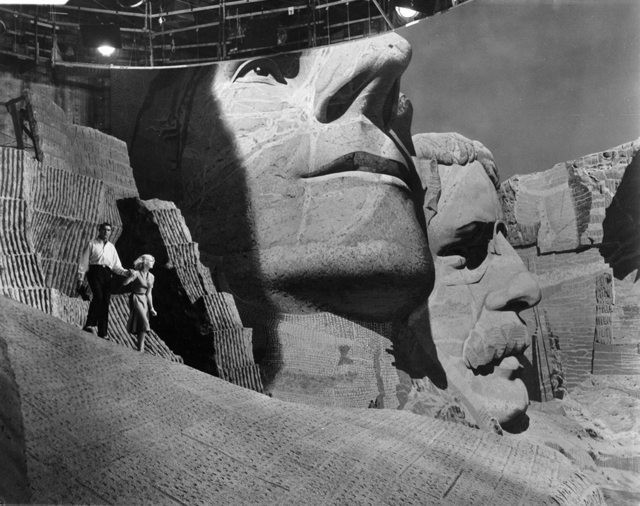
After watching a number of 'the making of' and 'behind the scenes' videos on YouTube, I realized I was allowing the illusion, the magic of some movies, to fade into ... reality. I don't need to know how a screen performer had chronic halitosis, false teeth, a toupee (although many are so easy to spot I don't know how I missed it). Don't need to know how crude a performer was on the set, or how certain special effects were done. I always thought they filmed the Mount Rushmore scenes in NORTH BY NORTHWEST at Mount Rushmore. It was a set.

I like a movie to draw me into its world. Science Fiction movies and mysteries lose a lot of their wonder when I know how the sausage was made.

A little-appreciated movie filmed in New Orleans, PANIC IN THE STREETS with Richard Widmark and the wonderful Jack Palance, featured gritty realism and excellent acting. No sets. The way to do it. It's great going back to Royal Street, Magazine Street and Jackson Square in 1950.


It's different with novels and short stories because that's what I write. How a writer crafted their story or put together a novel is interesting. If you build a building, you wanna know how others build their buildings. This is a lot of what we do here at SleuthSayers.

But I feel differently about movies. When I watch a movie with my wife, she always seems to figure out what's going to happen or who did it in a murder mystery. I don't for a couple reasons. First, I like to let the director and screenwriter take me there. Second, I think like a cop when I watch mysteries. I'm a homicide detective and most movies do not show the reality of a murder investigation. Some do but most don't.

Back to short stories and novels, where the CGI takes place in the reader's mind. I have my own vision of DUNE, and none of the movies have matched it. The latest is by far the best and there are looks in it I never envisioned. I don't want to know how director Denis Villeneuve pulled it off. I just let it flow over me.

I don't try to figure things out in a novel. I rather let the writer take me there. That's just the way I read. I find it funny when someone reads one of my books and tells me they figured out who did it in the first thirty pages because I rarely know who did it until I'm near the end. Lately, I don't even know how the book's going to end at all.

That's all for now.


www.oneildenoux.com

05 January 2023

Beginnings


  New years are like new books.

“Well begun is half-done.” 

You may have first heard or read this in either the book or film version of Marry Poppins, but it was the Greek philosopher and polymath Aristotle who first referenced what even he noted was in his time a proverb of long stand in day-to-day language. In other words, if you started out well, and things are cooking, you have momentum, and a great feel for what’s going to happen next, or maybe you’re just enjoying the ride. Either way, whether reading or writing, a great beginning is key to a great finish. 

Yep, this guy, not Mary Poppins!

At the risk of employing too many quotations too quickly, let me add another one: “The journey of 1000 miles begins with the first step.” And just as December is a time to take stock of the recently departed year, so is January so often the month of first steps.

Whether it be starting a new diet, or a new exercise regimen, a new term at school, a resolution to read more, a resolution to read less, a resolution to watch less TV, or to watch more TV, the combination of the new year, and the human predisposition to place outsized importance on arbitrarily designated beginnings and endings means that January is usually crammed with good intentions. 

This is no less true in the writing community. And I’ll let you in on the one secret that successful writers have all figured out. Maybe it’s conscious on their part, or maybe it’s not. Either way, successful writers are successful because they write.

They don’t plan and plan and plan endlessly. They don’t set ridiculous goals. They don’t read a million books on how to write this or that way.

At the risk of sounding sappy or obvious, the writing journey is just that: a journey. I know this because I’ve been on it for a big chunk of my adult life. I started writing for intended publication back in the late ‘90s, and published my first book in 2005. And I have been as much a work in progress as has my writing during the intervening seventeen-plus years. Had I waited until I’d “developed and perfected my style” to get something published for pay, I’d still be waiting. So obviously, it’s my opinion that anyone who thinks they need to train train train, and then start writing for publication, has it exactly wrong

Writing, like any other art, requires dedication, persistence, and, of course, talent. The first two are not negotiable. They come from within, and only you can gauge your own limits in these two areas. The good news, such as it is, is that the third, since it's a skill, can be developed.

If you’re not especially talented, by dint of the first two (dedication and persistence), you can simply become more talented. Time for another quote. This one isn’t exact, but I think you’ll get the point:

“We weren’t very good when we first started out playing together, but when we went on tour that first time, we played three hundred dates over a calendar year. You play three hundred dates a year, you’re gonna get better.” - KISS guitarist Ace Frehley.

Yep, this guy. Note: not a KISS fan myself, but the wisdom in his quote above cannot be denied.

What can I say? When you’re right, you’re right. The most talented unpublished writer I’ve ever met wrote a great first novel, got rejected by ten agents and gave up. Reversing the point of view of a jealous Salieri, I was thrown by this. I loved this guy’s book. And I told him so. Repeatedly.

My friend’s problem was that while enormously talented, and pretty dedicated, he wasn’t persistent. And of the three things all successful writers possess, the most important isn’t talent or dedication. It’s persistence.

I know authors who don’t possess the talent required to review the guy above‘s never-to-be-published book. I either don’t care for their work or just find it amateurish. And yet I call them “authors” because they’re published. Many of them multiply.

Because they were persistent.

One last thought: no matter who you are, no matter how talented or connected, experienced or not, just as with putting pants on one leg at a time, you’re going to experience the beginning of your next project the same way that Hemingway, Erica Jong, Toni Morrison, Aeschylus, Jane Austen and so many others throughout the course of history have.

We all experience the so-called “ tyranny of the blank page” in exactly the same way.

By staring at it.

 How long you stare is up to you.

No one ever said beginnings were a piece of cake. After all, they’re beginnings.

Now, if you’ll excuse me, I have to go take that first step.


Happy New Year, and see you in two weeks!

04 January 2023

On A Winter's Night, A Writer...


At our house we usually keep the house pretty cool in the winter time, even more so at night.  The week I am writing this, in late December, the weather outside dropped to around 7 degrees Fahrenheit, which is darned low for my city.  Of course it was a lot warmer inside, but leave it to say it was cozier under the blankets than outside of them.

And as I lay there, all snug and warm, waiting for Morpheus to do his thing... I remembered something.  Details don't matter but it involved calling a doctor's office about something.  So, while it was not life-and-death, this was a matter of some significance.  It was an errand I had better not forget.  That meant I was either going to 1) find a way to make sure I remembered it in the morning, or 2) stay awake all night worrying about it.

Now, for the past fifty years I have seldom gone anywhere without a pocket notebook.  Every writer needs a way to scribble down the Next Brilliant Idea.  But as it happens my notebook was across the room on the dresser.  So in order to write myself a reminder note I would have to throw off the lovely sheet and duvet and stomp across the room, pick up my notebook, take it out into the hallway (so as not to wake my very tolerant wife), flip on the light, find an empty page, write down the reminder, and retreat to Slumberland.  It would be a cold couple of minutes.

I lay there for a while, trying to think of another alternative.  As it happened my cell phone was charging on my night table and I seriously considered turning it on, waiting for it to wake up, finding the note app, and sending myself a reminder.  This would actually take longer than the out-of-bed method but wouldn't get my toesies all chilled.

I decided that was ridiculous.  I got of bed, made the journey, made my note, and climbed back into bed. But before sleep could knit  up the unraveled sleeve of care, another thought came into my mind. 

What if, instead of a reminder of a medical issue, my brain had popped up a story idea?

I would have been out of bed in an instant, grabbing for my notebook to scribble it down. Because to a writer a hot idea can be much more important than a mere health issue.

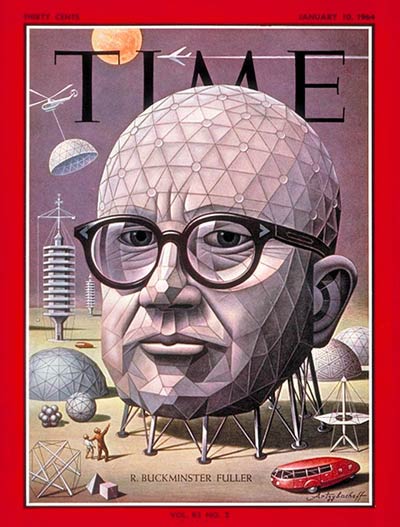
Decades ago I remember reading that Buckminster Fuller said that from the moment you have an idea you have 17 minutes to do something physical with it - write it down, tie a string around your finger,  sing it out loud until it's stuck in your head -- or it will disappear.  I have searched for this bit of wisdom many times and have never found it again.  Did I make it  up?  Got the details hopelessly wrong?

If I ever do find it again, I'll even get off the mattress to write it down. In the mean time, the moral of the story: Keep my notebook near the bed.

03 January 2023

A Halkett Happy New Year


According to historians, the Babylonians were the first people to embrace the concept of a New Year's Resolution. For them, them, the new year began with the vernal equinox in the middle of March. As an agricultural society, they planted crops at this time. Then, they kicked off the year with a 12-day party.

The celebration, called Akitu, seems to have been a mixture of revelry, patriotism, and religious ceremony. The Babylonians renewed their vows of loyalty to their king and promised to pay off debts to the gods. They promised to return borrowed goods (Usually thought to be farm implements traded around during the planting season).

These promises are considered the forerunners of contemporary New Year’s Resolutions.

The Roman emperor Caesar moved the start of the year to January in 46 B.C.E. As we are reminded regularly, January is named for Janus, the god of arches and doorways. The god is pictured with two faces, one looking forward while the other looks back. The Romans offered sacrifices to Janus on January 1st and promised good conduct for the year to come.

Using the Caesarian calendar, early Christians adopted the first day of the new year as a time for self-contemplation. It became the traditional occasion for thinking about one’s past sins and resolving to perform better in the year ahead. Medieval knights reportedly renewed vows of chivalry at the end of each year by placing their hands on the feathers of a peacock. The “peacock vow” was a commitment to be a better person in the year ahead.

On January 2nd, 1671, Anne Halkett, a member of Scotland's gentry, wrote a number of pledges in her diary. These included the vow, "I will not offend any more." She entitled the page "Resolutions.” It is the first recorded resolution to kick off the start of a year.

The full phrase "new year resolution" is first found in a January 1st article, “The Friday Lecture,” published in a Boston newspaper in 1813.

And yet, I believe there are multitudes of people accustomed to receive.

Injunctions of new year resolutions who will sin all the month of December With a serious determination of beginning the new year with new resolutions and new behaviour, and with the full belief that they shall thus expiate and wipe away all their former faults.

© Wikimedia Commons

What I like about the 1813 note is not the solemn resolve to be better in the year ahead but rather the expressed thought that resolutions may serve as an excuse for a December blow-out.

While resolutions have always been about getting better, over the centuries, the emphasis has shifted from an abundant harvest, avoidance of sin, or securing salvation to personal improvement goals like weight loss or smoking cessation.

Let me then gather up the nearest peacock, draw him close, and make a few writer resolutions for 2023. I know I've waited until January 3rd. But, if Anne Halkett can postpone a day or so to drop her self-improvement goals, so can I.

  1. Set a realistic writing goal.
    I read a back-and-forth debate in the online community about this. Write honestly every day, and don't worry about the output is one admonition. But I like measurables. Last year, I averaged a story a month. I vow to be a bit more productive in 2023. I'll stake out 15 stories as my goal. (I know that writers like John Floyd call that a Tuesday.) Still, it measures my attempt to spend a smidge more time in the writing chair while balancing my other commitments.
  2. Set a realistic reading goal.
    This one is harder for me to quantify. I used to keep a running list of the books I'd read in a year. I stopped a few years ago. I don't really know why. As a result, I can’t say how many I read in 2022. So I can't set out a number goal to build upon that total. But I know I need to read more. It's good for me and for my craft. This 2023 resolution, therefore, is a two-parter. Read more and keep a log. That way, I’ll have a baseline for 2024.
  3. Meet more writers.
    Like many of my fellow writers, I'm introverted by nature. That's why I work a job in the jail's basement. I tend to control the conversations with the inmates and don't find myself forced into too many casual conversations. But I need to get out more. I'm resolved to be more active in at least one writer's group. In my experience, it's not that hard. Most people will gush with talk when simply asked, "What are you working on?" I must make myself pose the question more frequently.
  4. Screw up something new.
    Making a mistake I've made before is something I do frequently. It usually means I need to pay more attention. But fouling up in a new way, hopefully, means I'm challenging myself to try something different. It could be a new genre or a different voice. I don't know. With any luck next year, I can tell you about my colossal success with my 2023 experiment.

On the day of this blog post, we'll be driving across the southwest. The landscape provides a lot of open desert and time for contemplation. I'm sure I'll think of other writer's resolutions—consistent use of commas, more and better rewriting.

I hope you remain firm in whatever resolutions you settle upon. May you find the write words for 2023.

Until next time.

New Year’s Resolutions: A Pretty Old Practice, merriam-webster.com.

02 January 2023

The Blank Page


I don’t think it’s a coincidence that many mystery writers were once reporters.  It surprises me that more weren’t advertising copywriters, since we faced the same daily dilemma:  how to fill up that blank screen on demand, usually with precious little time to do so.  This is the ultimate cure for writer’s block.  If you don’t do that thing they pay you for, within the deadline, you’re fired. 

This is motivating.  Especially if you’d been on the job long enough to have acquired a mortgage, a few kids, car payments and a spouse who expects you to hold up your share of the financial bargain. 

My approach was to pull up the empty document, then go to the bathroom.  I found the walk down the hall to be energizing, and often standing at the urinal, something would come to me.  An opening line, perhaps, or recalling a popular song that might provide some inspiration.  Sometimes I’d think of a great headline, and the following copy, then realize it was an existing ad.  Maybe even one I’d written myself.  At this point, I was forced to go back to my office.  

I’m old enough to have started in this work before there were computers.

In those days the blank page was bright white marker paper favored by the art directors.  This provided the opportunity to start filling up that first page with doodles.  I had various themes, but finally settled on drawing lizards, with captions.  This did nothing to prompt creative inklings, though it did compress the timeline until the ideas needed to appear almost immediately or I’d be switching to writing compelling resumes.

Another approach was to just start writing down anything that came to mind, whether it related to the purpose at hand or not.  Hence the first words of an ad could be, “An army travels on its stomach”, or “These are the times that try men’s souls.”, or “It is a far, far better thing I do than I have ever done.”  Though the resulting copy was usually far, far worse. 

Procrastinating in the hope that something useful would come to me was great for my inner-office social life.  I’d jump back up out of my chair and start meandering around the halls, popping in on my fellow writers and art directors and striking up an inane conversation.  Since they were also in the throes of an impending deadline, they were more than happy to interrupt their work to exchange thoughts on the British Royal Succession, Saturday Night Live or the comparative merits of tile versus hardwood flooring. 

Our traffic manager, the woman in charge of agency workflow, would usually break up these tête-à-têtes with a glower and a sigh, and a look at her watch. 

The thing is, the idea always did appear.  I can’t explain why, though I suspect it had something to do with getting myself into the proper frame of mind.  I knew a writer who could only start her workday by driving her car to a lake, emptying the car’s ashtray into a paper bag, and cry for a few minutes.  One writer, I forget his name, would spend all day in front of his typewriter, and often only begin something as the sun started to descend.  He did this day after day, every day of the week.  Hemingway wrote standing up much of the time, which I suspect forced him to start writing so he could sit down again.

If I’ve conquered the problem of getting the writing started, I’ve yet to overcome it’s counterpart.  Not being able to stop. 


01 January 2023

№ 00419088


Lee Morris, Helen Louise Morris, Ryan Morris
Lee Morris, Helen Louise, Ryan

Louisiana Perish

Twenty seven years ago on another New Years Day in a small northern Louisiana town, the bodies of a moderately wealthy couple in their late sixties were found shot to death, Lee and Helen Louise Morris. Their visiting 9-year-old grandson, Ryan, was missing.

Near the end of the month, a teen found Ryan’s pajama-clad body. All three Morrises had  been shot in the head by the same .22 calibre pistol. Two months after the discovery, investigators arrested Mark Morris, son of Lee and Helen, father of Ryan, for first degree homicide.

The arrest surprised no one except the arrestee. He had been terribly careless in quotes and comments, raising suspicions since the beginning of the case. He was even picked up on a courthouse microphone admitting to his then-lawyer that he was guilty. The unusual aspect of this case was the motive– Louisiana’s Legislature had recently changed the law.

Untenable story, miniature of page 1

Fiction Becomes Factual

Several years ago, a Canadian publication serialized a locked-room mystery, one I’d written. Its title, ‘Untenable’, was a play on words. The motive in that homicide was a 2010 change in federal law.

It was a damned good locked room conundrum and I considered the motive unique. Then recently, I discovered a real murderer reacted to a change in state statutes.

For two centuries, a Louisiana doctrine called ‘forced heirship’ dictated that parents must divide their estate evenly amongst their progeny. No child could be disinherited without disinheriting all. The repeal abolished forced heirship and would take effect exactly midnight on New Year’ Day 1996.

Unhappy New Year

Helen Louise and Lee Morris visited their attorney and wrote a new will, leaving out their troublesome kid, Mark. They made the mistake of telling him.

Mark Morris allowed his parents to live into the waning hours of 1995 and then killed them for their nest egg. Grandson Ryan witnessed the killings and, in that parent’s depraved mind, he had to go.

With one exception, surprisingly little about the case appears on-line, mainly an AP news item and a find-a-grave squib. The one exception, however, is a well-written article explaining details. I recommend it.

As far as I can determine, Mark Morris resides in Angola Prison. He’ll die there whereupon his corpse will be interred in a grave with no marker revealing his name nor even his prisoner number, 00419088.


May you have a singularly wonderful — and safe — 2023.