21 November 2022

Sorry, just not a good fit.


Chris Knopf

No writer likes rejection. That’s because no human being likes being rejected. But writers are often more eloquent in their anger and despair over rejection, because they’re writers and have some time on their hands as the result of being rejected so often.

The kind of rejection I like is terse, breezy and obviously canned.

This means they just don’t want you. I’ve had rejection letters that actually go to some trouble to express their bitter disappointment over the quality of my submission. This takes some extra effort.

There’s no solace anyone can offer the rejected writer.

But we can at least appreciate that other, better writers than ourselves have experienced far more devastating rebuff. I’m always hearing about some world-famous, best-selling author who wrote fifty novels that were rejected two thousand times before a fluke cracked open the door, with the rest being, naturally, history.

I spent most of my adult life as an advertising copywriter, which is the ultimate cage fight of unrelenting rejection.

You not only enjoy having your best ideas die like rotted fruit on the vine, but sometimes a bit of derision accompanies the occasion. I had a client accuse me and a creative partner of being on drugs, which we weren’t, though in that moment we considered it. (That campaign was later approved and was the most award-winning work I ever did. But that’s another story.)

So I’m pretty thick-skinned.

I admit, at first I usually consider the rejection a pathetic failure of critical judgment by people with diminished mental capacities, but later, after cool reflection, I go back and re-examine the work. Often this inspires me to make genuine improvements, or at least, launch another project that might have a better chance. I’ll show you, you knuckleheads.

I never liked Nietzsche’s line, “What doesn’t kill me, makes me stronger.”

In fact, what doesn’t kill you can often leave you in a puddle of broken dreams, bones and/or recurring headaches. That written, nothing succeeds like failure when it comes to motivation. Even if those who’ve defeated you are wrong in their estimation. Especially.

I’ve also worked as an editor, publisher and creative director, where much of my job involved rejecting other people’s work.

My approach, as with other arbiters I’ve admired, was to point out the good parts before admitting the shortcomings were insurmountable. It still didn’t feel so great. I think a lot of people in that role go through the same thing. The creator might feel the sting, but the rejectors often suffer greater remorse for having to deliver the news.

My friend Steve Liskow, who invited me on to this blog, was rejected 350 times before publishing his first short story.

He’s won a passel of awards since then, including being short-listed for an Edgar. I have no words for my admiration of this level of steely determination. My steel has no such equivalent alloys.

I downloaded this article from the New York Times several years ago, and I like re-reading it once in a while.

If you’re a writer, I guarantee you will also enjoy reading it. It’s not often I can make that claim, but I do here.

If you’re daunted by the paywall, write me at chrishknopf@gmail.com, and I’ll super copy it and send along.

By the way, it’s especially fun for me to see my last name (no relation, as I’m forced to constantly explain) so liberally used within an article on foolish rejections, in particular those from the most exuberant rejector of them all, Alfred Knopf.

20 November 2022

Murakami Haruki — Professional Tips


We’ve offered up professional tips from many famous authors, but I don’t recall we’ve published any from Japan. Meet Murakami Haruki (Haruki Murakami in Western notation), award-winning novelist, essayist, and short story writer.

He’s been accused by Japan’s literary elite of being too Western, of being unJapanese. Among his influences are Raymond Chandler, Kurt Vonnegut, Richard Brautigan, and Cormac McCarthy.

From time to time, Murakami has dropped pearls of wisdom vis-à-vis writing. Fortunately author Emily Temple has gathered them into a must-read article. The bullet points are:

Murakami Haruki
Murakami, Haruki
  1. Read.
  2. Take the old words and make them new again.
  3. Explain yourself clearly.
  4. Share your dreams.
  5. Write to find out.
  6. Hoard stuff to put in your novel.
  7. Repetition helps (outside of writing).
  8. Focus on one thing at a time.
  9. Cultivate endurance.
  10. Experiment with language.
  11. Have confidence.
  12. Write on the side of the egg.
  13. Observe your world.
  14. Try not to hurt anyone.
  15. Take your readers on a journey.
  16. Write to shed light on human beings.
  17. No matter what, it all has to start with talent…
  18. … unless you work really hard!

So, starting with admonition № 1, check out the article. Perhaps you’ll find a gem too.

19 November 2022

Treasures from the Sock Drawer


Like all writers, I have a lot of ideas for stories. When one of them occurs to me, I try first to figure out whether it's marketable, and if I think it is I go ahead and write the story. If the idea seems a little anemic, I store it away until I can (1) develop it into something better or (2) combine it with another idea. Several stories that I've written lately have come from this second approach.

Most ideas seem to appear to me from thin air, but sometimes I see a call for a short-story anthology whose theme kicks off an idea that might not have happened otherwise. (Barb Goffman's Crime Travel was one of those, and Michael Bracken's Jukes & Tonks, and a couple of Josh Pachter's music-themed anthologies.) At other times--not often--I go back to ideas that I had and stories that I wrote many years ago, stories that I felt weren't strong enough to submit. And whenever I dig those manuscripts out from under the bed or from the back of my sock drawer and look at them I usually realize how good a decision it was to hide those stories from any chance of public view. Most of them were terrible, and serve to remind me of just how little I knew when I first started trying to write short fiction.

But now and then I find that some of those old stories can be repaired and made presentable, and when that happens it's like finding a silver dollar on the sidewalk, or a free gift among all the bills in your mailbox, or a pair of clean underwear in your dorm room in college. In other words, a pleasant surprise. And the rewriting of some of those old manuscripts can actually be enjoyable.

Most of my favorite stories have been written fast: I get an idea, think about it a while, write the story, edit it, and send it off to a market. But a few of my favorite published stories didn't start out as a blinding bolt from the blue; they came from unearthing those aforementioned old stories and trying to breathe new life into them. One of those was "Molly's Plan," a dot-matrix-printed manuscript about a bank heist that I found hidden not in my sock drawer but in a cardboard box on the bottom shelf of a closet in one of our back bedrooms. I took it out, dusted it off, worked on it for a week or two, and sent it to Strand Magazine in the spring of 2014. It wound up getting published there, went on to be selected for Best American Mystery Stories the following year, and has since been reprinted overseas, considered for film, and chosen for inclusion in the permanent digital archives of the New York Public Library. Another was "Calculus I," an unsubmitted and forgotten story I'd written in the mid-'90s about two engineering students' plan to cheat on a college exam. I found the manuscript, rewrote and retitled it, and sold it in 2019 to the print edition of The Saturday Evening Post and later to a foreign publisher. I usually judge the worth of my stories by how much fun they were to write, and I had a great time writing (in this case, rewriting) both of those. And I almost missed them completely.

A few weeks ago I found several more of those old unsubmitted manuscripts in the back of one of my file cabinets (I'm not the most organized person in the world), and while two or three of those stories look promising, the others are probably too weak to ever grow into anything more. I won't throw them away--I never throw away anything I've started writing--but if I use them at all it might be to try to salvage some parts and pieces from them to insert into something more current.

Okay, question time. Have any of you writers discovered older stories in your files that you later reworked and marketed? Any success with those? Do you have other projects (teaching moments?) that you gave up on and will probably never revive? Do any of you save your story ideas for later use? How and where do you save them? In your head? In a Word file? In the "notes" app on your phone? Do your story ideas usually come in a burst of heavenly light, or do they seep in during deep thought, or come from "prompts" like anthology submission calls or themed issues of a magazine? Please let me know, in the comments.

As for my situation, I have re-filed several of those old manustcripts that I recently found--this time I put them in a folder called "in progress" (a hopeful label if ever I heard one)--and I'm actively reworking the others. If I'm lucky you'll soon see those somewhere in a publication. And meanwhile, I'm trying to stay alert to any new ideas that happen to come along.

One last observation: They can be quick as rabbits, these story ideas, and if you're not careful they show up and then scurry off into the bushes before you can grab them and hold on. Especially those that appear in the middle of the night. But when you do catch one, and when it turns out to be something you can develop into a story you're proud of . . . well, that makes all this worthwhile.

Good hunting, to all of us.


18 November 2022

Dr. Stange Tunes (Or How I Learned to Stop Worrying and Hate the Music Culture Wars)


I am currently reading Major Labels: A History of Popular Music in Seven Genres by Keleefa Sanneh. It's a book I wish I had written. Only stupidly, I never took the plunge and became a music writer in the late eighties. Then again, my chemical hobbies were limited to beer of increasing quality and various whiskeys and rums. Not sure if I could have survived the rock 'n roll lifestyle, which is fully embraced by Sanneh's other six genres: R&B, Country, Punk, Hip-Hop, Dance, and Pop. 

Sanneh, a longtime music critic and son of a Gambian immigrant, is clearly in love with the job and listening to as wide a variety of music as possible. As a second generation American, he doesn't have nearly the cultural baggage the rest of us insist on piling on ourselves.

He begins with rock, then R&B. And while he loves the Beatles and the Stones, Aretha Franklin and Beyonce, he's a bit harsh on those genres' fans and musicians. The division between the two is sharply along racial lines. This is somewhat true, but he's almost gleeful in his descriptions of country music. Hard not to be when you lead off with Dolly Parton, Willy Nelson, and Waylon Jennings.And yet, one of the hallmarks of Nashville's country community, as well as country radio and its fans, is the purism Sanneh bemaons about rock and R&B.

Which brings me to an aspect of music - or rather listening to music - I can no longer tolerate.

"If you listen to this kind of music, you can't listen to that."

Excuse me?

Once it's out in the ether, I can listen to Miles Davis back to back with Black Flag, chase it with Blake Shelton before chilling out to Pink Floyd. I absolutely hate purism. I hate it with movies. And yet I'm guilty of it.

In my misspent youth, my entire love of rock was based on one band, Deep Purple. Deep Purple begat Rainbow and Whitesnake, as well as two forgettable line-ups of Black Sabbath, and had, for all-too-short a year, a versatile guitar player named Tommy Bolin. The cross-pollination lead me to Jeff Beck, to the Yardbirds, Cream, and Led Zeppelin. Couple that with an earlier obsession with the Beatles, and my rock had to be loud, with melodic bass, screaming vocals, and frantic drums. 

I was a snob. A girl who wanted to date me gave up when my obliviousness fixated on loathing an eighties romantic classic, "I Just Died in Your Arms Tonight." Things only got worse when I discovered Floyd's Dark Side of the Moon. Then it went to progressive rock: Yes, early Genesis and later Peter Gabriel, Kate Bush, ELP, and Rush, who firmly kept a foot in in their heavy metal roots, and a bizarre, ever-changing band called King Crimson.

You think Crimson would have been a hint. "21st Century Schizoid Man" does not sound like anything on the more obscure Islands or the metal-leaning "Red" or the punk influenced sounds of Adrian Belew. (Chit! Chat! Chit! Chat!) Robert Fripp wasn't running a rock band, even a progressive rock band. Fripp is a tyrannical visionary who thrives on his bandmates hating his leadership and, paradoxically, improvisation. One line-up morphed into another band, UK, and the most recent spun off at least four bands. Fripp comes off as a humorless perfectionist, which, if you've ever seen his hilarious videos with wife Toyah Wilcox, he is most certainly not. 

So, if one of my favorite bands and its cast of thousands of ex-members loathe and despise purism - Let's be honest here, Crimson is a jazz band that doesn't play jazz. Much. - how could I be a purist? Purists are killjoys. I'll stop short of the worst criticisms and just say they have benign prejudices. 

For the past five years, I've gone to sleep to the sounds of country music. My wife loves country, is burned out on Rush, and probably wouldn't stay in the room beyond the first chords of anything off Three of a Perfect Pair. My parents killed country for me. (I returned the favor by playing The White Album. Over. And over. And...) But country has the same appeal to me as jazz. I don't know squat about Luke Bryan or Alan Jackson. Dolly Parton doesn't count since she is so open about her life, like a favorite aunt coming to visit. Similarly, I know little about Bill Evans or John Coltrane. The ignorance is refreshing. Contrast that with my experience with rock. I can tell you what Keith Richards had for breakfast. (Corn flakes, coffee, and an unfiltered Camel. Thanks for asking.) That sort of blissful ignorance lets the music wash over me. 

The only true musician working today

I occasionally run into someone who complains about my music choices. When I was in my twenties, those would be fightin' words. Now? Is the music too white? Too black? Is that the objection? Is there a political motivation behind the objection? It completely ignores the most important part of my music choices.

I don't care. I don't want to hear about cultural considerations or "selling out" (although I'd like a word with a few country bands who decided "country" means "throw-back to British synthesizer pop." I don't remember Buck Owens playing that.) 

There's only one reason to pick your music.

It hits the ears right. All other considerations are meaningless.

17 November 2022

All the Cockroaches Coming Out...


 by Eve Fisher

I haven't written about the 2022 election in South Dakota, because it basically took its dismal normal shape:  we are a ruby-red state, and people will vote for anyone with an R in front of their name.  Our new Secretary of State, Monae Johnson, is an election denier, as were many of our State House and Senate candidates.  But that's not the worst of it.  Hell, this election proved that Jason Ravnsborg wasn't the worst we could do, at least in my humble opinion.  Meet two major losers:

Bud May (R), who got 2,348 people to vote for him for a House Seat:


This is his mug shot from Nov. 13, 2022 on one count of second-degree rape. Link

"The alleged victim said May decided to force himself on the victim in a bathroom stall at a bar and says May said to her at the bar: “I am 6′8″, white, it is all consensual.” According to the police report, he fled the area, and upon being detained he claimed he had no involvement at first, then claimed: “it was simply a hug.”

Apparently  the woman was hiding behind a bar counter with dirt, blood and an abrasion on her face when law enforcement arrived. She said May raped her in multiple ways and that the blood on her was May’s, who had been in an altercation before the alleged incident. May’s mugshot clearly shows a bloody wound on his left eye, which had settled into a dark purple by the time he appeared in court Tuesday morning via video conference from the Pennington County Jail.

Fun guy.  Thankfully he lost his election.

And here's Joel Koskan, who ran for a SD State Senate seat (R):


Mr. Koskan was arrested for one count of exposing a minor to sexual grooming behaviors. It’s a class four felony. However, the DCI probable cause statement shows years of child molestation (incest, BTW) of one of his 5 children, and "surveillance". He got a plea deal, in which he agreed to "accept some responsibility for his actions, but ultimately would deny any sexual intercourse had occurred throughout the alleged abuse" and would not have to serve any time or register as a sex offender, or be separated from his other 4 children (who are still living with him). Thankfully, the judge in the case is reconsidering this plea deal. (LINK)

He still got 2,495 people to vote for him.  Thankfully, HE lost.  

I wish I could believe that these two bastards are anomalies.  But they're not. When I was working as Circuit Administrator of the now-defunct 4th Judicial Circuit, we had a grandfather who was convicted of molesting all 4 of his grandchildren. He'd only been caught because the oldest (around 12) was now pregnant. The judge at the time (brought in because all the locals had to recuse themselves) gave him probation "because he had no prior criminal record."

And then there's South Dakota's Jabba the Hut (look up a picture of him online, I'm not providing anything that fat and ugly), Ted Klaudt, farmer, rancher, and former Republican member of the South Dakota House of Representatives (1999-2006) from Walker, South Dakota. Thankfully, in November 2007 he was convicted of four counts of raping his two foster daughters and he was sentenced on January 17, 2008, to 44 years in prison, where he still resides.  

And to add to the general mood of this piece, South Dakota has the third-highest rape rate in the U.S., with 72.6 rapes per 100,000, up from 68 in 2018. (LINK)

Meanwhile, Gov. Noem has been fighting the culture wars against LGBQT+ with all flags flying, in a steady determination to eliminate transgenders from... well, everywhere.  And yesterday the Rapid City based Family Heritage Alliance (having fits about LGBQT+ wherever they go) pitched a major one about SDSU hosting a drag show last night. But the sponsor of this event was the Gender and Sexualities Alliance student organization, and they held it at the Student Union, and not a penny of taxpayer dollars were spent. Oh, horrors!  (LINK)  (NOTE:  Said Family Heritage Alliance failed to speak out against Mr. Koskan before, during or after the election.)  

Personally, I'd rather have drag queens reading to my grandkids than Jason Koskan, Ted Klaudt, and Bud May, not to mention Matt Gaetz , Dennis Hastert, Jim Jordan, Larry Nasser, Roy Moore, Herschel Walker, Charles Herbster, Newt Gingrich, Bob Allen, Mark Foley - Seriously, the list is just so damn long of people I don't want my friends, children, or grandchildren exposed to.  And none of them are gay. 

Meanwhile, can we make it, someday, that "nice white men" can no longer get away with incest and rape?  Asking for children and women everywhere. 

From South Dakota, where Mayberry keeps looking further and further in the way-back mirror...


16 November 2022

Attempted Language


  I have been thinking lately about the weird ways the English language deals with certain incomplete actions.  The weirdest part is that all of the examples I come up with are about bad things.  Let me give you eight-ish examples.

1. This particular flea jumped into me ear because I hear people talking about the events of January 6th as a coup. For this column I am not interested in discussing politics but language.  Surely if that's what it was, it was an attempted coup, right?  Because it didn't succeed.

2.  And then there is what the Russians are doing in Ukraine.  I have seen it referred to as genocide.  Well, the dictionary says that that is killing a lot of people in the hope of destroying a nation or ethnic group.  But if that's what's going on we would have to call it attempted genocide, because (hooray!) they don't seem to be succeeding.

3. On a more personal basis, let's say I tried to punch you on the nose and missed.  (I'd be glad I did, because I really do like you.)  In some states I would be guilty of attempted assault.  In others the charge would be actual assault.  If I had connected with your schnoz (sorry!) it would be assault and battery.

4. And then there is mutiny.  My knowledge of that offense is based strictly on fiction, mostly the movie based on Herman Wouk's famous novel. But I was under the impression that even discussing mutiny amounted to mutiny.  So is there such a thing as attempted mutiny?


I asked two people likely to know more than me.  Mystery writer James Lincoln Warren served in the Navy and his wife Margaret Warren was actually a Navy attorney.  They point out that charges of mutiny are extremely rare; simply "disobeying orders" is the more likely offense. But Margaret notes that the Uniform Code of Military Justice does recognize the existence of "attempted mutiny." So Fred MacMurray in The Caine Mutiny has been dethroned as my source of legal wisdom. Much thanks to Margaret and James.

5. I think for many years people tended to confuse impeach with "remove from office." Thanks to a certain politician we have become aware in recent years that it only means indict, not convict.

6. What is the difference between "I tried to warn you" and "I warned you?"  Unless the email doesn't get delivered, isn't the result the same?

7. Another  sign of our interesting times: I have heard people talk about conspiracy when contextually they obviously mean conspiracy theory.  

8. Slightly different issue...  If you take the sentence "He was tempted to do it" and change it to "He was tempted to do it by the devil," the word tempted shifts its meaning.

9. Slightly MORE off-topic.  Somebody should use the ambiguity of "had" in a mystery story.  Agatha Christie could have built a novel on it, and for all I know she did.  Here's what I mean: "John had his house robbed" probably means "Somebody robbed John's house," but it could mean "John arranged for someone to rob his house."  The cad.  

And that's all I've got.  I hope it entertained you, if not, I at least, uh, tried.

15 November 2022

Batter Up!


My disinterest in baseball probably stems from my single season as an outfielder for the worst team in my local Little League when I was a fifth grader. The coach rarely showed up, and my mother, the only parent who regularly attended practice, would stand at home plate and belt fly balls and grounders to us.

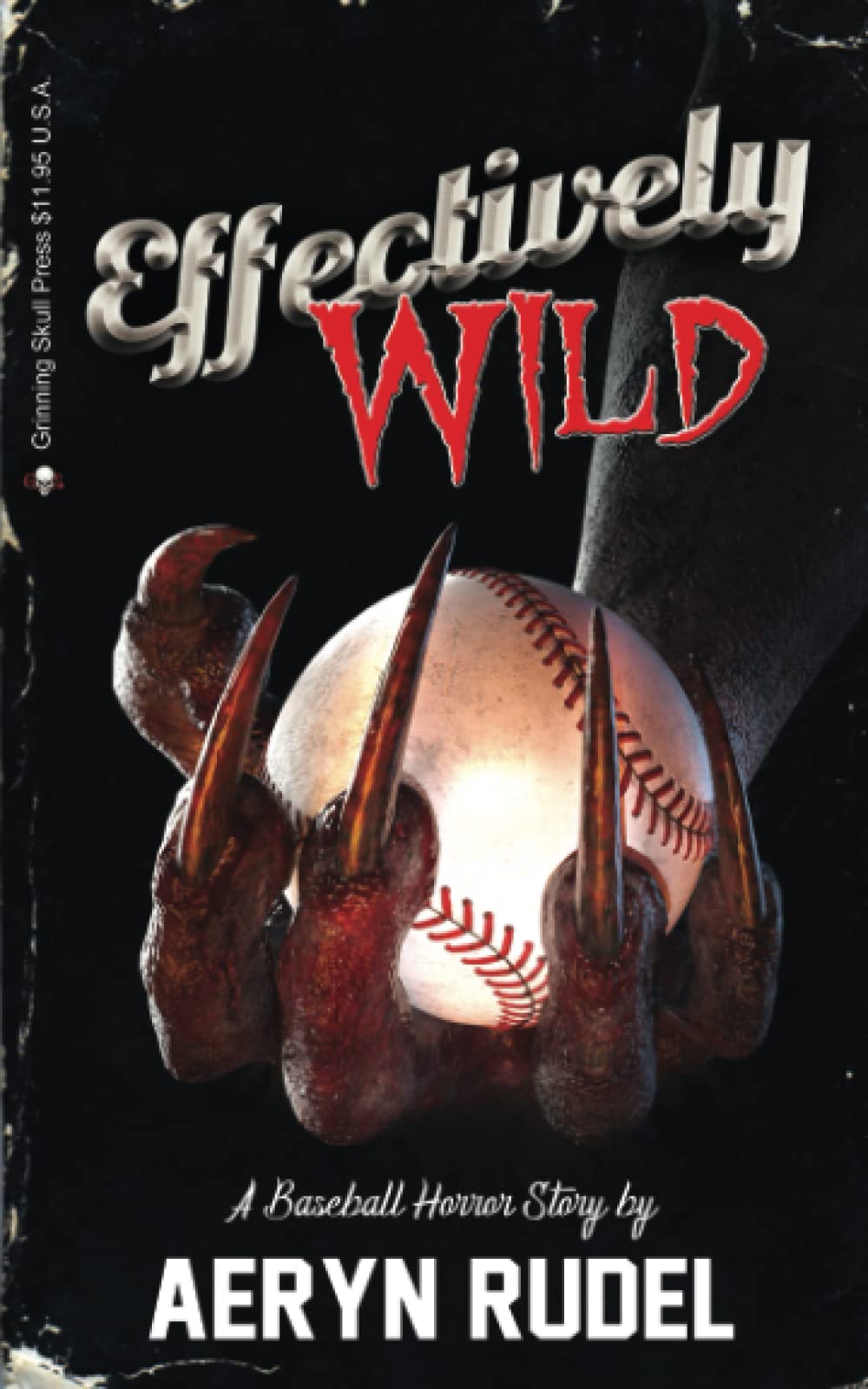
That may be why I’m surprised to realize, around the time of this year’s World Series, that two of the best stories I’ve recently read were baseball themed: Joseph S. Walker’s mystery short story “Give or Take a Quarter Inch,” first published in Tough and reprinted in The Best Mystery Stories of the Year (Mysterious Press, 2022), and Aeryn Rudel’s horror novella Effectively Wild (Grinning Skull Press, 2022).

Walker writes about a kidnapping where the ransom demand isn’t money. Instead, Ryan Vargas, a retired, Cy Young-winning pitcher whose wife has been kidnapped, comes face-to-face with a batter he had struck out three times during the batter’s only major league game nineteen years earlier. To save his wife, can Vargas give the kidnapper one last at-bat?

Rudel writes about Martin “Wags” Wagner, a washed-up catcher relegated to the minor leagues who is presented with an opportunity to return to the big leagues. All he must do is mentor a promising young pitcher—a pitcher with no experience that the organization keeps separated from the rest of the team and who gets stronger each time he takes the mound. When Wagner discovers the pitcher’s secret, he must decide how much he is willing to sacrifice to relive his own dreams.

Both Walker and Rudel captured and held my attention through their characters. In Walker’s story, Vargas’s nemesis—Mickey Loch—was as finely drawn as the protagonist, and Rudel presented an excellent portrayal of Wagner as an everyman desperate to hold onto his dream career.

While baseball is important to both stories, I found I was not hindered by my lack of knowledge of the sport. Each author provided enough information for me to understand what was happening without burdening the stories with arcane details that only true fans would appreciate.

My memory is hazy on this point, but I don’t recall my Little League team ever winning a game. On the other hand, Walker and Rudel both—to use an already over-used cliché—knock it out of the park.


My story “Little Spring” was reprinted in Haus (Culture Cult Press), marking my first official publication in India. (Several years ago I had a story published in India without my permission or prior knowledge.)

14 November 2022

Love, Murder, and The Crown


In Shakespeare's day, royalty and the nobility were the only celebrities. Writers and players were merely part of the hoi polloi, to be dazzled and fascinated by their doings and, in the Bard's case, to write about them.

In the sixteenth century, the sovereigns of England ruled as well as reigned. Shakespeare would never have dared to write the Netflix TV series The Crown, which bares the most scandalous shenanigans and dysfunctional family secrets of the House of Windsor. Nor would the Lord Chamberlain's Men have dared to produce it at The Globe. Even in the history plays, Shakespeare was careful to make the current dynasty, the Tudors, the good guys. His Richard III was such a powerful a piece of propaganda that a lot of us didn't know a case could be made for the justice of the last Plantagenet's cause until we read The Daughter of Time by Josephine Tey, one of the best mysteries of the twentieth century.

There are plenty of murders among Shakespeare's characters. Indeed, some of his plays end with the stage strewn with bodies. Some murder for love—Othello kills Desdemona in a fit of jealousy. But more often, unhappy lovers kill themselves—Ophelia, Romeo and Juliet. There's an occasional McGuffin in Shakespeare—the handkerchief in Othello springs to mind. But most of Shakespeare's plays are about winning, losing, and pursuing power. His characters usually murder for power and ambition. The Macbeths, Hamlet's Uncle Claudius, all the killers like Julius Caesar's faithless friends and schemers like Iago and Edmund the Bastard want to topple those above them and either take their place or manipulate those who do for their own advantage.

In The Crown, there are no murders. I'd say this is because modern monarchs have no power. Indeed, landed aristocrats whose titles go back for centuries no longer sit in the House of Lords, ousted in favor of Life Peers, who according to the Parliament website, "have successful careers in business, culture, science, sports, academia, law, education, health and public service. They bring this knowledge to their role of examining matters of public interest that affect all UK citizens." (My personal favorite is Baroness Cohen of Pimlico, who wrote mysteries as Janet Neel, using her civil service experience in the Department of Trade and Industry. Death's Bright Angel is another of the best mysteries of the twentieth century.) There is no ambition the members of the royal family can fulfill by killing one another. Watching the real Charles take up the burden of his throne at his mother's funeral, I didn't think he looked triumphant, but as if he'd just taken the weight of the world on his shoulders, knowing he doesn't have the power to fix it. Watching the dramatized Charles agonize his way to a divorce, which only takes place when his mother finally agrees it's the only course, can you imagine him having killed Diana to gain his freedom instead? There isn't even any malice in the ways they repeatedly hurt one another.

In one episode of Season 5, having come as close as she ever will to apologizing to Princess Margaret for forbidding her marriage to Peter Townsend many years before, the Queen says, "I love you very much." Margaret says, "I love you too." (Or maybe it's the other way around.) Then there's a shocked silence. The Queen says, "How middle class! Let's never do that again."

First I was amused. Then I thought, How would she know what middle class people do? She's never met one except to shake hands. It reminded me of a moment in Murder in Provence, where Roger Allam, playing a French detective in the Police Justiciaire in a very English way, leans over in bed, pecks his wife on the cheek, and says, "Night night. Love you—as the Americans say." That was funny too. But does it really make us hopelessly banal to express our love verbally on a daily basis? Not to guilt-trip Roger Allam or the Queen (or their clever British scriptwriters), I've done it ever since 911.

It is readily apparent, as we watch the royal family live their lives in the spacious environs of Buckingham Palace, Windsor Castle, Kensington Palace, and their other stately dwellings amid beautifully landscaped grounds, why the middle classes commit murder over love while royalty does not. Space and money make quite a difference. I enjoyed the divorce episode in which several ordinary couples who've applied for their divorce decrees explain their irreconcilable differences. Then comes a scene in which Charles and Diana, attempting to have a moment of amicable closure, can't help turning it into yet another squabble. But they do it with plenty of room to get away from each other. Kensington Palace Green and Kensington Gardens stretching away beyond the palace give them a huge bubble of peace and privacy. The settlement at issue is a matter of millions of pounds. They don't even have to attend the divorce decree hearing personally.

How many of the murders we write in which love turns to hate take place when the characters are cooped up together with no place to go and one or both of them don't have the financial means to start over?

13 November 2022

What happens in Gatineau doesn't stay in Gatineau


"By day he worked for the Canadian government as an IT specialist.

By night, he worked as a drug trafficker and becomes a federal government employee  hacker, extorting companies and others around the world as a part of a criminal ransomware gang, amassing millions of dollars in bitcoin by threatening to expose the private digital information of victims who didn't pay up.”

For those who don’t know Gatineau, its a rather sleepy community in Quebec, so near the capital of Canada, Ottawa, that many federal civil servants live there because it’s lovely, nestled in nature, and much cheaper than Ottawa. Who would have thought that an international criminal in ransomware - masquerading as a 33-year-old simple bureaucrat - lived there? He has an addiction to making money and is very dangerous.

What is ransomware? It’s a form of malicious software that blocks access to a computer or computers until a ransom payment is made.  The ransomware criminals hold sensitive information on the locked computer and threaten to release the information publicly if the payment is not made. How much? Millions of dollars. In bitcoin that can’t be traced.

For those who aren’t familiar with the Fifth Estate, it’s an amazing CBC investigative journalism program. Here is the link: https://gem.cbc.ca/media/the-fifth-estate/s48e07

My summary:

The hacker, User ID 128, has a name: Vachon-Desjardins. He doesn’t live big, he lives in a small home in a sleepy community. He just wants more money. And then, even more.

He attacked universities and health institutions during COVID-19, their most vulnerable time, to extort millions. He threatened them with losing their valuable data and releasing personal information on patients. Why? For money. “He told me … he was having an addiction to money. He always wanted more and more and more. He [didn’t] know where to stop,”

Vachon was charged in Canada and, after the FBI got involved via the ransomware attacks in the United States, he was extradited and charged there too. “I think that a lot of individuals who commit these crimes don’t think that they’ll ever stand trial in the United States. I think that the 20-year sentence was a very good deterrence piece to prevent others who might consider committing this type of conduct, that maybe they should think twice.”

Vachon-Desjardins remains in Pinellas County Jail in Clearwater, Fla., as he awaits his next hearing set for January, when restitution for his victims will be decided. He will then be assigned to a federal prison.”

Does crime pay for those who need more and more money? At first, it sure looked like it, “When police raided Vachon-Desjardins’ Gatineau home and arrested him on Jan. 27, 2021, they seized $742,840 and 719 Bitcoin, valued at approximately $21,849,087 at the time and $14,463,993 as of today.”

Today, he’s in a federal prison in the United States, serving a 20 year sentence.

What happens in a small home, in a sleepy community like Gatineau Canada? A lot apparently. And what happens in Gatineau never stays in Gatineau. It isn’t Las Vegas. Thank goodness.

Threatening institutions in Canada and the United States during COVID-19 should have a price — 20 years seems hardly enough.

12 November 2022

I Confess: New Fletch Is a Big Improvement


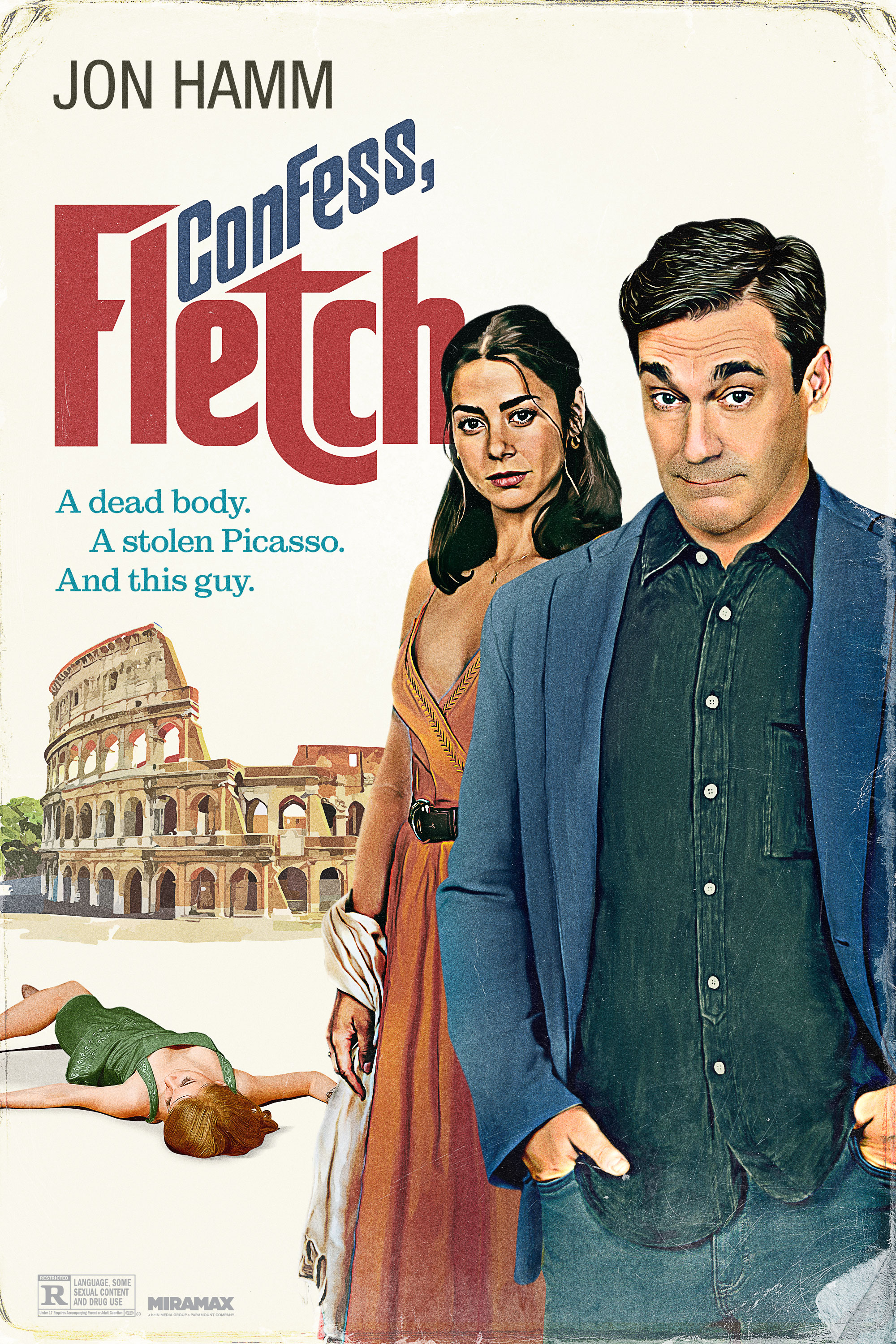
I thoroughly enjoyed the Fletch reboot. You might agree, or you might disagree, or likely you hadn't heard there is a Fletch reboot. Well, there is. September. Confess, Fletch skipped wide release and headed almost straight for streaming services, propelled by a Miramax marketing campaign so stealth it would've shamed a ninja.

Fine by me--in the short run. I last darkened a movie theater door sometime before the pandemic. I'm happy in my basement cave, the big screen primed and a glass of wine ready for crime comedy.

Jon Hamm takes up the Fletch mantle. Fletch, if you've never seen the 1980s films or read the novels, is an ex-investigative reporter turned odd combo of art writer and impromptu sleuth, with special stress on impromptu. Movie-version Fletch is forever under-thinking investigation aliases and winging his way through trouble, usually of the upper crust sort. Fletch isn't a bumbler, though. He's a glider, and given the chance, Jon Hamm glides like few can.

The film offers plenty of glide path. The set-up: An Italian count hires Fletch to help recover a stolen art collection. Fletch's contacts say one stolen piece was sold in Boston. Fletch gets wrapped up first with the client's daughter and next with Boston Homicide detectives. Fletch discovers a young woman murdered in the Beacon Street condo that his new Italian flame rented. Then the Count vanishes, presumed murdered. The more Fletch investigates, the more the crimes are connected back his girlfriend. There's an actual mystery here.

They make too few movies like this anymore. Paced but not hurried, snappy dialogue without banter, constant humor without stooping to sophomoric, a bit of style but not style-obsessed. Much too rare these days. That's my long-term worry over Confess, Fletch landing bang in my basement cave, zero marketing beyond rolling the dice on a social media buzz-let.

If Miramax thought a smart crime comedy would break the box office, Miramax would've tried that route. I get it. Jon Hamm is great, but he's a television guy, and Mad Men was a while ago. Box office leads aren't also doing Progressive commercials. Nobody casted in Confess, Fletch is pre-hyped to younger thrill-ride seekers actually buying tickets. This film franchise has been dormant for three decades. The Fletch demographic is home decompressing via binge watch.

Maybe no one wants to make movies like this anymore.

Honestly, Hollywood didn't even make the original Fletch movies like this. Fletch (1985) exists to let Chevy Chase shtick his shtick. Seriously, there have been interviews about the lack of a traditional script. The plan was Chevy. The shtick works, but it doesn't hit hard. It can't when Chevy riffs through scenes played as skits, some legit hilarious, few with conflict even decent comedies need. Shtick without story wears thin. Witness the sequel, Fletch Lives (1989). Its contribution to entertainment was that actors and crew banked a paycheck.

Confess, Fletch takes the road more scripted. Good thing, because director and writer Greg Mottola asks the cast to act their comic roles. Much of that script sticks to the source material, Gregory McDonald's Edgar-winning novel (1977). Updated for a double-generational leap, of course. The best tension onscreen isn't between Hamm and his girlfriend or any of the suspects. It's the inter-generational joust between Hamm and Ayden Mayeri's Junior Detective Griz. Mayeri is gloriously Millennial in speaking her value while learning to keep up with Fletch.

Confess, Fletch can be nitpicked. The suspects could've used character depth. More danger would've sharpened the humor. The forensics and evidentiary exposition creeps toward a high-budget episode of Castle. But smart comedy doesn't have to be inventive genius. It has to be good, and Confess, Fletch is pretty good.

Please, someone keep making films like this.


Side note only discovered while researching this: In the 1980s, Gregory McDonald relocated to Pulaski, Tennessee, sixty miles from my basement cave. McDonald got involved in local anti-Klan efforts, which makes him especially cool.