Showing posts with label short stories. Show all posts

28 January 2026

The Best is My Guest


This is my seventeenth review of the best short mysteries of the year. 

If you mention this list, and I hope you do, please refer to it as something like "Robert Lopresti's best short mysteries of the year list at SleuthSayers," NOT as the "SleuthSayers' best of..." because my fellow bloggers are ruggedly independent and may well have opinions of my own. 

18 stories made my list this year, a tie for the highest with 2017. 11 were written by men and 7 by women.  And that brings up a question that has been bugging me for a while: men have always outnumbered women on my best-of list. Does that coincide with the number of stories I read or is something else going on? So last year I kept track of the gender of the authors I read.  These charts tell the story. You can decide what the results mean.

As long as we are looking at statistics, two sources were responsible for half the winners:  Alfred Hitchcock's Mystery Magazine, with 5 stories, and Level Best with 4, Wildside scored  2.

5 stories were funny, 4, historic, and 4 had science fiction/fantasy elements. 3 were by foreign authors and 3 by my fellow SleuthSayers.

One author made the list twice this year, which I believe has happened only 4 times before.  And one author has achieved a record-breaking score of 6 appearances.

Okay, let's get started.


Andrews, Donna, "Dirty Deeds,"  in Malice Domestic: Mystery Most Humorous, edited by John Betancourt, Michael Bracken, and Carla Coupe, Wildside Press, 2025.

The protagonist  is trying to be a dutiful niece, but Aunt Josephine is not making it easy.  Niece wants her to get rid of most of the stuff that is cluttering her house in a dangerous way. She should be glad when a nosy neighbor tells her a junk removal firm has just arrived at the aunt's house, but  Dirty Deeds is not any of the companies the niece helpfully researched... 


Beck, Zöe "Abreast Schwarztonnensand," in Hamburg Noir, edited by Jan Karsten, Akashic Press, 2025.

The publisher sent me a free copy of this book. Beck is making her second appearance on this list.

This story  is written as a film script, dialog with occasional description. 

Kai-Uwe is a billionaire and the owner of a Hamburg family business. He has been cruising on the Elbe River in his yacht and has run over a man in a sailboat.  The story consists of  the man and his cronies discussing ways to avoid all responsibility, legal and financial, for the accident. 


Beetner, Eric, "The Cutting Room Floor,"  in Hollywood Kills, edited by Adam Meyer and Alan Orloff, Level Short, 2005.

Scott is editing episodes of a reality show.  Its success has been based on one of the contestants. Violet is blunt, rude, short-tempered. She "didn't come here to make friends." She was "a bad bitch and I know it, honey." She was ratings gold. 

But all bad things come to an end and she was getting kicked off the show. Who would have guessed that she wouldn't take the news well? 

Benedetto, J.F. "Never Bet Against Death,"  in Crimeucopia: A Load of Balls, edited by John Connor, Murderous Ink Press, 2025.

Tien-Tsin, China in 1901. The Boxer Rebellion has failed and Europeans and Americans have the run of the place. One of those Americans is Hezekiah Sauer, ex-cowboy, retired Marine, now a traveling man. 

An Englishman, a baronet no less, invites Sauer to watch a game of Ts'uchu or cuju, a ball game played by - gasp - women. The game is interrupted by the murder of a Russian consul and the Russian army officers who arrive to investigate enlist Sauer's aid.

Coward, Mat, "Come Forth and Be Glad in the Sun,"  in Alfred Hitchcock's Mystery Magazine, March/April 2025. 

These two mark Coward's third and fourth appearances on my best list.  

"Of all the people we have ever kidnapped, you are by far the rudest."

Gemma and Nathan, sister and brother, are the victims.  Nathan is the genius who never found anything to do with his life. Gemma is the grouchy businesswoman who runs an escape room business.

The kidnappers  are "permanent security consultants" but their boss is getting old and it "had been ages since they'd last been required to consult anyone concerning their security and their baseball bats and steel-capped boots were growing old with neglect." 

Coward, Mat, "Splash,"  in Ellery Queen's Mystery Magazine, January/February 2025.

Whatever happens -- environmental crises, pandemics, economic collapses -- rich people always end up richer, with the sole exception of those events which involve rich people having their heads chopped off.  It is largely for this reason that I am strongly in favour of rich people having their heads chopped off on a pretty regular basis.

And so we meet Pewter who has the unlikely occupation of helping the disgustingly rich (not to be confused with the merely rich or the insanely rich) find new ways to spend their money.  No doubt encounters with his clients led him to his opinion of decapitation.  But that isn't why he becomes a serial killer...


Hatcher, Alice. "Into the Weeds,"  in Alfred Hitchcock's Mystery Magazine, January/February 2025.

Mark Rousseau  is the only cop in a small town.  He laments that "There's a certain kind of loneliness that comes from living in a place where you know everyone, but where most people associate you with the worst day of their lives."

An interesting observation, but the real star here is  Mrs. Stockard, eighty-five years old and, well: "People who don't know any better -- tourists -- would probably call Mrs. Stockard 'spry' or 'feisty'. I would call her 'mean.'"

She interrupts the cop's breakfast to tell him she struck a man on a back road that morning. Not her fault, of course. He "walked into my truck... Am I talking too fast for you?"

Kudlacz, C. J. "Paradise by the Dashboard Light,"  in Bat Out of Hell, edited by Don Bruns, 2025.

Ten miles to Canada and Jacob Mills has an empty gas tank, a flat tire, and his stepfather's body in the trunk.  Oh, it's also snowing.   And he's vague about who killed Clint, largely because of his concussion.  

Mallory, Michael, "The Eyes That Won't Die," in Alfred Hitchcock's Mystery Magazine, January/February 2025.

This marks the third appearance here by my fellow SleuthSayer.

It's 1946 and Jim Beckley survived the war but, like many of his comrades, he is having trouble with the peace.  He is living with his wife (who he only met three months before they married) in a hastily built Quonset hut village for ex-GIs and their families.  Memories of people he killed are haunting him and no one seems to understand.  Jobs are hard to find and so, for Jim, is the gumption to hunt for one. 

When the ex-GI living in the other half of his barrack is murdered and dumped in the street, Jim is  suspected of the murder.  

Mansfield, Nina, "Wax On, Wax Off," in  Malice Domestic: Mystery Most Humorous, edited by John Betancourt, Michael Bracken, and Carla Coupe, Wildside Press, 2025.

Our protagonist is "Andrea Kalinski, PTA treasurer, locally known mommy-blogger, and founder of The Ageless Change, a recently launched skin-care line that targeted menopausal women." 

Unfortunately for her the Body Hair Acceptance Movement has moved into power and twenty-eight states have banned "unnatural hair removal for profit."  

Andrea is forced to go to an illegal waxing parlor to prepare for her work-and-recreation trip to Brazil, but someone gets killed.  "I hadn't signed up to investigate a murder. I wanted to battle an unjust law and wear a thong at Ipanema Beach."

Narvaez, Richie, "The Skies Are Red,"  in On Fire and Under Water, edited by Curtis Ippolito, Rock and a Hard Place Press, 2025.

The second appearance here for Mr. Narvaez.

This is an oral history of  a TV series that never aired, told in fragments of interviews with the cast and crew.  Criminal Takedown: Climate Change Cops was supposed to be the latest hit spinoff from that hugely successful television empire. 

This particular show was the brainchild  of Sal Cassady, who had made it big in hippy movies and was a dedicated environmentalist.  He thought that he could change hearts and minds by approaching the issue of climate change through the classic crime format.

Didn't quite work out.  The interviews show us a toxic combination of Hollywood ego, corporate doubletalk, denialism, and just bad (hah) chemistry. 


Phillips, Gary, "What Ned Said,"  in Hollywood Kills, edited by Adam Meyer and Alan Orloff, Level Short, 2005.

I learned a new term from this story: grief tech, the use of advanced to technology to help with the mourning process. 

In this story it refers to Ethereal Essence, a company  which uses videos, text messages, and other mementos to create a virtual reality experience between the mourner and the deceased.  The mourner here is Clayton and the deceased is his old friend Ned.  They have a terrific session together - right up to the end when Ned tells his pal that he had been murdered.


Ross, Stephen, "Murder in F Sharp,"  in Alfred Hitchcock's Mystery Magazine, September/October 2025.

Ross is a fellow SleuthSayer.

My name is Thomas Phipps, and I discovered a dead body today.

Thomas is sixteen and he doesn't have to investigate the murder because he has a strong suspicion about who did it.  Anyway, his bigger problem is that  his father wants him to keep taking classical piano lessons but Thomas wants to learn jazz.  

Simmons, Shawn Reilly,  "Level Up," in The Most Dangerous Games, edited by Deborah Lacy, Level Short, 2025.

 I have a story in this book.

Natalie is a PhD student in Medieval Literature.  No surprise then that she is in desperate financial straits.  The big surprise is when she receives an invitation from DARE+ that begins:

Congratulations! You've been selected for an exclusive opportunity to earn real money through fun challenges.  Based on your profile, you could earn up to $500 in your first week. Interested? 

What could possibly go wrong?

Spencer, David,  "The Advantages of Floating in the Middle of the Sea," in Every Day A Little Death: Crime Fiction Inspired by the Song of Stephen Sondheim, edited by Josh Pachter, Level Best Books, 2025.

Teaser is a master thief and he has scuba dived to a private island to steal an ancient Japanese artifact.  His backup team, Pran and Gadge, are following him on radio.  In a story like this the reader usually contemplates one question: Will the gang triumph or will things fall apart at the last moment?

But halfway through the story there is a plot reversal.  And suddenly the action is quite different and so are the stakes.  

Tashiro, Tia. "The Temporary Murder of Thomas Monroe,"  in Clarkesworld, #220, January 2025.

College student Tom Monroe has just been murdered, and he finds it very inconvenient, but no worse than that. You see, ihs parents are very rich and have supplied him with a medtag which alerts the authorities when he dies and they have the money to have him revived.

Someone killed Tom in order to steal his money which is protected by voice and fingerprints.  His memories of the previous two months are cloudy, due to the revival process.  Can he figure out how this happened?

Van Dessel, Jessica, "The Violent Season,"  in Alfred Hitchcock's Mystery Magazine, July/August 2025

Helen wants a divorce.  Ed is reluctantly willing to go along, so she has "the look of defiant guilt that is displayed by people who are about to get their own way."  (Ooh, that's good.) 

Problem is it is 1956 and in New York the only grounds for divorce are desertion or adultery.  Ed is willing to provide the latter.  Well, he doesn't actually want to commit adultery but he has contacts who will put him in touch with a woman willing to pretend in front of a camera.

Pretty messy stuff but it gets worse when somebody ends up murdered.  And just when Ed thinks he has that problem solved, along comes...

Walker, Joseph S. "The Right Size of Favor,"  in Sleuths Just Wanna Have Fun, edited by Michael Bracken, Down and Out Books, 2025.

Joe is, of course, another SleuthSayer. This is his sixth appearance on my best of the year list, which makes him the World Champion, so far.

My name is Josh Branson. I'm a seventh-grade English teacher, and I'm married to [private eye] Hard Line Graham's daughter.  I didn't get a summer school assignment, and Hard Line doesn't like people sitting around, so he told me I'm working for him.  He sent me here because he owes somebody a big enough favor to help Brenda Roman, but not a big enough one to show up himself.  I have precious little idea what I'm doing and I'm frankly terrified.

Brenda Roman is the county coordinator for a national charity fundraiser.  Someone is demanding a share of the money raised for charity: a protection racket.  Our teacher-turned-P.I. has no trouble finding the gangsters but they may not be so easy to deal with: "Christ, this guy's huge. He looks like he bullies offensive linemen for their lunch money." 

And that's all. Congratulations to the winners. The checks are in the mail. See you next year!


29 October 2025

Six of a Kind


I had an unusual month recently, an experience I can only describe as almost John-Floydian.  It started on a Monday when an anthology was published with one of my stories in it.  That was actually expected.  But I was surprised on Tuesday when a second anthology appeared with one of my tales.  And then I was flabbergasted when it happened again on Wednesday.

A week later at Bouchercon I was delighted to sign copies of the conference anthology with yet another of my stories in it.  Since then, two more have appeared in magazines.


I assure you, this is not my usual publication record.  But let's take a guided tour of these six literary masterpieces.

"The Cage," in Better Off Dead Vol. 1: Crime Fiction Inspired by the Songs of Elton John and Bernie Taupin, edited by D. M Barr.  I actually wrote about this  at SleuthSayers in August.  It's a story about a high school student having a bad day, following him class by class.  IMPORTANT: This book is published by Down and Out Books, which is going out of business, so if you want a copy grab it fast! 

"Lucky Night" in The Most Dangerous Games, edited by Deborah Lacy.  The shortest of six stories.  A successful businessman goes back to his hometown and attends a poker game.  Crime deals itself in... 

"The Little Death," in Celluloid Crimes, edited by Deborah Well.  A few years ago I wrote a story for Monkey Business, Josh Pachter's anthology of stories inspired by the Marx Brothers, and my protagonist was Madame Matilda, a dwarf working in a circus in the 1940s.  By the end of the story she had solved a murder and been hired by a detective agency.  "The Little Death," in which she provides security for the prizes in an art contest, is actually her third adventure.  Numbers two and four have been purchased for anthologies but have not yet been published.  I am currently polishing up on #5.

"The Unreliable Narrator," in Blood on the Bayou: Case Closed, edited by Don Bruns.  This story  is about an actor who makes his living performing audiobooks.  He's very good at his job -- except you can't count on him to show up on time and sober.  He is, you see, an Unreliable Narrator.  I was very smug when I dreamed that up.  All the stories in the book had to be set in the Big Easy so I owe a debt to O'Neil DeNoux who helped me NOLA-fy my tale.

Shanks and the High Bidder," in Black Cat Weekly, #212.  My 24th story about Leopold Longshanks, grouchy writer of crime fiction and reluctant solver of true crime.  In this one he deals with the winner of a charity auction who is reluctant to come up with the cash.  This is my second story inspired by Not Always Right, a webpage where anonymous contributors send in true tales of horrible customers. It is a huge time sink but it does provide wild story prompts.

"The Night Beckham Burned Down," in Black Cat Mystery Magazine, #16. This one was fun to write.  It was inspired by a catastrophic fire in Oregon in 1936.  Most of the bizarre events I describe really happen.  I  just had to make one of the fire victims a murder victim.  I wrote about it  at SleuthSayers last year.

But wait! There's more!  After I wrote this I learned that a seventh story was coming out in October.

"Give the Gift of Murder," in Black Cat Weekly, #216. I worked for 31 years in a university library and for some of them a campus fundraiser had the office next door.  Her job consisted of talking people into donating moolah to the university, preferably in large amounts.  It occurred to me that someone giving away money that greedy relatives might want for themselves was an obvious premise for a crime novel.  I even had the opening ready.  But my novels have not been hugely successful so I set the idea aside.  But one day I remembered my New Choice! technique and had a new thought: What if I made it much shorter?  A novella?  And immediately the pieces fell into place.  As it turned out the story is only about half as long as a novella, but I like it.  Oh, here's that opening I dreamed up:

When she found the corpse of Howard Secton III ruining the expensive Persian rug in his study, Maggie Prince's first thought was Did he sign the papers?  Her second thought was: I hate my job.

Personally, I love mine. Hoping you the same.

11 August 2025

The Long and Short of It


Guy de Maupassant
Guy de Maupassant

            The thing I like best about short stories is they’re short.

  A novel’s length can sometimes get a bit unwieldly.  When reviewing the first draft, you stumble on passages you forgot about, or failed to properly integrate into the story.  It’s sometimes hard to get a clear picture of the full narrative.  The manuscript print out is heavy and pages like to slither out of their proper order or turn themselves upside down. 

            But all-in-all, I find short stories much more difficult to write.  There’s little elbow room to blather on when you’re feeling expository.  A compelling twist is nearly always called for, but there’s no room for all the little twists, sub plots and mini mysteries you can fold into a novel that eat up pages without losing your reader’s interest.  You also probably need to have the story fairly well worked out ahead of time, not a convivial format for the pantsers in the audience.

            The shorter the page requirements, the harder it is for me to write.  Flash fiction?  Forget about it.  As a copywriter, I’d much rather be assigned a 20-page brochure than a bumper sticker or billboard.  I’ve known many in that craft for whom it’s the exact opposite.  One writer virtually spoke in puns and plays on words.  Quick quips that sparkled at the top of a print ad, but he could never settle down and compose an actual story, with a narrative arch that wasn’t punctuated by relentless witticisms.

Flannery O'Connor
Flannery O'Connor

           So it appears that fiction writers have similar predilections.  Some like to go long, others short.  It’s just a matter of brain wiring.

            I prefer short stories that  include description, character development and atmosphere that feels like a novel.  As if you were plunked down in the middle of the tale, with all the richness of a thorough backstory implied, suggested, familiar.  I also look for an interior logic, following all the rules of continuity and deference to plausibility.

            Preferences aside, if you’re writing in the crime fiction genre, something has to happen over the course of the tale.  A creative writing teacher once told me to learn the difference between a story and a mood piece, which apparently I was mostly writing.   He was one of the MFA maharishis who felt that plots were indispensable in literary fiction, bless his heart.

              If you ask Chubby Checker, there’s nothing better than a good twist.  But there is something about a bad one that wrecks the vibe.  You can twist yourself into a pretzel trying to force fit a surprise, which often comes across as contrivance.   I find it best to start out with the twist in mind, and build the whole story around it so the surprise feels entirely believable.  Even predictable if you’d only been paying attention.  Though everybody does it differently.

            I‘m often disappointed by a very good story, no fault of the author.  When I get all wrapped up I want it to last, so I can turn off the bedside light and know there’s more to come the next day.  Short stories won’t let you stay past closing time, hanging with the wait staff and watching the band fold up their equipment.  When it’s done it’s done and you’re out on the street.

O. Henry
O. Henry

            Given that modern attention spans can be measured in nanoseconds, you’d think short stories would be enjoying a heyday.  There’s no shortage of great writing or the number of publications dedicated to the art form.  But no one’s making six figure livings off short stories the way Hemingway and Fitzgerald once managed.  That’s unfortunate, especially for short story writers, but we’ll just go ahead and write them anyway.


Because, after all, they’re short.

17 May 2025

Pass the Popcorn


I watch a lot of movies. So many, actually, that I often run out of current and recent movies and wind up re-watching those I've seen many times before. At least those are easy to find: I have three dozen boxes, each holding 26 DVDs, scattered around the house, plus God knows how many more DVDs on and underneath the bookshelves here in my home office. It's enough to make my wife scream. Thank goodness I'm a great husband in all other respects (he said modestly).

Anyhow, I recently rewatched The Quiet Man, a lighthearted John Wayne/Maureen O'Hara movie set in Ireland, which on the one hand is not my usual kind of movie and on the other hand is one that I always enjoy. And it occurred to me, when it was finished and the credits were rolling, that this well-known and award-winning film was adapted not from a novel but from a short story, first published by Maurice Walsh in The Saturday Evening Post in the early 1930s. Whoodathunkit?

That, of course, got me thinking about other film adaptations from the short stuff. And since I had an upcoming and uncompleted SleuthSayers column that needed to be completed . . .

Here are my highly-biased (and always changing) picks for the ten best movies adapted from short stories:

1. It's a Wonderful Life -- from "The Greatest Gift," Philip Van Doren Stern

2. Rear Window -- "It Had to Be Murder," Cornell Woolrich

3. High Noon -- "The Tin Star," Mark Casper

4. Bad Day at Black Rock -- "Bad Day at Honda," Howard Breslin

5. The Quiet Man -- "The Quiet Man," Maurice Walsh

6. Hondo -- "The Gift of Cochise," Louis L'Amour

7. The Killers -- "The Killers," Ernest Hemingway

8. The Swimmer -- "The Swimmer," John Cheever

9. 3:10 to Yuma -- "Three-Ten to Yuma," Elmore Leonard

10. The Curious Case of Benjamin Button -- "The Curious Case of Benjamin Button," F. Scott Fitzgerald  

Five runners-up: The Birds ("The Birds," Daphne du Maurier), Stagecoach ("The Stage to Lordsburg," Ernest Haycox), The Tall T ("The Captives," Elmore Leonard), The Secret Life of Walter Mitty ("The Secret Life of Walter Mitty," James Thurber), Million Dollar Baby ("Million $$$ Baby," F.X. Toole)


Continuing with this idea of short fiction to screen, the following are my picks for the ten best movies adapted from novellas:

1. The Shawshank Redemption -- from Rita Hayworth and Shawshank Redemption, Stephen King

2. Stand by Me -- The Body, Stephen King

3. The Thing -- Who Goes There?, John W. Campbell, Jr.

4. The Mist -- The Mist, Stephen King

5. Apocalypse Now -- Heart of Darkness, Joseph Conrad

6. Silver Bullet -- Cycle of the Werewolf, Stephen King

7. Hearts in Atlantis -- Low Men in Yellow Coats, Stephen King

8. The Old Man and the Sea -- The Old Man and the Sea, Ernest Hemingway

9. The Man Who Would Be King -- The Man Who Would Be King, Rudyard Kipling

10. The Snows of Kilimanjaro -- The Snows of Kilimanjaro, Hemingway

NOTE: Yes, I like Stephen King.

Five runners-up: A River Runs Through It (A River Runs Through It, Norman Maclean), Minority Report (The Minority Report, Philip K. Dick). The Fly (The Fly, David Cronenberg), Breakfast at Tiffany's (Breakfast at Tiffany's, Truman Capote), Shop Girl (Shop Girl, Steve Martin)

Breaking news: I was reminded, by SleuthSayer Joseph D'Agnese's column yesterday, of several more good movies that started out short: Arrival, All About Eve, Brokeback Mountain, etc. (Joe, do great minds think alike, or what?)

Okay, which ones, Faithful Readers, did I leave out? Which do you think shouldn't have been included? Have you writers had any of your short stories or novella-length fiction adapted for the movies or TV? (For me, no.) Anything pending or promising? (No.) Any near-misses? (Yes.) Sold any film options? (Yes.) Do you have cinematic hopes for future projects? Who knows, right? 

Who knows, indeed. If you're like me, and none of your fictional creations have made it to the big screen, don't lose hope. Hold steady, stick to the plan, maintain the course. 

Anything's possible . . .


23 February 2025

The Horror! The Horror?


For the past few years, I've been maintaining a list of markets for short crime/mystery fiction for the members of the Short Mystery Fiction Society (obligatory plug: membership is free, and the group is open to writers, readers, editors, and anyone else interested in the form). Several times a month I go hunting for new market opportunities: magazines, websites and anthologies that might be of interest to the writers in our group. This means checking sites like Duotrope and the Submission Grinder, scrolling through social media, doing general Google searches, and so on. New magazines are relatively rare these days, but new anthologies pop up fairly often.

I'm Stephen King, and you're not.

And I've noticed something odd– or at least, something I don't quite understand.

Mystery readers can be a fairly rabid bunch, and there are a lot of them. Walk into any bookstore, and the mystery section is likely to be among the largest. So why is it that there seem to be a lot more markets for short fiction in other genres than there are in mystery?

This isn't new; it's something I was aware of even before I started keeping the markets list. I should also say that it's possible I'm just wrong about this. Maybe my perceptions are skewed somehow, or maybe I'm just not good at this kind of searching.

But, man, it certainly seems as though, for every new anthology seeking mystery stories, there are ten seeking fantasy or science fiction and fifteen or so seeking horror. It's the preponderance of horror that I always find especially confusing. Go back to that generic bookstore, and compare the size of the mystery section to the size of the horror section (you can find it by looking for Stephen King and Joe Hill). In pretty much every bookstore I've ever frequented, the mystery section is larger.

So what explains the seemingly much larger number of markets for horror? Logically, it would seems to suggest a similarly larger number of readers, but I don't see much other evidence that this is the case. Maybe it's just the case that there are a lot of horror readers who don't read anything else? Maybe horror readers are more open to short stories, while most mystery readers prefer novels?

One of the places I dabbled in horror

I should make it clear that I have nothing against horror fiction. I've dabbled in it myself, and I certainly recognize there's a lot of wonderful writing being produced in the field. My first love will always be crime, though, and I guess the bottom line is that I wish mystery writers had more opportunities to strut our stuff.

So: short column this month. It's February, after all. The main reason it's short is because I don't have an answer to this question, and I'm hoping someone will. What do you think? Are my perceptions of the current market just wrong? If they're not, what explains this?

Or maybe everyone just wants to be Stephen King?

The irony, of course, is that horror fiction has its roots in texts like Dracula and Frankenstein. Mystery fiction, by contrast, looks back to the short stories of writers like Poe and Doyle (yes, this is reductive, and yes, Doyle wrote novels about Holmes, but I think there's pretty general agreement that the stories are better).

29 January 2025

Test the Best


This is my sixteenth review of the best short mysteries of the year. I am sure  the judges of Edgars, Derringers, etc. can relax since they can simply look here for all the greats (well, except for these and those.)  

If you mention this list, and I hope you do, please refer to it as something like "Robert Lopresti's best short mysteries of the year list at SleuthSayers," NOT as the "SleuthSayers' best of..." because my fellow bloggers are ruggedly independent and may well have opinions of my own.

There are 14 winners this year, down two from 2023. Ten are by men, 4 by women. The big winner is Alfred Hitchcock's Mystery Magazine, with three stories. Ellery Queen's Mystery Magazine, Down and Out Books, and White City Press each scored 2. One author has two stories in my list, which has only happened three times before. Five stories are by my fellow SleuthSayers.

Okay. Let's get down in the dirt.

Binney, Robert J. "Restoration Software,"  in The Killing Rain, edited by Jim Thomsen, Down and Out Books, 2024.
 
This is the story of a Seattle private eye, not exactly a  native to the city, but one who has been kicking (ahem) around the northwest for a long time.  "He might be an eight-foot-tall mythological savage covered in mottled, tangled fur, but he was no dummy."   Yup. Sasquatch, P.I.

 Chase, Joslyn. "Mall Cop Christmas Parade,"  in Alfred Hitchcock's Mystery Magazine, January/February  2024.

'Tis the merry season in California and Bradford Hines has a ticket to get back to his family in Maryland.  But he's in a busy mall and before he can grab that plane he wants to grab a wallet out of a man's jacket.  That part's easy, but Brad is not as  smooth a pickpocket as he thinks and a female security guard catches him in the act.  Or is that what happens? 


 Cody, Liza, "Don't Push Me,"  in Ellery Queen Mystery Magazine, July/August 2024.

This is Cody' fourth appearance in my best of the year list. Debby "Basher" Belker is a squaddy - a British soldier.  She has seen a lot of combat overseas but this story takes place in England and the trouble starts when she sees a man beating a small boy. True to her reputation,  she hits first and asks questions after.  Turns out the boy  is a thief, but the man is selling counterfeit goods.  The police have no interest in prosecuting him but Belker takes advantage of a possibility that does not exist in the United  States: She organizes a private prosecution. The crook's bosses object...

D'Agnese, Joseph S. "When Lilacs Last in the Dooryard Bled,"  in Murder, Neat: A SleuthSayers Anthology, edited by Michael Bracken and Barb Goffman, Level Short, 2024.

I have a story in this book. Joe is a fellow SleuthSayer.

It's Greenwich Village in 1859 and eccentric people flock to Pfaff's a German-owned tavern.  When a theatre critic is murdered there  poet and regular Walt Whitman decides to solve the crime before the police find out what goes on there and shuts the joint down.

Floyd, John M.  "Hole in my Soul,"  in Janie's Got a Gun: Crime Fiction Inspired by the Music of Aerosmith, edited by Michael Bracken, White City Press, 2024.

Hard to believe this is SleuthSayer Floyd's first mention on this list. 
The narrator  saves a child from dying in a horrible accident. Then he walks off down the street with something on his mind.  The fun part is finding out what.


Hannah, James D.F. "Do You See the Light?"  in Lost and Loaded: A Gun's Tale, edited by Colin Conway, Original Ink Press, 2024.

I have a story in this book. 

John owns a record shop, selling vintage discs to fanatical collectors.  His friend Danny makes his living as a clown at children's parties, which doesn't really match his personality: "You oughta be able hunt five-year-olds for sport." They suspect a very valuable album (five figures!) might be in a wealthy home in town, and decide to try a short career as burglars. It doesn't go well.

Mallory, Michael. "Who Wants to Kill Someone?" , in Alfred Hitchcock's Mystery Magazine,  January/February 2024. 

Michael is our newest SleuthSayer. and this is his second hit on my list. 

Bruce  signs up for a hit TV show called Who Wants to Kill Someone?  The cast is flown to a Central American country and one member is assigned the role of murderer and is then actually expected to kill a fellow performer.    Bruce is given the role of murderer and learns that  not everyone is who they appear to be and the actual plot of the show is different than it seems - but no less dangerous.  


O'Connor, Paul Ryan. "No One Will Believe You,"  in Mystery Magazine, March 2024.

Ayden is a dishwasher at a restaurant in the South Bronx, sharing  an apartment with four people ( he gets the couch).  His troubles really begin when he gets mugged at gun point by the most famous actor in the world,

“You can’t get away with this,” Ayden said . “You’re a movie star . I know who you are . Everyone knows who you are .”

“No one will believe you,” Ted Pace said...


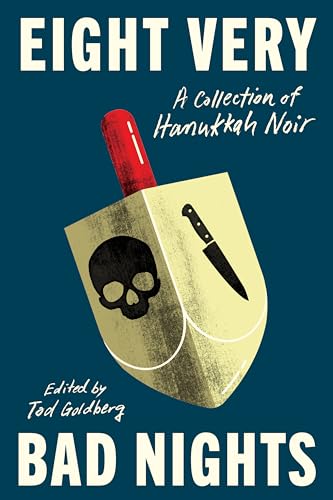
Pochoda, Ivy.  "Johnny Christmas,"  in Eight Very Bad Nights: A Collection of Hanukkah Noir, edited by Tod Goldberg, Soho Crime, 2024.

The narrator, Davo, recently got out of the army and decides to get a tattoo.  He gets linked up to an artist named Johnny Christmas and immediately recognizes him as Mike Goldfarb, who he had known many years before at the Brooklyn House of Detention. Goldfarb was awaiting trial for running over his grandmother's landlord. Twice.    A nice character study.


Rusch, Kristine Kathryn, "The Bride Case,"  in Alfred Hitchcock's Mystery Magazine, September/October 2024.

This is Rusch's fourth appearance on the list. The narrator  is an attorney, on his way to an important homicide case, but  he  looks in on a colleague  trying her first divorce case.  Something goes wrong, life-changingly wrong, and the story shifts.  Later it changes again and we get to what the story is really about, as the narrator has to really think about his relationship with the law.


Troy, Mark, "The Car Hank Died In,"  in Tales of Music, Murder, and Mayhem: Bouchercon Anthology 2024, edited by Heather Graham, Down and Out Books, 2024.

Two horny teenagers decide the perfect place to fool around is the backseat of an old Cadillac.  Couple of problems with that: 1. The driver is about to take it out for gas.  2. This isn't just any old Caddy; it's the one where Hank Williams took his last breath and is used in parades on holidays, such as the next day.  Next problem: a cowboy with a gun and bad intentions.


Walker, Joseph S. "Come On Eileen," in (I Just) Died in Your Arms, edited by J. Alan Hartman, White City Press, 2024.

Fouth story on this list by my fellow SleuthSayer,

 Liam Walsh grew up in a neighborhood called Little Dublin, ruled over by Patrick Flynn.  His father worked for Flynn, and Liam adored Flynn's daughter, Eileen. At an off-to-college party for Eileen, Flynn shot Liam's parents, killing his mother and crippling his father. Years later Liam finds out what really happened...


Walker, Joseph S. "And Now, an Inspiring Story of Tragedy Overcome,"  in Three Strikes -- You're Dead!, edited by Donna  Andrews, Barb Goffman, and Marcia Talley, Wildside Press, 2024. 

And here is greedy Joe back with a fifth story.   That ties him with David Dean for the most ever (so far). 

Lonnie Walsh is a second generation mobster.  His sister dies giving birth to the daughter of Brant, her  worthless  husband.  Lonnie has to watch over little Kayla while trying to keep idiot Brant out of trouble. Things get more complicated when Kayla has the potential to be  a world-class figure skater, if her family's reputation doesn't interfere.


Wiebe, Sam, "The Barguzin Sable,"  in Ellery Queen Mystery Magazine, March/April, 2024.

David Wakeland is a Vancouver P.I. At his mother's request he investigates the home invasion of a neighbor that included her murder and the theft of her precious fur coat, a relic that came over from Russia a century before.  It turns out that  the sable means many things to different people.  As one character says "You can't expect common sense from folks who wear weasel."

By the way, in the last month several SleuthSayers have presentied in this space  a review of their year's work.  I actually put mine up on a different site.  Feel free to take a peek.

23 December 2024

Writing Advice from 1908, Part 2


Last Wednesday I offered you some words of wisdom from Writing the Short-Story by J. Berg Esenwein.  Published in 1908, it was one of the first creative writing manuals. Here are some more of his tips, useful or otherwise.

* "As a character the detective cannot be much more than a dummy.  That is, his individuality cannot be brought out in a single short-story, except by a few bold strokes of delineation; but when he figures in a series of stories, as does Sherlock Holmes, the reader at length comes to know him quite well."

* "The novel is expansive, the short-story intensive."

* Sir Walter Scott said that "in nature herself no two scenes were exactly alike, and that whoever copied truly what was before his eyes, would possess the same variety in his descriptions, and exhibit apparently an imagination as boundless as the range of nature in the scenes he recorded; whereas -- whoever trusted to imagination, would soon find his own mind circumscribed, and contracted to a few favorite images."

* "Wise is that writer who patiently awaits the hour of full-coming before attempting to write."

* Esenwein says there are three main streams of fiction. He does not do a great job of explaining them or giving adequate examples but here you go: Realism (which "paints men as they are" and in which he suggests the author should not express a point of view), Romanticism (such as Kipling's "The Man Who Would Be King,"), and Idealism (which expresses the world as the author wishes it was, such as "A Christmas Carol.")

*"Must I typewrite my story? You need not, but you ought to.." 

* There are  many ways to tell a story. "Another variation is that in which a minor character tells of the deeds of his enemy, who is nevertheless the central figure in the story." 

* "A hackneyed device is to tell the story in the first person after having introduced the speaker by a second person, who really thus reports the story 'as it is told to me.' You may be sure of two things in this connection: a story begun in this style must possess unusual merit to offset the triteness of its introduction; and, it is a hard task to convince the reader that you could not have plunged into the story in the first person direct, relying upon the opening sentences to set the scene.  Still, if you can do it exquisitely, go ahead.  No rule in art is so good but that it may well be broken by a master stroke." I point out that Henry James' "The Turn of the Screw" was written a decade earlier.

* "All things must be looked at with an eye to their possible literary use."

* "Many an unwary author has slipped on the simple matter of forgetting that it takes time to travel here, there, and back again; that people normally get older with the lapse of years; and that events must be consistent with the procession of the seasons."

* "Wit deals with externals, humor seeks out the heart; wit consorts with contempt, scorn and hate; humor abides with friendship, benevolence and love; wit holds folly up to darting ridicule, humor looks with gentle sympathy upon weakness."

* "In the mystery story the author should begin early to set his wires so that with a single pull the whole house of bafflement may come tumbling down before our eyes, at a glance disclosing the secret. In the short-story the mystery must be less complex than the novel, hence the uncovering of the secret will require less time. But if I knew how to hold a breathless mystery up to the last moment and then disclose it all in a trice, I could not -- and perhaps would not if I could -- impart it to others.  This is the very incommunicable heart of the plotter's craft."

Some Previous Owners

* "The use of quotation marks does not convert a passage into dialogue." - Arlo Bates

* Could a story have two reasonable but different endings?  Robert  Louis Stevenson: "The whole tale is implied; I never use an effect when I can help ir, unless it prepare the effects that are to follow; that's what a story consists in. To make another end; that is to make the beginning all wrong... The body and end of a short-story is bone of the bone and blood of the bone of the beginning."

* Character's "speech must show not so much what they say as what they are." 

Near the end Esenwein lists "One hundred representative stories."  I had read eight of them (e.g. Bret Harte "The Outcasts of Poker Flat"), heard of 39 other authors, (e.g. Rudyard Kipling "The Man Who Was") and was completely unfamiliar with the rest. Such is fame, or my ignorance.

Thanks again to Mary Lou Condike for giving me much to think about.

18 December 2024

Writing Advice From 1908, Part 1


A few months ago John Floyd asked if I would be interested in a very old book about creative writing.  Mary Lou Condike had found it and offered it to him.  John didn't want it but thought I might.  I said sure, why not. Mary Lou very kindly mailed it to me and it has been part of my bedtime reading for a while.  

Writing the Short-Story by J. Berg Esenwein was published in 1908.  According to Wikipedia it is one of the first creative writing manuals.  When Esenwein wrote it he was the editor of Lippincott's Magazine.

So clearly the information was going to be a little dated.  But I thought it would be fun to see what, if anything, I could learn from this book.  Don't expect a review, just a summary of things I thought were interesting for one reason or another. Some still make sense. A few will astonish you.

* Let's start with something that appears near the end of the book which I am sure will move the hearts of all the writers out there. In discussing the processing of submitting stories to magazines Esenwein asks:  how long should you wait to hear from an editor? "If you do not get an answer in three weeks, it may be wise to drop a line courteously asking for a decision, but you had better wait the month out."  That sound you just heard was the rueful laughter of thousands of authors.  In today's modern age of mad speed and instant communication, well... I have fourteen stories out waiting for judgment by editors.  The wait is currently an average of 131 days, with the median being 95 days.  Considerably more than four weeks.  


* Esenwein tells us the oldest known story is in The Westcar Papyrus.  I had never heard of it but it turns out to be an Egyptian manuscript from roughly 1600 BCE, although the stories seem to be a millennium older.  The tales are about priests and magicians doing amazing things. If you have ever heard that cutting an animal in half and restoring it to life is "the oldest trick in the book," this papyrus is the book.

* "Men are often interested in fictional characters whom they would not care to know in life."

* Mystery writers "all introduce the detective, amateur or professional, for the purpose of unraveling the mystery before the reader's very eyes and yet concealing the key-thread until the last.  Sometimes the web  of entanglement is woven also in full sight -- with the author's sleeves rolled up as a guarantee of good faith; and the closer you watch the less you see."

Esenwein

* Character "names should be fitting. Phyllis ought not to weigh two hundred, nor ought Tommy to commit suicide. Luther must not be a burglar, Maud a washerwoman, nor John spout tepid romance.  The wrong surname will handicap a character as surely as the wrong pair of hands.  Hardscrabble does not fit the philanthropist any more than Tinker suggests the polished diplomat, or Darnaway the clergyman."

* "A man who has a stirring fact or a thrilling experience has not a story until he has used it in some proper way - has constructed it, has built it." - Walter Page 

* Esenwein gives us a list of things a short story is not: an episode, a scenario or synopsis, a biography, a mere sketch, or a tale.  In a tale "events take a simple course," but in a short-story "this course is interrupted by a complication."

* "Never write back sarcastic letters when your offerings are rejected. You may need that editor some day."

* "In the detective plot, the author seems to match his wits against the detective's, by striving to concoct a mystery which presents an apparently impossible situation. It adds to his problem that he must leave the real clue in full sight, yet so disguised that the reader cannot solve the mystery before some casual happening, or the ingenuity of the detective, shows it to the reader at the proper moment."* "To make a first-class short-story longer would be to spoil it."

* Some themes for stories may just "pop into your mind." "Sir, Madame, I am a Story. Write me up!" I wish that would happen more often.

*The advice on the left will make most modern writers, not to say editors, shudder in horror.

* Sir Arthur Phelps quotes an anonymous friend: "Whenever you write a sentence that particularly pleases you, CUT IT OUT." An early statement of "Kill your darlings."

* "Whatever may be the thing which one wishes to say, there is but one word for expressing it, only one verb to animate it, only one adjective to qualify it.  It is essential to search for this word, for this verb, for this adjective, until they are discovered, and to be satisfied with nothing else." - Flaubert

* "Write at white heat because you can think big thoughts only under stress of emotion; but revise in a cool mood."

* Esenwein criticizes writers who "debase their gifts by presenting distorted views of life, placing false values upon the things of experience, and picturing unclean situations -- all for the sake of gain." Thank heavens that never happens anymore.

This is getting long so I will give you the rest of Esenwein's wisdom next Monday.   See you then!

03 July 2024

Long Time Reviewing Shorts


Recently a discussion on the email list of the Short Mystery Fiction Society  (which you can all join for free, by the way)   led me to talking about my habit of reviewing short stories.  Some members wanted to know more and it struck me that it might be useful to go into detail here, rather than repeating myself to individuals.  So this may get a little deep into the weeds here.

In 2009 I decided to make notes on the best short mystery stories I read and I produced a list at the end of the year that ran in Criminal Brief.    I have kept that up ever since, moving it to SleuthSayers  when we started up.


In 2011 I added a wrinkle.  I started the Little Big Crimes blog where I reviewed the best short mystery story I read each week.  And I've been doing that ever since.


(By the way, I run Litle Big Crimes with Blogger, the same system that we use for SleuthSayers.  It is quirky - and that's being kind - but it has held up all these years - and it's free!)

Why do I review a story every week? Well, a bunch of reasons:

1. I enjoy reading a lot of short stories.  The reviewing process makes me feel like I am accomplishing something by reading them.

2. Since I like to read (and write and try to sell) short stories it is in my interest to encourage people to read them.

3. Finding something to write about every week forces me to think more deeply about the stories which increases my enjoyment and is good for my writing.


Why do I review the best story? I have no desire to write negative reviews of anything.  And as for producing a blistering attack on a short story - well, talk about breaking a butterfly on a wheel.

How do I decide which is the best story? That's easy.  It's the one i like the most.  If, as happens on rare occasions, I am torn between two stories, I choose the one I can think of the most interesting things to write about.

What do I get out of it besides the benefits mentioned above? One thing I don't get is any kind of payment.  It may sound odd to even mention that but I felt I had to say so in my blog a few years ago when there was a scandal about reviewers taking money.  Not that anyone ever offered!

On the other hand, some publishers (and editors and authors) have given me copies of books or magazines to review and I am grateful for that.  Last year I purchased 16 anthologies (plus magazines) so freebies are a nice change.

And that reminds me: since I believe in full disclosure I always mention at the beginning of a review if there is any factor that might have affected my choice, such as receiving a free copy, or the author being a friend of mine.  

That brings up another benefit: I have made friends with a lot of writers who thanked me for selecting them. (They hsve to find that out without help from me, by the way. Notifying them would feel like I was saying "Now what are you going to do for me?")


Another plus, of course, is that some readers find out about me because of my reviews.  This has led to my worldwide fame.  Okay, maybe not. But I do average about 1700 readers a week, and that ain't nothing.

Do I have any regrets about reviewing?  One, I don't read as many novels as I would like or even old short stories.  It's hard to keep up with even most of the mysteries.  I take off my hat to Michele Slung, who reads many more each year for Otto Penzler's best-of collections.

And another regret: I wish more women and people of color showed up in my best-of lists.  Next year I hope to keep track of how many I read of various groups and figure out how the percentages are working out.

The thing is, I really do pick the story I like best each week, and I can't change my preferences by an act of will.  One reason I have written this piece is in the hope that more people will be encouraged to write their own short story reviews.  Who knows? They may even disagree with me.  That would be very welcome!