Showing posts with label Jane Harper. Show all posts

03 August 2026

Difficult Crimes


There are certain serious crimes that seem resistant to the mystery genre. Environmental crimes, for example, are mighty hard to fit into a conventional pattern. Just how hard I discovered when I attempted a submission to fellow Sleuthsayers Rob Lopresti's ambitious anthology, Crimes Against Nature. 

     Sure there were candidates going right back to the near extermination of the buffalo, the loss of the once sky-darkening passenger pigeon, the ruination of many mountains in Appalachia, and the decimation of forests from the Pacific northwest to the Amazon. But many hands contributed to all this destruction, and it proved hard to find a plausible single criminal or criminal entity. 
    

 By their very size and scope, such crimes seem destined to escape both literature and justice, and it is far easier to pick a smaller crime, preferably with interpersonal violence, for a story. For this reason, I admire Australian novelist Jane Harper's Last One Out, which manages her usual high level of mystery plot while tracing the impact of an open pit coal mine on the environment, the local community, and, eventually, on longstanding ties among the citizens. A real tour de force, Last One Out manages to be gripping despite a minimum of action. No gun battles, no fights, no car chases in this novel. It begins in conventional fashion when Sam Crowley disappears on the evening of his twenty-first birthday, after a visit to several abandoned homes on the edge of the town of Carralon Ridge.
 
     This once idyllic rural community is under threat, both physically and financially. The enormous, unsleeping mine is steadily chewing its way toward outlying homes, but even those living in the center are aware day and night of the rumble of the works and of the fine, omnipresent coal dust drifting onto every surface.
 
     Sam had been doing a college paper on the town, interviewing residents on past and present life in Carralon Ridge and on their reactions to the town's increasingly precarious situation. The easy answer to the mystery would be to connect his disappearance to the mining company, to something incriminating he discovered, but Harper has other ideas in mind, and Sam's disappearance remains unsolved. 
 
     Five years later, grief over his loss has dissolved his parents' marriage. Ro Crowley, a medical worker, now lives in the city. Her husband, a fire watcher, remains, but now, instead of working for the town, he does the same work for the all encompassing mine. The Crowleys are only temporarily reunited when Ro returns for the annual commemoration of their son's disappearance. 
 
     What she finds is an eerie, half- deserted town. The medical center where she worked is boarded up, various businesses, likewise. Even the pub is only open irregularly. Houses are deserted, there are strange bangs and noises, coal dust is everywhere, and the town feels so strange and foreign that she is relieved when her husband messages her that he can see her through his binoculars from his fire watching post. 

    The feeling of incipient danger, of strangeness and decay, of a familiar place being out of joint, is really what makes the novel work. Yes, there are suspects, red herrings, promising speculations, but what is gripping is the spectacle of slow moving destruction on every level. 
 
     The mine machines are moving ever closer. Outlying houses have already been bought up by the corporation and leveled. Cherished farms, gardens and houses closer to the center are becoming steadily noisier, dustier, and less habitable, even as financial offers drop because who else but the mine would want the properties now. 
 
    This creeping devastation infects the human world on a more intimate level, too. All who sell save themselves at the cost of their neighbors, whose homes and life work are made more vulnerable. The devastated natural landscape produces a devastated human landscape with toxic results ranging from feral children to adult despair – to murder. 
 
    Last One Out is a good mystery. It is also a picture of the follies of certain types of progress and of in inescapable consequences of environmental destruction.

30 September 2025

Transformations


Back in the dark ages when I was first writing, most mysteries from the major houses appeared in hardback, destined for what was called the "library trade." Libraries were huge consumers of mysteries, and their book orders guaranteed a modest but reliable profit for the writer. 


Back then, our hope was to go into paperback, the new mass market offerings that promised a wider audience and, possibly, real money. Of course, this market was competitive, and even more competitive for women writers, because the big publishing houses were leery of supporting too many female authors.


With a few sterling exceptions, mysteries and thrillers were thought to be male territory, and I remember my then agent reporting that a major New York house had turned down my work on the grounds that "they already had their female mystery writer."

Times change. Now there are vast numbers of notable – and published – women writers, and ebooks, print on demand, self published, and trade paperbacks have joined mass market paperbacks. While the big movie deal remains as elusive as ever, the voracious streaming services have provided new possibilities.


In the process, outlets like Netflix and HBO have come up with a new way of delivering mystery entertainment: serials consisting of six to eight - or more- episodes that the producers hope will be binge worthy. I have enjoyed several of these lately, but significantly, all were based on unfamiliar authors and books.

The Netflix series, The Survivors, was a different matter. I have admired Australian writer Jane Harper for her clever plotting and efficient style. She also has a real mastery of setting, especially in her descriptions of the devastating fires that ravage the continent. As I had somehow missed the novel when it was released, I was eager to see the series.


I lasted two episodes. Had I not been familiar with the author, I think I would have found the video series diverting. The sea off Tasmania looks suitably threatening, the cast is attractive, and the actors are decent, with Robyn Malcolm and Damien Garvey doing especially good work as the protagonist's parents. Long happily married, Brian is slipping into dementia, leaving Verity, his devoted wife, grieving and raging and unable to stop blaming their visiting son, Elliot, for his adored older brother's death. 


Malcolm and Garvey have been given meaty rolls, and they dominate every scene they are in. They get the big emotions and the sometimes outrageous behavior, while the central characters, Elliot and his partner, Mia, come off as rather passive and colorless.


I was curious about that and when I secured the novel from our local library, I understood why. In the novel, Elliot, returning to the island after a number of years away, is our window into events. He is our observer and also, because of a grim past history, the catalyst for reminiscence, nostalgia, hostility, and grief. In print, with a slow but relentless build up of unease and unpleasantness, he works fine. 


The video is another matter. A series, just like the old time Perils of Pauline, needs an eye-catching opening, preferably for each episode. I must admit the initial scene in The Survivors, a swimmer trapped in a sea cave, is impressive. A successful serial also needs a cliff hanger at the end of each installment, dual requirements that give the episodes their characteristic rhythm.


This is perhaps why I found The Survivors, and a number of its competitors, a curious mixture, at once faster and slower than print. On the one hand, the action and the emotions are ramped up, on the other, the pacing often seems slow, with scenes needlessly elongated or clearly inserted as filler before some twist or revelation.


Of course, visibility on a major streaming service opens up a range of possibilities for a mystery writer, but at the risk of sounding terminally old fashioned, I suspect some books–and some writers– are better served by print.


28 August 2024

Cultures & Their Disconnects


I read a book this past week that my sister gave me, A Killer in King’s Cove, the first of a mystery series by Iona Whishaw, a Canadian writer new to me but maybe not to the rest of you – the first book came out in 2015, her most recent in 2024, eleven of them so far.  King’s Cove is set in 1946.  The heroine, Lane Winslow, an SOE courier and clandestine op in Occupied France during the war, and troubled with PTSD, has exfiltrated herself to the woods of British Columbia, wanting to leave her past behind.  Not, of course, to be.  Lane, much like her cousin in spirit  Maisie Dobbs, is fated by temperament, a sense of duty, and her fatal curiosity, to be drawn toward the flame.

I’m making it sound more melodramatic than it is.  The story-telling is relaxed and even a little shaggy-dog, not my usual preference for hard-boiled blunt force trauma.  It leans on charm - by which I don’t mean fey, or whimsical, or labored hillbilly slapstick.  Characters who present as genuine, not tics or tropes.  Round, in other words, in the use of the word E.M. Forster gives us, not flat.  There’s something, I may say, Canadian about this, as distinct from British, a very different kettle of fish. 

This is actually where I’m going, here.  Another book I read, recently – again, a gift, so not something I might necessarily have stumbled on, all by my lonesome – is The Lost Man, by the Aussie writer Jane Harper, known on these shores for The Dry.  And then there’s the thoroughly subversive In the Woods, an Irish procedural, Tana French’s debut novel, which I also picked up this year.

The mystery story is essentially conservative.  This isn’t an original observation, on my part.  It’s generally agreed to.  The social compact is broken, murder being the most grievous breach of the common good, and the cop, or the private dick, or the avenging angel, knits up the raveled sleeve, and repairs the damage.  This is the classic set-up of an Agatha Christie, or S.S. Van Dine; not that it isn’t corny, and readily parodied, but Christie, for all that she may be dated, still puts the bar pretty high.  And moving forward, to somebody like Ross Macdonald, even at his most anarchic, in The Chill, say, the larger purpose of a social good is served.

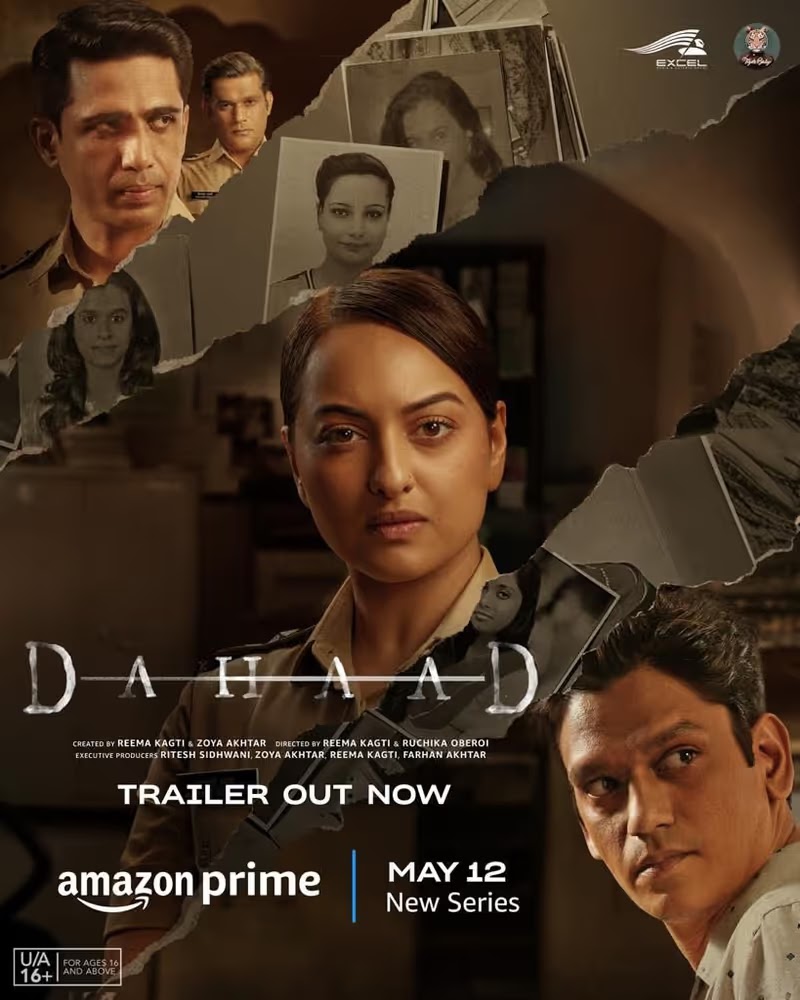
Having said that, I’ve noticed some things mysteries and police procedurals don’t have in common, when set in exotic locales: not Christie, in Death on the Nile, or Martin Cruz Smith’s Arkady Renko books, the visiting fireman, but homegrown.  We’re used to the attitudes and accents of an Inspector Morse, or an Inspector Lewis, because we’ve seen a lot of PBS Mystery, and we’ve accustomed ourselves to how the Brits present these kinds of stories.  Cable broadens the overview.  I’ve mentioned Dr. Blake (Australian), Brokenwood or My Life Is Murder (New Zealand), and Blue Lights (Irish).  I’ve also picked up on Candice Renoir, in French, and the German police series Tatort – in its many different local iterations, the Dresden version my personal favorite, the Berlin storyline disturbing and too deeply creepy, even for me.  Speaking of, I also happened on the Hindi cop show Dahaad, which I wrote about on this blog, in September of last year.  Creepy, yes, but compelling.

Here’s my point.  Watching this stuff, which can come from very different cultural biases, you can be thrown off.  The case of Tatort, for example.  The series will do half a dozen episodes per season in a particular German city, so each season you get a few in Berlin, a few in Hamburg, a few in Frankfurt, and so on.  I followed, specifically, the Dresden episodes, over three seasons.  One of the things I found fascinating about it was the hangover from the not so distant past, of East Germany.  This attitude – shame, in fact, with some of the older characters – is of course not even present when the setting is Hamburg or Frankfurt.  For a German audience, it’s a crucial subtext. 

Same thing with Dahaad, this dissimilarity, or cognitive dissonance.  If you’re used to the rhythms of Bosch, or The Wire, or Barney Miller, for that matter, watching the beleaguered but furiously obstinate Bhaati and Singh fight their corner against religious politics, misogyny, caste prejudice, and plain willful ignorance is really something to behold.  Any lesser person would cave.  And although you might harbor the suspicion that Bollywood is going to simply paper over these intransigent differences in favor of a happy ending, by the actual end, you’re pleased not to be drowned in cynicism, although the happy is ambiguous.

We find, maybe, that something’s gained in translation, rather than lost.  I know there are other examples of this phenomenon that don’t in fact work, because I’ve tried to watch them and given up, but that doesn’t signify.  What’s fascinating to me is how these shows manage as best as they do, to tell stories that only work in their own context.  It seems obvious, but it’s not, that the conventions of a narrative depend on the inner tension between discipline and chaos, and arbitrary social structures aren’t just good manners, but a survival mechanism.  In this particular narrative construct, the Western hero is often an avatar of indiscipline; that’s not the only model for a story.