Meanwhile, back at the ranch, here's another story from the New Mexico headlines.
Santa Fe's police chief just resigned. Eric Garcia was on the job for about a year and a day. His immediate predecessor, Ray Rael, served a little under three years. Before that, there was Aric Wheeler (two years), Eric Johnson (three), Beverly Lennen (three), and John Denko (four), which is some kind of record. By comparison, Cathy Lanier in Washington, DC, has been the chief there for fifteen years.
Why this pattern? you ask. We're talking about a police force with only 150+ officers, serving a population of some 69,000, which is a crappy staffing ratio, in a town with surprisingly high crime statistics for its size. Drug trafficking, gang-bangers, road rage, domestic violence, all the weaknesses flesh is heir to. From what I hear, morale in the rank-and-file, patrol officers, is pretty good, but they don't have much trust in chain of command. There seems to be a real issue with senior management. As a for instance, Chief Garcia was undermined by a group of his lieutenants who wrote a memo - leaked to the press - to the city manager, accusing the chief of favoritism in hiring practices and creating a hostile work environment. Might be something to it. In any case, it made his job all but impossible, and he quit.
It may well be that running a smaller police department is tougher than running a big one. Everybody probably knows everybody, and people hold grudges, promotions, salary levels, territory. It gets parochial. Any of us who've worked in a hierarchal company model, whether it's the military or a cubical farm, know you have to put up with dicks. It applies across the board. But active sabotage, trying to degrade a guy's authority and effectiveness, is a different order of business. It's sedition.
What happens in a situation like this, not to put too fine a point on
it, is that it jeopardizes public safety, for one, and it puts working cops in a bad position, too. If you've lost faith in the people serving over you, you're leaderless. Good generalship is as much about creating a climate of confidence as it is about strategy and politics, or communication skills. In other words, you follow a business plan. If this were the private sector, the Santa Fe PD would be in Chapter 11. I don't have anything prescriptive to suggest, because I'm not on the inside, but it seems pretty obvious the next chief can't come from the inside, because the internal divisions run too deep. Maybe it's not my place to say, but it's an embarrassment.
On the other hand, speaking as a writer, it makes for terrific soap opera, sorry to say. I like nothing better than blood in the water, everybody at daggers drawn. I use this kind of stuff all the time. It's red meat. Nothing like a good turf fight to bring out the worst. I just wish I didn't have such a wealth of material. It sucks.
12 August 2015
Hanging by Your Fingernails
Labels:
David Edgerley Gates,
New Mexico,
usual suspects
11 August 2015
No Plot. Mo' Problem.
by Melissa Yi
Do you like to plot your story, point by point?
Fantasy writer Tim Powers advocated this method at my Writers of the Future winners’ workshop. He outlines his novel meticulously, sells it on proposal, and then never gets writers’ block because he just follows the outline he already wrote.
Sounds perfect, right? Except I like to just run to the computer and type madly, before my kids wake up and/or I have to run to work. Sometimes, I have almost no idea what came out of my fingers, except it was up to 1000 words and I’m done for the day.
It means I’m a pantser (as in “flying by the seat of”). I let my characters shoot off their mouths, and possibly other body parts. They run into and out of danger. It’s a lot of fun. My characters really do surprise me, and my subconscious brain comes up with a lot of bizarre plot twists.
So the good news is that I’m 66,000 words into my latest Hope Sze novel, Human Remains.
The bad news is that I haven’t decided on a plot.
For me, if I don’t have a good plot, I don’t have the backbone of my mystery. Even though Kris Rusch and Dean Wesley Smith teach that character and setting are the keys of mystery, especially important in a series character, I just can’t get a handle on a book when I’m constantly spinning new plot points and antagonists. It’s CRAZY.
Usually, I end up punching a bunch of words out, throwing half of them in the garbage, then stitching the survivors into a slamming good story, but it takes me so much time and energy that I spend a year or longer writing each mystery and I’m wrung out by the end of it.

So I probably should plot more.
What about you? Do you like to write into the darkness, or craft each scene in advance?A lil’ bit o’ both? Or just check out some illustrious suggestions from Jan Grape, which I discovered after I’d already written this column….
Fantasy writer Tim Powers advocated this method at my Writers of the Future winners’ workshop. He outlines his novel meticulously, sells it on proposal, and then never gets writers’ block because he just follows the outline he already wrote.
Sounds perfect, right? Except I like to just run to the computer and type madly, before my kids wake up and/or I have to run to work. Sometimes, I have almost no idea what came out of my fingers, except it was up to 1000 words and I’m done for the day.
| My kids need supervision. |
It means I’m a pantser (as in “flying by the seat of”). I let my characters shoot off their mouths, and possibly other body parts. They run into and out of danger. It’s a lot of fun. My characters really do surprise me, and my subconscious brain comes up with a lot of bizarre plot twists.
So the good news is that I’m 66,000 words into my latest Hope Sze novel, Human Remains.
The bad news is that I haven’t decided on a plot.
For me, if I don’t have a good plot, I don’t have the backbone of my mystery. Even though Kris Rusch and Dean Wesley Smith teach that character and setting are the keys of mystery, especially important in a series character, I just can’t get a handle on a book when I’m constantly spinning new plot points and antagonists. It’s CRAZY.
Usually, I end up punching a bunch of words out, throwing half of them in the garbage, then stitching the survivors into a slamming good story, but it takes me so much time and energy that I spend a year or longer writing each mystery and I’m wrung out by the end of it.

So I probably should plot more.
What about you? Do you like to write into the darkness, or craft each scene in advance?A lil’ bit o’ both? Or just check out some illustrious suggestions from Jan Grape, which I discovered after I’d already written this column….
Labels:
Dean Wesley Smith,
Melissa Yi,
plots,
plotting,
writing
Location:
South Glengarry, ON, Canada
10 August 2015
Where Do You Get Your Ideas?
by Susan Rogers Cooper
Back in the early 90's,
I saw an article in the Austin paper about a family tragedy. The
mother committed suicide in her car by carbon monoxide poisoning, but
the garage was attached to the house and the door didn't shut
properly. Her husband and three children all died. When
investigators entered the house, they found a filthy horror – open
pizza cartons next to dirty diapers, all three children on a mattress
on the floor of a bedroom, sharing space with food and more dirty
diapers.
But there was more to
this story. In interviewing the mother's co-workers they found a
real estate agent who was always dressed to the nines, and had a
pristine car in which to take clients to view homes. The teachers at
the two older children's school said the children were healthy and
well dressed and quite respectful.
Reading this article I
had one burning question: What happened to this woman when she
stepped over the threshold of her own home? There was no answer in
the article. It ended with the sad news that no extended family
members ever claimed the bodies, and the only reminder of this family
was a plaque on the playground of the school the older children
attended.
And I kept asking myself
why?
Since
there were no answers given, I decided to make up my own, and wrote
OTHER PEOPLE’S HOUSES, the third Milt Kovak mystery.
Years
ago at a convention I heard two writers belittled the often asked fan
question: “Where do your ideas come from?” They thought it was a
dumb question. I disagree. I think the origin, the nut, of the idea
is fascinating, and have asked the question myself of fellow writers.
In 1998, I went w/ my extended family to St. John
in the U.S. Virgin Islands. It was my daughter and me, along with
both my brothers, their wives, and my two nephews. We rented a large
house on the water and when we finally got to the island, a real
estate lady led us to the house and then took us on a tour,
explaining garbage pick up and water delivery (there’s very little
water on St. John so it has to be shipped in from one of the larger
islands.) In the middle of the living room, the real estate lady
lifted up a section of the ceramic tile floor to reveal a cistern –
a hole in the middle of the living room floor where the water was
stored. Every single member of my family turned and looked at me.
Finally, one of them said, “What a great place to hide a body.”
The
real estate lady turned a little green and we had to explain my
penchant for hiding dead bodies.
But
that’s exactly what I did. In DON’T DRINK THE WATER, E.J. Pugh
and her husband, her three sisters and their significant others, go
to St. John and stay in the exact same house. First day in, the
water pressure is way off – no one can take a shower, they go to
investigate and voila!
All
our ideas come from somewhere and is it any wonder that fans who love
our books want to know where that kernel came from? If a writer
can't answer that question, maybe the problem is theirs.
Just
last week I was talking w/ a friend who had just taken her young
daughter to the circus. She said they were standing around before
the show, looking at the animals. Three year old Marissa was
fascinated w/ the elephants. My friend said it made her nervous
because they were so big, and what would happen if one of them got
spooked?
And
I thought, hum? What would happen? And how could you spook an
elephant? A dart gun loaded w/ amphetamines? Then the elephant
starts charging everything in site? And why? Because – because –
because there’s this witness, see, that you need dead. But it
needs to look like an accident, so---
That’s
where ideas come from.
09 August 2015
Rocky King: The Hermit’s Cat
by Leigh Lundin
As mentioned last week (2nd August), Rocky King, Detective was shot live. Besides the thread of the plot, it adds a level of interest for me as I figure out how they managed the telecast on live television from the DuMont Studio premises.
This episode contains an outdoor scene utilizing a couple of different shots. The oncoming car headlights sequence is cleverly done. I imagine a couple of small light bulbs on a black-painted board moving closer to the camera. The camera shows a car wheel, not an actual car itself, rolling to a stop against the victim’s body. The scene in the garage was assembled with only a few props; at no time did the cameras leave the studio.
Note the touches of humor, some of it self-deprecating.
My apologies to Bonnie Stevens; even Rocky King, Detective, wasn't able to save the cat.
Grab your popcorn, settle in your armchair, and watch…
The Hermit’s Cat
broadcast: 1952-Aug-31
in which a cat dies and a lawyer loses the will to marry…
This episode contains an outdoor scene utilizing a couple of different shots. The oncoming car headlights sequence is cleverly done. I imagine a couple of small light bulbs on a black-painted board moving closer to the camera. The camera shows a car wheel, not an actual car itself, rolling to a stop against the victim’s body. The scene in the garage was assembled with only a few props; at no time did the cameras leave the studio.
Note the touches of humor, some of it self-deprecating.
Norton (gardener): “I like to read these and sometimes I get scared.”Notice the hideous clown picture in the King family’s house at the beginning of the episode… it will come up again before the episode ends.
R.King: “Oh, detective magazines, huh. You can find out a lot from these, here.”
Norton: “They sure kill people funny ways, don’t they.”
R.King: “That depends on your sense of humor.”
My apologies to Bonnie Stevens; even Rocky King, Detective, wasn't able to save the cat.
Grab your popcorn, settle in your armchair, and watch…
The Hermit’s Cat
broadcast: 1952-Aug-31
in which a cat dies and a lawyer loses the will to marry…
Labels:
DuMont,
Leigh Lundin,
Rocky King,
television
Location:
515 Madison Avenue, New York, NY
08 August 2015
Saving the Cat
by Unknown
In the delightful Albert Brooks movie Defending Your Life
(1991), the souls of the dead go to Judgment City, where they must
prove they deserve to break free from the reincarnation cycle and move
to a higher level of existence. During trials, prosecutors and defenders
support their arguments by showing film clips from the dead person's
life. (Yes, your most paranoid fantasies are true: Everything you've
ever done has been filmed and filed, and can eventually be used against
you.) The onward progress of Meryl Streep's character is assured by a
clip from the night her house caught fire. We see her rushing out of the
burning building, leading her two children to safety. Then we see her
rushing back in, flames all around her, to emerge moments later with the
family cat safe in her arms.
I don't know if Blake Snyder had this scene in mind when he wrote his 2005 guide to screenwriting, Save the Cat! It seems possible. Snyder defines a Save the Cat scene as "the scene where we meet the hero and the hero does something--like saving a cat--that defines who he is and makes us, the audience, like him."
True, he admits, not all protagonists are sterling sorts likely to save cats or help old ladies across the street. He cites Pulp Fiction as an example of a movie with protagonists who are, to put it mildly, not very nice. (But even then, he argues, the writers manage to get us interested in the protagonists, to come close to sympathizing with them.)
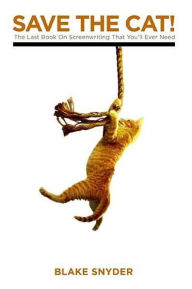
I think many insights in Snyder's book apply not only to movies but also to novels and stories. As a writer, I've found his ideas about plot structure helpful, and I've been careful to include Save the Cat scenes in the first chapters of my recently released novel (Interpretation of Murder) and my soon-to-be-released young adult novel (Fighting Chance). Much as I'd love to talk about my own books, though, I decided more authoritative examples would provide more convincing support for Snyder's ideas. So I pulled some mysteries and thrillers from my bookshelf, not quite at random, and looked for Save the Cat scenes.
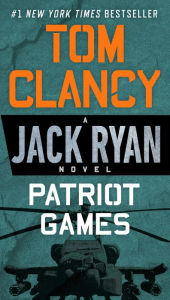
I'll start with an obvious example, Tom Clancy's Patriot Games. Jack Ryan is strolling down a London street with his wife and daughter when he hears an explosion. Grenade, he realizes instantly. He hears a burst of gunfire, sees a Rolls Royce forced to a halt in the middle of the street, sees one man firing a rifle at it and another man racing toward its rear. IRA, Ryan thinks. He yanks his wife and daughter to the ground to keep them safe. Then he takes off. He tackles one attacker, grabs his gun, shoots the other attacker. Ryan gets shot, too, in the shoulder, but he hardly notices. He's done what he had to do. He's protected his family and stopped the attack. He's saved the cat.
The second book I looked at was Dick Francis' Banker. Even before I read Save the Cat, I'd noticed how often Francis uses his first chapter to make us like and admire his protagonist. Banker begins when one of Tim Ekaterin's co-workers looks out a window at the bank and sees an executive, Gordon Michaels, standing fully clothed in the courtyard fountain. The co-worker exclaims about it but does nothing more. Ekaterin "whisk[s] straight out of the deep-carpeted office, through the fire doors, down the flights of gritty stone staircase and across the marbled expanse of entrance hall." He rushes past a "uniformed man at the security desk," who presumably should know how to handle unsettling situations but instead stands "staring . . . with his fillings showing," past two customers who are frozen in place, "looking stunned." "I went past them at a rush into the open air," Ekaterin says, "and slowed only in the last few strides before the fountain." He tries to reason with his boss and learns Michaels is gripped by hallucinations about "people with white faces," who are following him and are, presumably, up to no good. The chairman of the bank, a "firm and longtime" friend of Gordon Michaels, scurries into the courtyard. "My dear chap," he says to his friend, but evidently can think of nothing else to say, nothing else to do. He turns to Ekaterin."Do something, Tim," he says.
Then there's Harry Kemelman's Friday the Rabbi Slept Late, the Edgar-winning first novel in the Rabbi Small series. David Small doesn't have much in common with Jack Ryan. He's slight and pale, he'd trip over his own feet if he tried to tackle a terrorist, and if he picked up an a bad guy's gun, he wouldn't know how to fire it. But he takes decisive actions when, in Chapter One, two of his congregants are locked in a silly dispute about damages to a car one borrowed from the other. The two men are longtime friends, but neither is willing to admit he could be at fault, and both are so angry and frustrated they refuse to talk to each other, or even to pray in the same room. Rabbi Small persuades them to submit their case to an informal rabbinic court at which he presides. As he explains his judgment, he applies centuries-old Talmudic principles to this contemporary situation, displaying deep knowledge of complicated texts, impressive mental agility, and penetrating insight into human nature. By the time he's finished, the two men are friends again, relieved to put their differences behind them. The dispute about the car has no relevance to the novel's central mystery, to the murder that hasn't yet been committed. But the scene has served its purpose. We like and admire Rabbi Small and want to keep reading about him. And, once again, the cat is safe.
I'm not saying Rebecca isn't good. The quality of the writing impresses me, the situation beginning to develop in Chapter Three intrigues me, and generations of readers have loved this novel. There must be wonderful things lying ahead. But I've got to admit I missed a Save the Cat scene. As I read the opening chapters of Rebecca, I kept waiting for the narrator to do something.She didn't.
That, I think, is the essence of the Save the Cat scene. As Snyder says in his definition, "the hero does something"--his italics. Or, as the befuddled chairman in Banker says, "Do something, Tim"--my italics.
I think readers are drawn to protagonists who do things. I'd guess that's probably true of most readers, especially true of mystery readers. In mysteries, after all, there's always a problem to be solved, an injustice to be set right. Sitting around and feeling overwhelmed by circumstances doesn't cut it. Feeling sorry for oneself definitely doesn't cut it. If we're going to commit ourselves to spending time with a protagonist, we mystery readers want it to be someone who responds to a tough situation by taking action. We can forgive a protagonist who makes mistakes. Passivity, though--that's harder to forgive.
I fully intend to read the rest of Rebecca. But not yet. While I was browsing through my bookshelves to find examples for this post, I got hooked by a protagonist who does things, who knows how to save a cat. I'll finish reading Rebecca right after I finish re-reading Friday the Rabbi Slept Late.
Labels:
B.K. Stevens,
Daphne Du Maurier,
Dick Francis
Location:
Hampden Sydney, VA, USA
07 August 2015
Biker Gangs & the Military
by R.T. Lawton
Myth has it that the Hell's Angels MC was started up by a group of military pilots in the years after World War II ended, however the current H.A.'s dispute that version of their origin. After some historical checking on their part, they claim there were several aviation units in WWII that used the name Hell's Angels as their unit's designation, but none of those were the guys who started the motorcycle gang. Myth or reality, it's not the past we have to worry about. Instead, we should be concerned with the current relationship between motorcycle gangs and the members of our nation's military, and where this relationship is going.
Several motorcycle gangs across America are now actively trying to recruit members of our military services. Why is that, you ask? Because people with military training have a multitude of skills that gangs can utilize to make their criminal endeavors stronger and more efficient. Weapons and explosives are two areas of expertise that gangs can turn into immediate use in their bids for territory and dominance in the environment of motorcycle gangs, or to make inroads into illicit business enterprises run by other criminal organizations, and even to make money from legitimate businessmen.
Other military skills such as combat tactics, communications and security also help the gang to tighten up their game, making it harder for a rival gang to compete against them. It can also make it more difficult for law enforcement to catch them in their criminal acts and then bring them successfully to trial.
For some military members back from deployment in a hostile country, a motorcycle gang offers the allure of continuing the excitement and adrenaline. An "us against them" mentality of being part of a special group. And, with the structured chain of command set up in most motorcycle gangs, it's a familiar type of leadership situation for the serviceman to transfer into.
Naturally, our military leaders have strong concerns about their people joining the ranks of any criminal organization. If it can be proved that a serviceman has an affiliation with a banned group, then he or she can be subject to discharge.
To avoid the appearance of an open affiliation, at least one gang, the Sons of Silence MC, has allegedly created a subgroup known as the Silent Warriors. This subgroup, according to two sources close to the SOS MC, is made up mostly of active members of the military. What can a Silent Warrior do for a 1% motorcycle gang? Well, for one thing, being an active member of today's military requires that person to have a clean record with law enforcement. And what does it take to purchase a firearm these days? Right, a records check. His clean record makes it easy for a Silent Warrior to conduct straw purchases of firearms for the gang.
As is necessary for their duties and training, members of the military have access to assault weapons, ammunition, explosives and detonators, night vision googles, ballistic vests and other equipment desirable for fighting against other groups. Of course when the military realizes that equipment has gone astray, they take follow-up action. For instance, our local army post locks down the entire fort while they search for the missing items. But, since the army also has other important matters to tend to, at some point, whether it is days or weeks, the lock down is lifted and the fort opens up again even if the stolen or "misplaced" items have not been located.
From time to time, agents from the Army CID, the ATF or other law enforcement agencies will conduct undercover operations to arrest those personnel who attempt to remove military equipment and weapons out through the back door. Unfortunately, it's impossible to catch every violator or to retrieve every stolen item. Some of those goods still get out to various criminal organizations, to include those motorcycle gangs which are actively pursuing them.
So what's the answer?
Good question.
Several motorcycle gangs across America are now actively trying to recruit members of our military services. Why is that, you ask? Because people with military training have a multitude of skills that gangs can utilize to make their criminal endeavors stronger and more efficient. Weapons and explosives are two areas of expertise that gangs can turn into immediate use in their bids for territory and dominance in the environment of motorcycle gangs, or to make inroads into illicit business enterprises run by other criminal organizations, and even to make money from legitimate businessmen.
Other military skills such as combat tactics, communications and security also help the gang to tighten up their game, making it harder for a rival gang to compete against them. It can also make it more difficult for law enforcement to catch them in their criminal acts and then bring them successfully to trial.
For some military members back from deployment in a hostile country, a motorcycle gang offers the allure of continuing the excitement and adrenaline. An "us against them" mentality of being part of a special group. And, with the structured chain of command set up in most motorcycle gangs, it's a familiar type of leadership situation for the serviceman to transfer into.
Naturally, our military leaders have strong concerns about their people joining the ranks of any criminal organization. If it can be proved that a serviceman has an affiliation with a banned group, then he or she can be subject to discharge.
To avoid the appearance of an open affiliation, at least one gang, the Sons of Silence MC, has allegedly created a subgroup known as the Silent Warriors. This subgroup, according to two sources close to the SOS MC, is made up mostly of active members of the military. What can a Silent Warrior do for a 1% motorcycle gang? Well, for one thing, being an active member of today's military requires that person to have a clean record with law enforcement. And what does it take to purchase a firearm these days? Right, a records check. His clean record makes it easy for a Silent Warrior to conduct straw purchases of firearms for the gang.
As is necessary for their duties and training, members of the military have access to assault weapons, ammunition, explosives and detonators, night vision googles, ballistic vests and other equipment desirable for fighting against other groups. Of course when the military realizes that equipment has gone astray, they take follow-up action. For instance, our local army post locks down the entire fort while they search for the missing items. But, since the army also has other important matters to tend to, at some point, whether it is days or weeks, the lock down is lifted and the fort opens up again even if the stolen or "misplaced" items have not been located.
From time to time, agents from the Army CID, the ATF or other law enforcement agencies will conduct undercover operations to arrest those personnel who attempt to remove military equipment and weapons out through the back door. Unfortunately, it's impossible to catch every violator or to retrieve every stolen item. Some of those goods still get out to various criminal organizations, to include those motorcycle gangs which are actively pursuing them.
So what's the answer?
Good question.
06 August 2015
History: a Study in Coincidences
by Brian Thornton
"We are continually shaped by the forces of coincidence."
– Paul Auster
Have you ever heard the one about how two men, born one year and and a hundred miles apart, went in different directions while still children, and grew up to be antagonists in this country's greatest internal struggle, the American Civil War?
Yes, that's right, Jefferson Davis, born in 1808, just outside what is now Fairview, Kentucky, spent his earliest days just about a hundred miles due west of Hodgenville, Kentucky, the closest metropolitan center to the hardscrabble farm that became the birthplace of Abraham Lincoln in 1809.
Davis' family moved south into the newly-settled lands along the lower Mississippi, where his father quickly established a successful plantation. Lincoln's father–an illiterate carpenter who resented both the slaves his elder brother had inherited along with the family farm upon their father's death and how slave labor undercut the fees free tradesmen could charge–uprooted his family and moved north, across the Ohio River into Indiana, and eventually into southern Illinois.
This is just one example of the coincidences which pop up in history from time to time. I mean, think about it: through a coincidence of birth, the first openly abolitionist president and one of the antebellum South's wealthiest slave-owning politicians were born within a year of each other, in the same state, nearly next-door to each other, and yet look how differently they turned out!
Here's one you may not have heard about though.
Two men, born on adjacent Caribbean islands, within five miles of each other, their birth places separated only by a shallow, two mile-wide stretch of ocean known as "The Narrows." Both of these men were born out of wedlock to members of their respective island's planter class. Both of their fathers were British-born and raised, coming out to the "Sugar Islands" seeking their fortunes.
Both of these men early demonstrated so much native intelligence that they were sent abroad (One to England, the other to New York City) to receive an education superior to the one they could have received at home.
Both of these men became very successful in both business and politics. They were both products of slave-holding societies during the 18th century, and it was on the subject of slavery that these two men could not have been further apart. One of them, impressed by the writings of Enlightenment philosophers on the subject, became a confirmed abolitionist at a time when it was rare for a gentleman, even those who found slavery distasteful, to express an interest in completely destroying the practice.
The other inherited his father's sugar plantation back home, and owned slaves until the very day the practice was abolished.
Oh, and there was one other area in which the two men vastly differed. Ethnically. One was Scottish and English, and the other was the half-Welsh son of a plantation owner and one of his black slaves, and thus born into slavery himself.
Care to guess which one was the abolitionist, and which one was the slave-owner?
Tune in right here in two weeks to find out.
Feel free to express an opinion or hazard a guess in the comments section.
See you in two weeks!
"We are continually shaped by the forces of coincidence."
– Paul Auster
Have you ever heard the one about how two men, born one year and and a hundred miles apart, went in different directions while still children, and grew up to be antagonists in this country's greatest internal struggle, the American Civil War?
Yes, that's right, Jefferson Davis, born in 1808, just outside what is now Fairview, Kentucky, spent his earliest days just about a hundred miles due west of Hodgenville, Kentucky, the closest metropolitan center to the hardscrabble farm that became the birthplace of Abraham Lincoln in 1809.
Davis' family moved south into the newly-settled lands along the lower Mississippi, where his father quickly established a successful plantation. Lincoln's father–an illiterate carpenter who resented both the slaves his elder brother had inherited along with the family farm upon their father's death and how slave labor undercut the fees free tradesmen could charge–uprooted his family and moved north, across the Ohio River into Indiana, and eventually into southern Illinois.
![]() |
| Davis' Birthplace in Kentucky – There is no accurate depiction of Lincoln's birthplace |
This is just one example of the coincidences which pop up in history from time to time. I mean, think about it: through a coincidence of birth, the first openly abolitionist president and one of the antebellum South's wealthiest slave-owning politicians were born within a year of each other, in the same state, nearly next-door to each other, and yet look how differently they turned out!
Here's one you may not have heard about though.
Two men, born on adjacent Caribbean islands, within five miles of each other, their birth places separated only by a shallow, two mile-wide stretch of ocean known as "The Narrows." Both of these men were born out of wedlock to members of their respective island's planter class. Both of their fathers were British-born and raised, coming out to the "Sugar Islands" seeking their fortunes.
![]() |
| The view from one of the Caribbean Islands mentioned above to the other Caribbean island mentioned above |
Both of these men became very successful in both business and politics. They were both products of slave-holding societies during the 18th century, and it was on the subject of slavery that these two men could not have been further apart. One of them, impressed by the writings of Enlightenment philosophers on the subject, became a confirmed abolitionist at a time when it was rare for a gentleman, even those who found slavery distasteful, to express an interest in completely destroying the practice.
The other inherited his father's sugar plantation back home, and owned slaves until the very day the practice was abolished.
Oh, and there was one other area in which the two men vastly differed. Ethnically. One was Scottish and English, and the other was the half-Welsh son of a plantation owner and one of his black slaves, and thus born into slavery himself.
Care to guess which one was the abolitionist, and which one was the slave-owner?
Tune in right here in two weeks to find out.
Feel free to express an opinion or hazard a guess in the comments section.
See you in two weeks!
Labels:
coincidence,
slavery
Location:
Renton, WA, USA
05 August 2015
As long as a piece of string
by Robert Lopresti
If you catch me talking to myself, don't worry. No more than you usually worry about me, anyway. I am practicing - rehearsing, I suppose. In a few weeks I will be doing a signing at my local bookstore, and I will be reading from my new novel.
Which brings up an old question: how long should one of those events be? My feeling is this:
* Five minutes of introductory prattle
* 20-30 minutes of reading
* Half an hour of Q&A.
* Two hours of frenzied crowds standing in line for autographed copies.
Okay, the last bullet is sheer fantasy, but do the rest of them sound right to you?
When
my book of short stories came out last year I picked out a few
fragments that added up to twenty minutes and thought I had nailed it.
But a friend of mine said that he thought it had been too short.
Trust me when I say I am not used to people telling me I don't talk enough. That is not the standard complaint.
There is another complication in this case. My current book, being about the Mafia, features a good deal of violence, sex, and profanity. And I ain't reading those scenes out loud.
I deliberately created a few key scenes at the
beginning that are free of those three special treats, figuring that those are the ones I would read. Turns out they aren't long enough, so I expect I will
bowdlerize a few naughty words, warning the audience in advance that they are being subject to censorship. Any
thoughts on that are welcome.
Hey, maybe nobody will show up and I won't have to worry about it. But, regrettably my friends are extremely loyal and I can count on them. Terrible the way I suffer.
So, writers: how do you organize a reading? And readers: what do you hope for at one?
If you catch me talking to myself, don't worry. No more than you usually worry about me, anyway. I am practicing - rehearsing, I suppose. In a few weeks I will be doing a signing at my local bookstore, and I will be reading from my new novel.
Which brings up an old question: how long should one of those events be? My feeling is this:
* Five minutes of introductory prattle
* 20-30 minutes of reading
* Half an hour of Q&A.
* Two hours of frenzied crowds standing in line for autographed copies.
Okay, the last bullet is sheer fantasy, but do the rest of them sound right to you?
When
my book of short stories came out last year I picked out a few
fragments that added up to twenty minutes and thought I had nailed it.
But a friend of mine said that he thought it had been too short.Trust me when I say I am not used to people telling me I don't talk enough. That is not the standard complaint.
There is another complication in this case. My current book, being about the Mafia, features a good deal of violence, sex, and profanity. And I ain't reading those scenes out loud.
I deliberately created a few key scenes at the
beginning that are free of those three special treats, figuring that those are the ones I would read. Turns out they aren't long enough, so I expect I will
bowdlerize a few naughty words, warning the audience in advance that they are being subject to censorship. Any
thoughts on that are welcome.Hey, maybe nobody will show up and I won't have to worry about it. But, regrettably my friends are extremely loyal and I can count on them. Terrible the way I suffer.
So, writers: how do you organize a reading? And readers: what do you hope for at one?
04 August 2015
The Importance of Mentors
by Barb Goffman
![]() |
| Photo by Robin Templeton |
I'm so pleased to be joining the SleuthSayers blog. As I contemplated what to write in my first post here, I remembered another time when I was the new kid. It was the summer of 1993, and I was interning as a reporter at Newsday on Long Island. Newsday is a big newspaper now, but back then it was even bigger--its circulation placed it in the top ten of US daily newspapers. Getting that summer job was a huge deal, and I arrived on my first day excited and eager and more than a little nervous. And then I met my editor for the summer, Dennis Bell.
![]() | |
| Dennis Bell |
But Dennis was more than that. He was a guy who started out at Newsday as a janitor, and he worked his way up and became a reporter. He went on to win a Pulitzer Prize as part of a reporting team sent to cover famine in Ethiopia. And then he became an editor and tried to help young people succeed, just as he had. Dennis was a role model, someone I hoped to emulate in my career, and someone I hoped to keep in touch with forever.
Forever came to a screeching halt two years later when Dennis died. To this day, I'm still a bit heartbroken.
Yet Dennis lives on, not only in my memory, but surely in the memories of all the reporters who worked for him on the Suffolk County desk, as well as his family and friends. He lives on as reminder to work your hardest--you never know how far you can go--but to also have a little fun along the way. I hope to do that here at SleuthSayers: a good job talking about writing, and having a little fun while I'm at it.
![]() | |
| My dog, Jingle. More on him later. |
I've had the good fortune to win the Macavity and Silver Falchion awards for my short stories, and I've been named a finalist for other awards (eight times for the Agatha, and three times each for the Macavity and Anthony awards). Two years ago, Wildside Press published my first collection of short stories, Don't Get Mad, Get Even, which won the Silver Falchion for best collection of 2013. Being a short-story writer has been a ton of fun, and with hard work, tenacity, and a bit of luck, I've succeeded far beyond what I'd imagined the first day I put fingers to keyboard. I'd like to think that somewhere, Dennis Bell is grinning at me.
He may also be thinking of the advice he gave me before I left his employ: don't sweat the first six months of any job as a reporter. That's the time to get your feet wet and to get to know your beat. But after the end of your second six months, if you haven't gotten someone arrested, you're not doing your job right. So let's consider this my settling-in period here at SleuthSayers. I hope it turns out all right. Will anyone be arrested by this time next summer? Well, maybe in my short stories. Keep a look out for a character named Dennis. If you see him, you'll know he's one of the good guys.
Do you have a mentor who's made a big difference in your life? I'd love to hear about him or her.
03 August 2015
With a Little Help From My Friends
by Jan Grape

When I'm writing fiction, I don't outline because I'm a seat-of-the-pants style writer. I also hate writing synopses. Recently, I had to write a synopsis for a Short Story. Now I'm having trouble writing the story. Any of y'all have a suggestion on how to unblock my muse?
I posted this statement yesterday on my author page and on my home page, tagging several published writers that I thought might have some idea for me. The responses were fantastic and I thought it would be a good idea to share.
Jan Burke: Next time use the old Nora Roberts trick--write the story, then the synopsis. (She did this book after book to make her editor happy. When the editor realized what was going on, she told Nora to stop bothering with the synopses.) For this one, tell yourself the truth--you don't have to follow the synopsis at all. It has nothing to do with you anymore. I promise you, if the story is good, no editor worth his or her salt will turn it down.
Nancy Pickard: Amen. Why did you "have" to write the synopsis, Jan? You don't have to say, I'm just nosy.
Alafair Burke: ^^^^Jan Burke is smart.
Billie Sue Mosiman: Jan Burke has the best advice possible.
Will Thornton: Always do it your way, Jan Grape. We don't do this for our sole income and living. It's therapy and very personal.
Ron Tatar: Sometimes I just let it sit, and when I come back to it I see things I missed. Once I looked at a scene I had written on a script, and realized that in ONE line of dialogue I had three key characters that hadn't been key before. Two got into the main character's goal and the other one the reason he was doing what he was doing. I was thrilled that what I missed was already there and I just had to find it.
Paul D. Marks: I agree with Jan (Burke), write the story first. I hate doing synopses or treatments. I have a lot of little tricks I do, take drives, listen to music, walk. Once when I was having trouble with something, I went down to Palm Desert and hung by the pool all day, wrote all night. But the real key for me anyway, is to just sit at the keyboard and write. Just let your characters talk and walk and it doesn't matter if you end up using any or all or none of it. You're getting to know them and see them in action. Eventually you'll break through--(I just happened to do a blog post for the Criminal Minds a few weeks ago if you want to check it out.)
Brendan DuBois: It seems like the act of writing the synopsis tossed you off--so I'd put the synopsis in the shredder, start fresh and just do it.
Robert Lopresti: I was going to say what Brendan said, but I also point out the piece Brendan wrote in the latest issue of The Third Degree, if you receive that. Some helpful hints there.
Les Roberts: Jan Grape and Jan Burke - as you both know, I've been good friends with Robert Crais for twenty-five years. One night, back in the day, we were talking over drinks and he said he always writes at least a sixty-page outline before he begins writing his book. I told him my "outline" is approximately two paragraphs about the plot, which I then put into a drawer and never read again. I told him while he was writing his sixty-page outline and or synopsis I was busy writing the first sixty pages of my book. I dunno - he's a GREAT writer and I really respect what he does - but for me, outlining just doesn't work.
Kathy Waller: Trying to outline makes me nervous. Tony Hillerman didn't outline. Said he couldn't. Good enough for me.
Jill D'Aubery: The one and only time I ever attempted to outline or synopsis a story and then write the thing I got as far as five pages into the actual writing when the characters took over and what was going to be a humorous spy story with a ghost spy from the 19th century helping a modern day spy became a full-on unamusing, rather violent thriller with no ghosts at all. No suggestions. Just get the synopsis out of your head and ask the characters what's going on with the story. Then do what you always do - by the seat of your pants.
Louise Stone: Relax in a comfortable room, with a tape recorder, close your eyes; take deep breaths to fully relax, and let your mind wander on the subject of the story. Something will come.
Jan Grape: All these suggestions/ideas were excellent. And I did actually get to the bottom of y problem, thanks to something Nancy said, "Why did you HAVE to write the synopsis?"
As I thought about that I discovered what I think had happened. This was a new editor and I suppose the editor thought I needed to show that I was capable of writing a decent short story since I'd never done a story for this editor before. I think that by thinking the editor might not think I was capable somehow got stuck in my subconscious. My inner self was doubtful that I was capable. Silly me, I know. I know I'm capable. I won an Anthony Award for Best Short Story for goodness sake. Other stories I've written have been chosen for more than one anthology. I've been nominated and won other awards. I know I can do it. Thanks, Nancy, for asking that question and thanks, Jan and Brendan for reminding me I don't have to follow that synopsis. And thanks to Everyone for great ideas and suggestions. And for my friends, Amber, who said on my author page that I could smoke pot or have a glass of wine to help. To Jeff Baker, who wished he could do a "half-asshat synopsis. And to my sister, Sharla, who reminded me that somehow to just go back to my story idea before I was rudely interrupted by writing the synopsis and go for it.
And to my friend Les Roberts, who reminded me of his four word advice to aspiring writers: Shut Up and Write. Good advice for all of us. Now back to my story which is moving along nicely.
Location:
Cottonwood Shores, TX, USA
Subscribe to:
Comments (Atom)