Showing posts with label Jo Dereske. Show all posts

17 December 2025

Farewell, Ms. Dereske


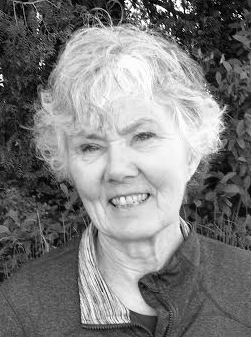
My friend Jo Dereske died this year. Like me, she was an academic librarian who lived most of her life in Bellingham, Washington.  She was also a very talented author of mystery novels.

Her most popular books were mystery novels starring  Wilhelmina Zukas, who worked in the public library in Bellehaven, Washington.  (Part of the joke here is that one well-loved neighborhood of Bellingham is named Fairhaven.)  Jo said that she created a fictional version of our city so that she could move a ferry and eliminate a mall.  

It is strange to have such a close relationship between fictional and real places.  Several people told Jo that they used to live in the same apartment building as Miss Zukas, but that building didn't actually exist. 

So what is Helma Zukas like?  Smart, introverted, private, small, neat...the word repressed comes to mind.  Elevators terrify her.  She reluctantly adopts a cat as aloof as herself and since she refuses to name him the vet calls him Boy Cat Zukas.  
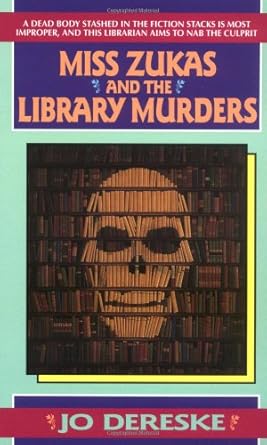
Clearly Dereske was playing with the stereotype of the librarian.  But most people in the field loved Miss Zukas.

Because Helma is far too complex and interesting to be a mere stereotype.  Quiet and introverted, yes.  But meek?  Never.  In almost every book she stuns quarrelers into silence with her “silver dime voice.”  In one novel she destroys library records so that the police can’t violate the privacy of a book borrower - in spite of the fact that the police chief, the wonderfully named Wayne Gallant, is her will-they-or-won't-they love interest.

So Helma is a force to be reckoned with.  Now, consider her best friend since fifth grade, Ruth Winthrop.  Ruth is an artist.  She is tall (and wears heels to emphasize it).  She is also loud, brassy, dresses in wild colors and is as easy with men as Helma is not.  Although these two opposites would gladly take a bullet for each other, they can't stand to be in the same room for more than an hour.  Dereske has received many emails from women asking "How do you know about me and my best friend?"

By the way, Jo used to get complaints from readers: "Why did you make Miss Zukas so ugly?"  Well, she was short and had a stubborn lock of hair that fell on her forehead.  Those are the only physical characteristics that are ever mentioned.  Anything else is just in their imaginations.

Clearly author had great ability to connect to her audience. At a conference once she read from Miss Zukas in Death's Shadow a passage in which our heroine refuses to pay what she considers an unjust traffic ticket and is forced to do community service at a homeless shelter.  This included creating a database of the shelters' donors.

Alphabetization resembled assembly-line work, or walking, or what Helma had heard meditation was supposed to be like: mindless, comfortable, nearly a fugue state.  She was unaware of anyone coming or going and worked in a state of silence, only noting occasionally a bead of sweat trickling between her breasts… Her hands flew, paper rustled.  To those who lived by the alphabet, there was something as soothing as a lullaby in the dependability of its order.

When Jo read this I heard embarrassed giggles around me from people who recognized the sensation.   

The first eleven books were published by Avon, which then chose not to renew the contract.  Jo had no complaints; she understood that sales and the economy forced the decision, and she was willing to call the series over.
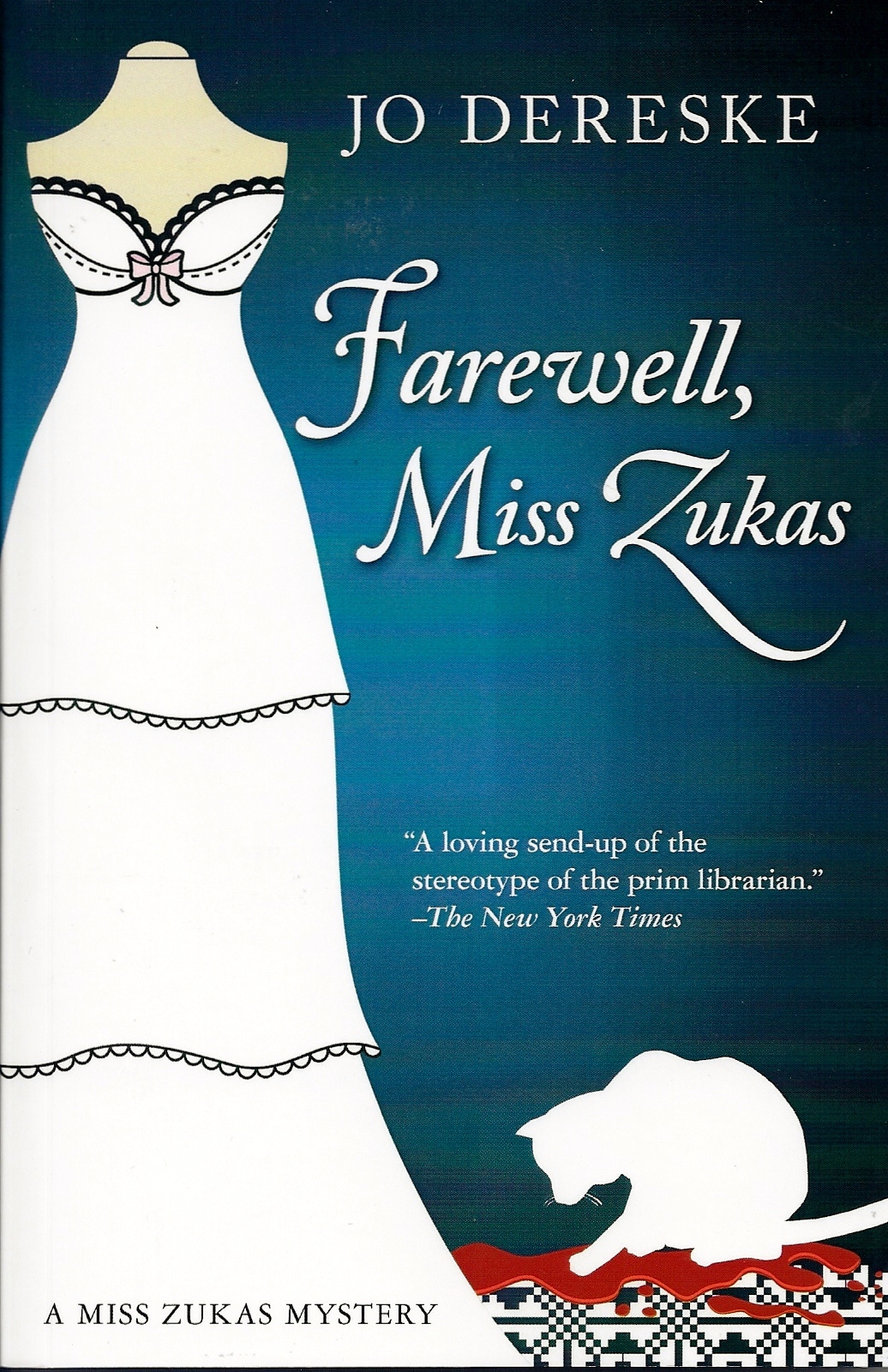
But her readers insisted  the saga needed an ending.  So Jo self-published Farewell, Miss Zukas,  which ties up most of the  loose strings of the story and brings our heroine to a happy ending.

And speaking of happy endings, I will finish with a favorite passage from Miss Zukas And The Island Murders:

On [Miss Zukas'] desk blotter lay a week-old newspaper article listing ten books a local group, calling themselves Save Your Kids, demanded be withdrawn from the library collection.  Two of the books, including Madonna's SEX, weren't even owned by the library, although twenty-three patrons had requested them since the article appeared…

Eve pointed to the Save Your Kids article on Helma's desk and stuck out her lower lip.  "Why ban Little Red Riding Hood?  What did SHE ever do?"

"I believe it was the wolf who did it," Helma said.  "But don't worry, she's safe.  Fortunately, the Constitution's still in effect."

Farewell, Jo.

16 November 2011

Shhhh!


I just read a very good mystery novel, which I don't  recommend you read.  This is not because of my natural perversity, but because I want to save you from the unnatural perversity of starting a series at the end.  Farewell, Miss Zukas is the  last volume in a series, and the reason for that is one reason I am bringing up the book at all.  It gives us a chance to discuss some of the trends in the publishing world.  I do hope I convince you to look up the early books in the series, which are available at least electronically.

First of all, full disclosure.  The author, Jo  Dereske, is a friend of mine and a fellow librarian. (In fact, this book contains a brief mention of "Rob, the mystery writer."  He sounds like a fascinating character and I wish we had heard more about him.)

The heroine of these books is Wilhelmina Zukas, a librarian who works at the public library in Bellehaven, Washington.  And here we get into an endless series of inside jokes;  Jo and I both live in Bellingham, Washington, which Bellehaven resembles to a remarkable degree.  (She has pointed out the many benefits of fictionalizing her setting; for example, eliminating a mall she doesn't like.)

So what is Helma Zukas like?  Smart, introverted, private, small, neat...the word repressed comes to mind.  Clearly Dereske was playing with the stereotype of the librarian. (Most people in the field love Miss Zukas.)   
You see, Helma is far too complex and interesting to see as a mere stereotype.  Quiet and introverted, yes.  But meek?  Never.  In almost every book she stuns quarrelers into silence with her “silver dime voice.”  In one novel she destroys library records so that the police can’t violate the privacy of a book borrower.  (And if that seems a far-fetched series of events consider this  which happened in the same county that contains Bellingham.)  

So Helma is a force to be reckoned with.  Now, consider her best friend since fifth grade, Ruth Winthrop.  Ruth is an artist.  She is tall (and wears heels to emphasize it).  She is also loud, brassy, dresses in wild colors and is as easy with men as Helma is not.  Although these two opposites would gladly take a bullet for each other, they can't stand to be iin the same room for more than an hour.  Dereske has received many emails from women asking "How do you know about me and my best friend?"

The author’s ability to connect to her audience is relevant to my point and we will get back to it, but here is an example: I once heard Dereske read a portion in which Miss Zukas filing some cards in alphabetical order and Dereske got quite rapturous about the meditation-like peace that comes with  alphabetizing.  I don’t know how many of the audience were librarians but I heard any number of guilty giggles from people who had experienced that same pleasure.

Helma is supported (or more usually, hindered) by a large collection of associates, like the  young children’s librarian Glory Shandy,  who is always ready with constructive criticism  about Helma’s appearance.  (When someone gives Helma an unwanted  free visit to a beauty consultant Glory enthuses "He's probably very good at disguising mature skin.")  

But the two most important supporting characters are what you might call a couple of soulmates of Miss Z.  Police Chief Wayne Gallant came to town just after a nasty divorce, which means Helma has a crush on the only person around as nervous about relationships as herself.  And Helma reluctantly takes in (but never talks to or touches) a stray animal who becomes known as Boy Cat Zukas, because that’s what the vet calls him.  Boy Cat is as standoffish as his owner and they seem made for each other.

The first eleven books were published by Avon, which then chose not to renew the contract.  Dereske has no complaints; she understands that the economy forced the decision, and she was willing to call the series over.

But remember what I said about Jo's relationship with her readers?  They were insistent that  the saga needed an ending.  After holding discussions with  some mainstream publishers, she decided to self-publish.  And that brings us to Farewell, Miss Zukas,  which winds up most of the strings of the story and brings our heroine to a happy ending.

And speaking of happy endings, you can see this story as depressing  (good authors are losing publishers left and right) or positive (authors are taking control of their destiny).  But in the spirit of natural perversity I am going to end with a favorite passage from the very beginning of Miss Zukas And The Island Murders
.
On [Miss Zukas'] desk blotter lay a week-old newspaper article listing ten books a local group, calling themselves Save Your Kids, demanded be withdrawn from the library collection.  Two of the books, including Madonna's SEX, weren't even owned by the library, although twenty-three patrons had requested them since the article appeared....

Eve pointed to the Save Your Kids article on Helma's desk and stuck out her lower lip.  "Why ban Little Red Riding Hood?  What did SHE ever do?"

"I believe it was the wolf who did it," Helma said.  "But don't worry, she's safe.  Fortunately, the Constitution's still in effect."


If you like funny mysteries with quirky characters, you can't do much better than to take a trip to Bellehaven.