Showing posts with label Abraham Lincoln. Show all posts

13 February 2026

How Presidents Talk


My father, the Big Band man, had a record in his collection that I heard quite a bit growing up. His 1971 album featured three pieces by the composer Aaron Copland, conducting the London Symphony Orchestra: Fanfare for the Common Man, Appalachian Spring, and Lincoln Portrait.

Lincoln Portrait is a fifteen-minute, music and spoken-word piece that is, as of this writing, eighty-four years old. Tradition calls for actors and other individuals of prominence to read the 400-word text. The recording I heard was performed by the actor Henry Fonda, who played the president in Young Mr. Lincoln and who subsequently ruined all other narrators for me. When I recently queued up Lincoln Portrait read by Darth Vader James Earl Jones on my phone, I expected great things. But no—Jones was too over the top. I think I caught him enunciating a comma.

Copland composed Portrait in 1942 when asked by the Russian-American composer Andre Kostelanetz to create a work that would celebrate a prominent American. World War II was on, and creative people of all types were being pressed into service to create art that would keep American minds on task. Copland suggested Whitman, but Jerome Kern had already picked Twain. Kostelanetz suggested Copland choose someone else—a statesman, not a writer. “[A]ny personality that is to be expressed with music should have some kind of humane aspect,” Copland would later tell an interviewer, “which is precisely what attracted me to Lincoln.”

As a subject, Lincoln was the perfect figure for that time, and always. Composers well before Copland had penned musical tributes to the gangly lawyer from Springfield. From the early part of the 20th century politicians of every stripe trotted him out, regardless of their persuasion. Progressives, leftists, radicals, Republicans and Democrats alike. FDR invoked him, suggesting that the Great Emancipator would have embraced the New Deal.

Copland had seen people suffer during the Depression; he was drawn to the plight of workers and the ideology of Communism, of all things, which would haunt his career after the war. But he, like others, believed Lincoln spoke for the common man (sans fanfare), the downtrodden, the masses. The words he selected from Lincoln’s writing hammered home principles that everyone who lived on the continent in that era had presumably agreed to embrace: freedom and democracy.

The historian Pauline Maier, in her book, American Scripture, discusses this at length. Lincoln’s genius was taking a forgotten document written in 1776 and linking it to a troubled moment in the mid 1800s, enshrining it as the nation’s critical founding document. The Constitution was the law of the land, but the Declaration was gospel. Lincoln had a flair for making political language sound sacrosanct.

In my thirties, I had a coach who loved smashing icons. He hated Democrats mostly, but for a born-and-bred Kentuckian he took strange aim at Lincoln. “You know,” he said once during a break in our sparring, “there is no evidence that he ever read a book.”

Bullshit, I thought then, and I stand by that today. Even before I knew about the sources he had drawn upon for his famous Cooper Union speech in 1860, it was obvious to me that Lincoln had read at least one tome: the King James Bible. Parallelism...chiasmus...he was all over it.

Copland incorporated five Lincoln texts in his Portrait. I’ve heard the piece so many times that I can practically quote them from memory. This week I went back and looked at the originals, in part to see what Copland left out.

In the selections that follow, I am bolding the lines Copland used. Copland did not preserve Lincoln’s underlines, which historians usually render as italics. The narrators of Lincoln Portrait are always given latitude to speak the lines as they see fit. The italics show which words Lincoln probably stressed.

Here’s the first, taken from the Annual Message to Congress, dated December 1, 1862, about a month before the signing of the Emancipation Proclamation:

Fellow-citizens, we cannot escape history. We of this Congress and this administration, will be remembered in spite of ourselves. No personal significance, or insignificance, can spare one or another of us. The fiery trial through which we pass, will light us down, in honor or dishonor, to the latest generation. We say we are for the Union. The world will not forget that we say this. We know how to save the Union. The world knows we do know how to save it. We -- even we here -- hold the power, and bear the responsibility. In giving freedom to the slave, we assure freedom to the free -- honorable alike in what we give, and what we preserve. We shall nobly save, or meanly lose, the last best hope of earth. Other means may succeed; this could not fail. The way is plain, peaceful, generous, just -- a way which, if followed, the world will forever applaud, and God must forever bless.”
You don’t have to go far, even in this selection, to see that its writer has wholly mastered that Biblical tone. When he uses an adverb, he makes it work. Words are not repeated unless they do double duty.

We shall nobly save, or meanly lose…

In giving freedom…we assure freedom…

He could have ended the graf with “and God must bless forever,” but then it would not so nicely echo “will forever applaud.” Ask yourself: is it a politician who has commanded our attention—or a preacher?

“fiery trial…”

“Plain, peaceful, generous, just…”

“Will light us down…”

Gotta admit, Coach: this is damn fine writing from a fellow who never cracked a book. We should all be so illiterate.

Copland’s second quote is taken from earlier in this very same message to Congress:
“The dogmas of the quiet past, are inadequate to the stormy present. The occasion is piled high with difficulty, and we must rise -- with the occasion. As our case is new, so we must think anew, and act anew. We must disenthrall ourselves, and then we shall save our country.”

I love this:

“quiet past…stormy present…”

“….is new, think anew, act anew.”


I have always liked the use of the word disenthrall in this sentence, but I needed to research what historians think he was really saying. They read it as tearing ourselves away from a system that we know is no longer working.

Copland’s third textual choice comes from the final debate with Stephen Douglas (October 15, 1858), in which Lincoln framed their senate race—as so many have—as a battle between good and evil, right and wrong. His oft-quoted “a house divided cannot stand” from this speech is paraphrased from the book of Matthew. But that’s not what Copland chose to quote. He went straight for the graf that would find favor with modern listeners:

It is the eternal struggle between these two principles -- right and wrong -- throughout the world. They are the two principles that have stood face to face from the beginning of time; and will ever continue to struggle. The one is the common right of humanity and the other the divine right of kings. It is the same principle in whatever shape it develops itself. It is the same spirit that says, 'You work and toil and earn bread, and I’ll eat it.' No matter in what shape it comes, whether from the mouth of a king who seeks to bestride the people of his own nation and live by the fruit of their labor, or from one race of men as an apology for enslaving another race, it is the same tyrannical principle.”

Earlier that year, Lincoln had made the same point, with similar phraseology, in another speech. Only then, instead of referring to this paradigm as "the same tyrannical principle," he dubbed it "the same old serpent."

A while back I learned that when Apple’s founder Steve Jobs was drafting a speech, for weeks he would tap out and shoot short emails to himself with a flurry of sentences and ideas that occurred to him. Lincoln did the same: he grabbed a sheet of paper and wrote short notes to himself. The three-line scrap that follows was found among his personal effects. He never inserted it into a speech, and his secretaries were unable to shed much light on their origin or intended use. Copland works it in as his third quote. And by now, coming after the tyrannical principle line above, two underlined words take on enlarged meanings. Again, these are Lincoln’s italics.

“As I would not be a slave, so I would not be a master. This expresses my idea of democracy. Whatever differs from this, to the extent of the difference, is no democracy.”
Copland ends with the final 71 words of the Gettysburg address. I’ll spare you the lines. You can probably hear them in your soul.

Of the people, by the people, for the people.

He spoke those words on a battlefield after a far more famous orator intoned his way through a two-hour speech. Lincoln rose, spoke for two minutes, and later confided to friends that he had utterly botched it. “It is a flat failure,” he told his bodyguard.

Well, sure: what can we expect from such a bookless wonder?

During the Portrait’s premieres in 1942, Kostelanetz observed that the piece was received differently depending on the news of the day. When newspapers were filled with news of American victories abroad, thunderous applause. When the news was somber, audiences left hushed, perhaps struck by the long road ahead and the work democracy demands of us. And for a few years after World War II, Copland endured his own fiery trials at the hands of McCarthy.

And yes, I suppose I understand what Coach was getting at…maybe. Lincoln was no saint. Go back and read some of the fourth debate with Douglas. For the first half of the speech, he’s playing African Americans for laughs, bending over backward to reassure his audience that he doesn’t really think a black person will ever be the equal of a white person. Once he gets them on his side, he hammers home that if he had his druthers, he would change this one little thing about American life. But it’s an ugly windup.

But then, at Gettysburg, he again rescued that one word, equal, from a document many of his colleagues had either forgotten, maligned, or had willfully misremembered, insisting that we regard this dirty, five-letter word as the prime directive of the American experiment. One can see why historians find it hard to disenthrall themselves from his words and actions, even today. They probably never will.

A while back, when she spoke at the Abraham Lincoln Association in Springfield, historian Doris Kearns Goodwin told her audience:

“It’s not just that he was a great president, that he won the war, ended slavery, and saved the Union. It was his kindness, his sensitivity, his empathy, his willingness to let those past resentments go. I had the feeling that he had the normal human emotions of envy and anger and jealousy, but somehow he would say, ‘You have to damp them down because they’ll fester if you allow them inside. They’ll poison you.’”

She spoke those words in 2018. She was describing an imperfect human being who was, if nothing else, a well-read, mature adult. Even in 2018, the thought of a president who actively worked to shun resentment must have seemed quaint to her audience of Lincoln admirers in Springfield.

Each year around this time I am reminded that the US has bundled Lincoln and Washington's birthdays (February 12th and 22nd, respectively) into one collective Presidents' Day. I understand the reasons for this choice, but just as Copland declined to compose a piece about Washington, thinking him too stiff and formal, I am drawn still to the rail-splitter.

If nothing else, family lore compels me. On the occasion of her naturalization, I am told, my Italian-born grandmother was asked to name the 16th US President.

"Ling-a-ling," she replied in the accent that she would carry for the rest of her days.

By then, she was a married woman, a homeowner, a taxpayer, and the mother of three (young) American citizens. Her examiner granted her citizenship, or I suppose I would not be writing these words.

My fellow writers, we cannot escape history. A humbling truth that one clings to in dark hours.

* * * 

See you in three weeks!

Joe


04 July 2019

Happy Fourth of July!


In between barbecues and fireworks, sports and speeches, beer and brats, there's going to be time for some movies.  Here's a few:

Smith goes.jpgMr. Smith Goes to Washington:  Can you believe that this movie was controversial when it came out in 1939?  Because it actually dared to talk about corruption in politics?  (Pearls clutched across the nation!)  Only Jimmy Stewart could have played this part - and what a great one it is.  The filibuster scene alone is worth watching.

"I guess this is just another lost cause Mr. Paine. All you people don't know about lost causes. Mr. Paine does. He said once they were the only causes worth fighting for and he fought for them once. For the only reason any man ever fights for them. Because of just one plain simple rule. Love thy neighbor. And in this world today of great hatred a man who knows that rule has a great trust. You know that rule Mr. Paine and I loved you for it just as my father did. And you know that you fight harder for the lost causes than for any others. Yes you'd even die for them. Like a man we both knew Mr. Paine. You think I'm licked. You all think I'm licked. Well I'm not licked. And I'm gonna stay right here and fight for this lost cause. Even if this room gets filled with lies like these. And the Taylors and all their armies come marching into this place. Somebody will listen to me."

Advise-&-Consent-(1).jpg
And speaking of corruption in politics, another great movie is 1962's Advise & Consent, starring Henry Fonda, Charles Laughton, Walter Pidgeon, Gene Tierney, and a host of other Hollywood celebrities.  Communism, homosexuality, and womanizing all feature in the various forms of blackmail, backbiting, demagoguery and political intrigue that revolve around the President's choice of Secretary of State.

Fred Van Ackerman:  [sniveling over being shunned]  What I did was for the good of the country.
Bob Munson:  Fortunately, our country always manages to survive patriots like you.

Of course, the Fourth of July is about the birth of our country - but strangely enough, I find most movies about the American Revolution pretty... bad...  (Think about Mel Gibson's The Patriot and Al Pacino's Revolution.)  So how about watching 1776?  A musical take on the Revolution and the Convention, it'll have to do until Hamilton comes out.
"I have come to the conclusion that one useless man is called a disgrace; that two are called a law firm, and that three or more become a Congress! And by God, I have had this Congress! For ten years, King George and his Parliament have gulled, cullied, and diddled these colonies with their illegal taxes! Stamp Acts, Townshend Acts, Sugar Acts, Tea Acts! And when we dared stand up like men, they have stopped our trade, seized our ships, blockaded our ports, burned our towns, and spilled our BLOOD! And still, this Congress refuses to grant ANY of my proposals on independence, even so much as the courtesty of open debate! Good God, what in hell are you waiting for?" 
            - John Adams in 1776

But July 4th is also about war.  

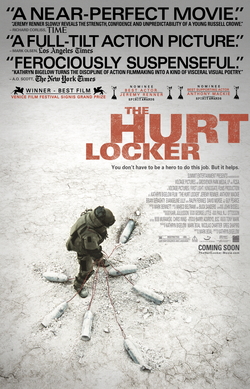
From above a flat. and dry desert floor, a person in a green military uniform with heavy padding holds red wires attached to seven pill-shaped bomb canisters scattered around him. At the top of the poster are three critics' favorable opinions: "A near-perfect movie", "A full-tilt action picture", and "Ferociously suspenseful". Below the quotes is the title "THE HURT LOCKER" and the tagline, "You don't have to be a hero to do this job. But it helps."
America has been making up for some time for the way Vietnam veterans were treated when they came back from the war.  But wars haven't stopped; if anything, conditions continue to degrade, and a soldier's lot has become one of perpetual deployments, wars with no exit strategy or even long-term goals, devastating injuries to mind and body, and a Congress that never seems to want to spend money on them once they're home.  There are a few "fun" movies about war - but here are a few movies that keep in mind the real price:

Black Hawk Down
Born on the Fourth of July


Full Metal Jacket
The Hurt Locker
Johnny Got His Gun
Platoon

“I do not say that children at war do not die like men, if they have to die. To their everlasting honor and our everlasting shame, they do die like men, thus making possible the manly jubilation of patriotic holidays. But they are murdered children all the same.” 
― Kurt Vonnegut, Cat's Cradle

“Society can give its young men almost any job and they'll figure how to do it. They'll suffer for it and die for it and watch their friends die for it, but in the end, it will get done. That only means that society should be careful about what it asks for. ... Soldiers themselves are reluctant to evaluate the costs of war, but someone must. That evaluation, ongoing and unadulterated by politics, may be the one thing a country absolutely owes the soldiers who defend its borders.”
― Sebastian Junger, War

Graves at Arlington on Memorial Day.JPG

BUT let's get back to fireworks and fun.  And if it's fun you want, then you need Presidents and aliens:

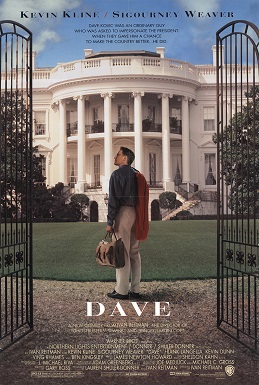
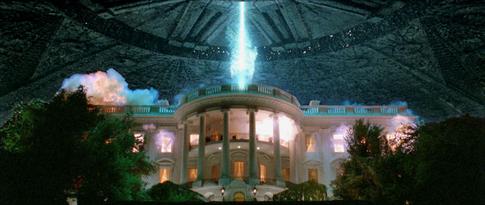
Dave poster.jpgMost fun movies about Presidents, from Dave to Independence Day, and, of course, Mars Attacks!  

Fun quiz:  Which quote is from which movie?

(1)  President:  I don't understand, where does all this come from? How do you get funding for something like this?
       "You don't actually think they spend $20,000 on a hammer, $30,000 on a toilet seat, do you?"

(2)  What is with [the] President lately? I mean has this guy been having too many "Happy Meals"? I mean geez!

   (3) I'll tell you one thing, they ain't gettin' the TV.

   (4) President:  What? Oh, you mean the press conference. I had a couple of ideas that I wanted to share with the country.

   (5) President: I want the people to know that they still have 2 out of 3 branches of the government working for them, and that ain't bad.


There's also Seven Days in May, Abraham Lincoln Vampire Hunter, and Dr. Strangelove.

Or you could do the Lincoln cycle - Raymond Massey's Abe Lincoln in Illinois, Henry Fonda's Young Mr. Lincoln, and Daniel Day Lewis' pitch-perfect Lincoln:
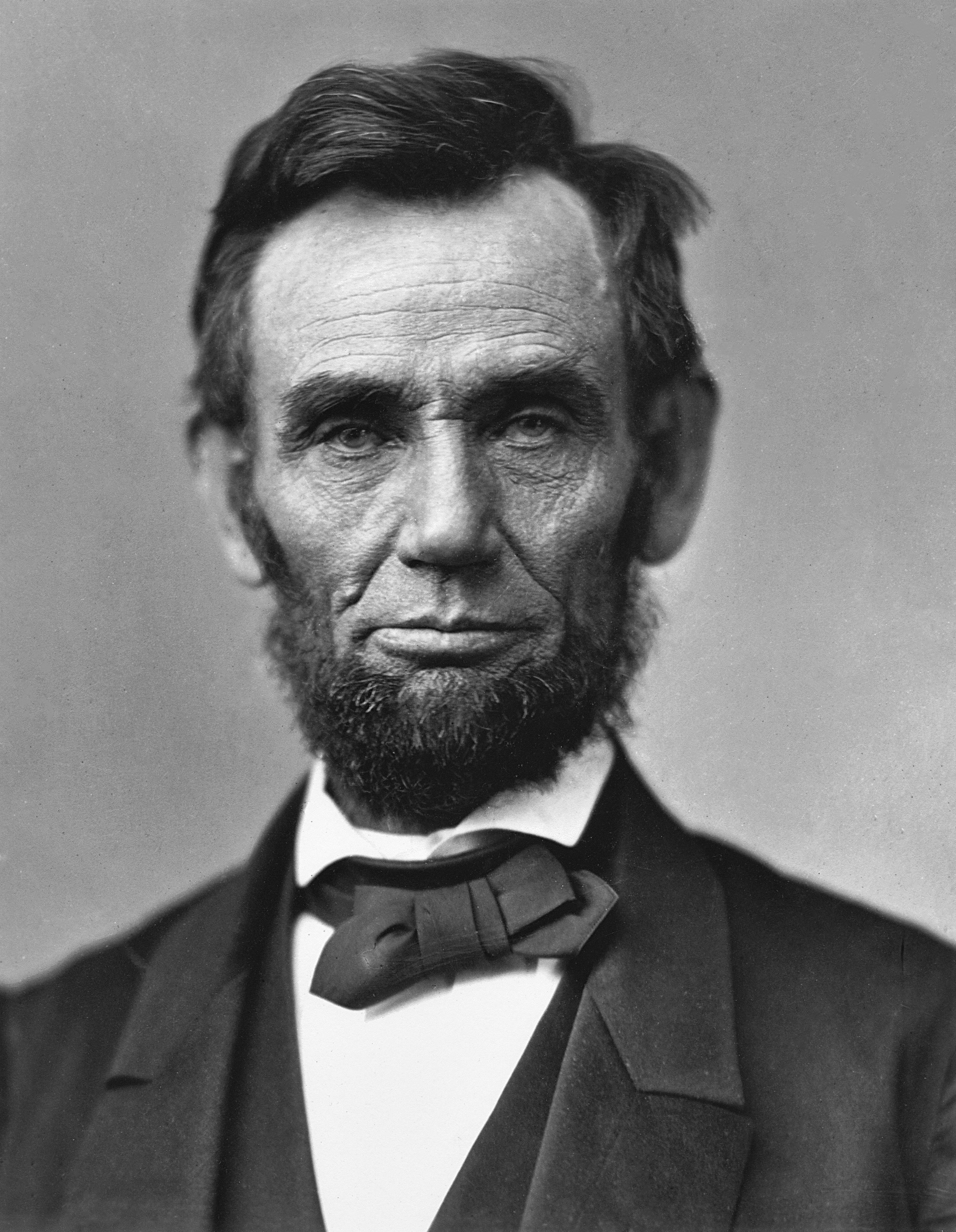
An iconic photograph of a bearded Abraham Lincoln showing his head and shoulders.Lincoln: Abolishing slavery by constitutional provisions settles the fate for all coming time. Not only of the millions now in bondage, but of unborn millions to come. Two votes stand in its way. These votes must be procured.
Seward:  We need two yeses. Three abstentions. Four yeses and one more abstention and the amendment will pass.
Lincoln:  You've got a night and a day and a night; several perfectly good hours! Now get the hell out of here and get them!
Ashley:  Yes. But how?
Lincoln:  Buzzard's guts, man! I am the President of the United States of America! Clothed in immense power! You will procure me these votes.
It's a shame that there haven't been nearly as many good movies about the other Presidents on Mount Rushmore.  The best are probably Ken Burns' documentary on Thomas Jefferson, the first 3 episodes of The Roosevelts:  An Intimate History for Teddy Roosevelt, and the 1984 miniseries George Washington (starring Barry Bostwick).

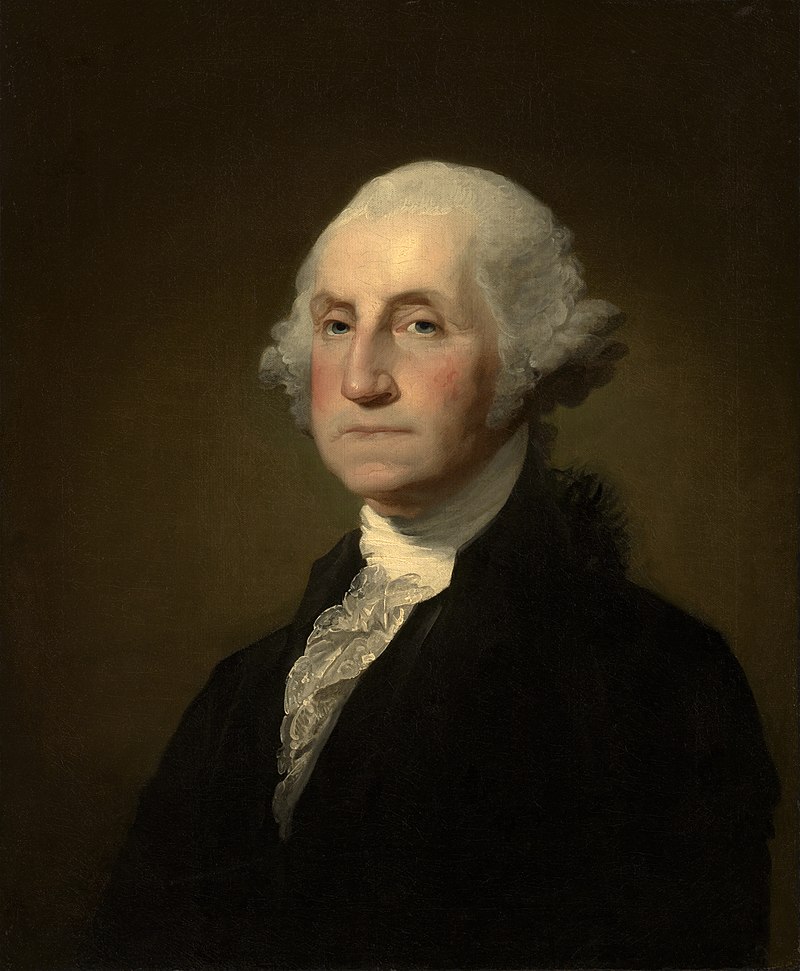
Gilbert Stuart Williamstown Portrait of George Washington.jpg“If freedom of speech is taken away, then dumb and silent we may be led, like sheep to the slaughter.”
― George Washington

“As Mankind becomes more liberal, they will be more apt to allow that all those who conduct themselves as worthy members of the community are equally entitled to the protections of civil government. I hope ever to see America among the foremost nations of justice and liberality.” 
― George Washington
Official Presidential portrait of Thomas Jefferson (by Rembrandt Peale, 1800)(cropped).jpg
“We in America do not have government by the majority. We have government by the majority who participate.”
― Thomas Jefferson
“If a nation expects to be ignorant and free, in a state of civilization, it expects what never was and never will be.”
― Thomas Jefferson
President Roosevelt - Pach Bros.jpg“Patriotism means to stand by the country. It does not mean to stand by the president or any other public official, save exactly to the degree in which he himself stands by the country. It is patriotic to support him insofar as he efficiently serves the country. It is unpatriotic not to oppose him to the exact extent that by inefficiency or otherwise he fails in his duty to stand by the country. In either event, it is unpatriotic not to tell the truth, whether about the president or anyone else.”
― Theodore Roosevelt

“Politeness [is] a sign of dignity, not subservience.” 
― Theodore Roosevelt

“Jazz is democracy in music.”
― Wynton Marsalis

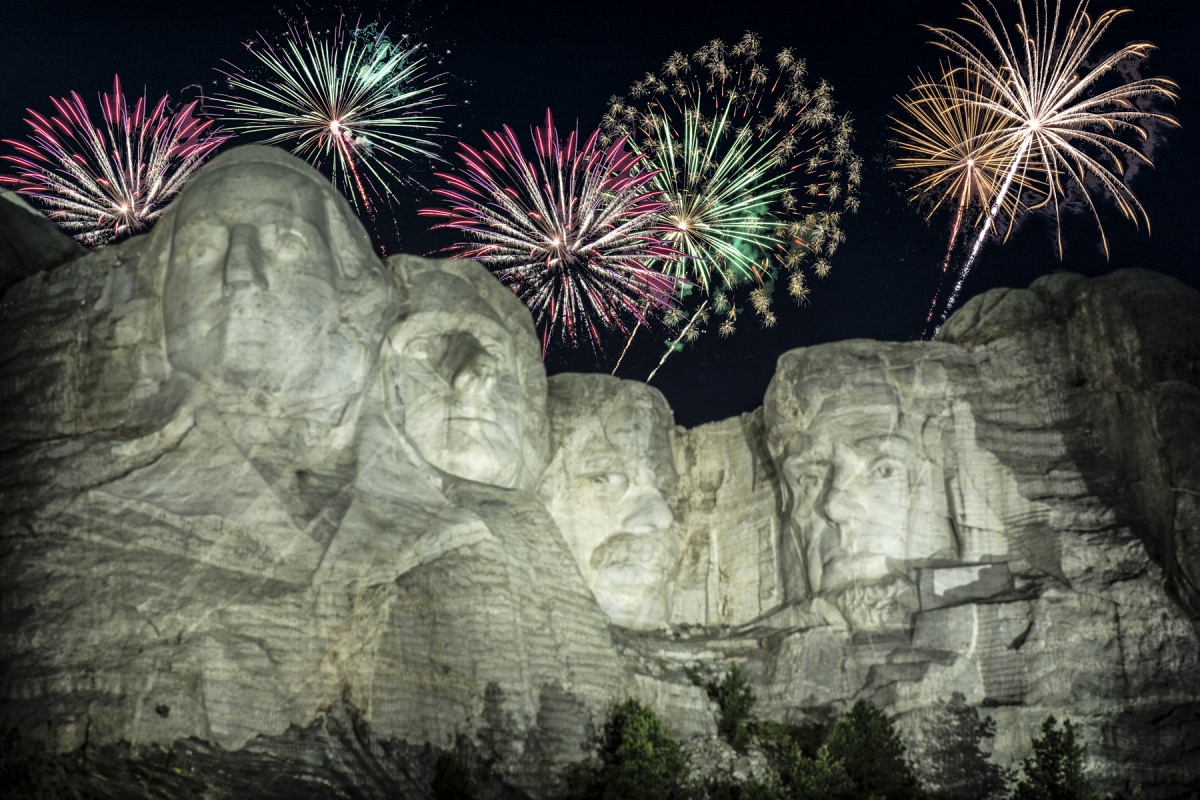
Happy Fourth of July from South Dakota!


Image result for fireworks over mount rushmore

“And so, my fellow Americans: ask not what your country can do for you—ask what you can do for your country.”
-- John F. Kennedy

25 January 2017

John Ford's PRISONER OF SHARK ISLAND


I had another subject in mind, but then I spotted this coming up on Turner Classic Movies. I couldn't let it slip past unnoticed.


The Prisoner of Shark Island is a lesser-known John Ford, from 1936. It came out after The Lost Patrol and The Informer, and the three pictures he made with Will Rogers. Ford was already established, in other words. He'd won his first directing Oscar for The Informer.  At this point, he probably didn't have to take work he didn't want to, and he didn't suffer much interference. He made Shark Island by choice. Ford said more than once, "It's a job of work," meaning he did what he did for a living, but it's plain his heart was in it.

Shark Island is about Dr. Samuel Mudd, who gets caught up in the conspiracy panic that followed Lincoln's assassination. There was, in fact, a plot, targeting Secretary of State Seward and Vice President Johnson as well as Lincoln, but only John Wilkes Booth got his part right. The others made a hash of it. This didn't keep
four of them from being hanged. Booth himself was shot and killed eleven days after Lincoln's death, but his first night on the run he stopped at a local Maryland doctor's - Dr. Mudd - and the doctor set his broken leg. This was enough to buy Mudd a treason conviction and a life sentence. Was he involved? It's never been established, but Shark Island plays on your sympathies, the innocent man being framed, justice denied.

Let's get the two most serious weak points out of the way. First off, Warner Baxter plays the lead. Big in the silents, made the transition to talkies, but a little overwrought. Admittedly, the acting style goes with the period, and you can get past it. It's a lot harder to get past the second thing, which dates even more badly, and that's the racism. I never thought of Ford as being particularly racist - although a fair number of American Indians might disagree with me - and while he's of course a product of his times, and Hollywood has historically been disrespectful of black people (along with the Chinese, and Mexicans, and plenty of others), Ford is often subversive with his black characters. Stepin Fetchit, in Steamboat Round the Bend, plays it very sly and saucy. His relationship with Will Rogers could be described as two bickering old ladies, Lucy and Ethel. Unhappily, the same can't be said of Ernest Whitman as Buck in Shark Island. Still, it strikes me as an extremely difficult part for a black actor to play without falling into
caricature, and Buck comes perilously close. The real problem is that these attitudes aren't peripheral, they're built into the narrative structure. Buck isn't just comic relief. He's integral to the story, he's a major piece of the action, and he has to walk a very fine line between pretending to Tom it up and demeaning himself. I'm a white guy. I can't step into Ernest Whitman's shoes, or get inside his skin. Maybe he simply figured it was a job of work. I'd like to think he did the best he could by a part that didn't give him much wiggle room - and I wish I could say the script or the director helped him make up for it. Not.

How about what's right with the picture? For openers, Bert Glennon's cinematography. It's the first of eight movies he made with Ford (including Drums Along the Mohawk, Ford's first color feature), and it has one of the most breathtaking pulled-focus shots I've ever seen. Ford's known for not calling attention to himself, or using obtrusive effects. He seems to prefer a static frame, but he moves the camera when he wants to. You see plenty of mobility in his tracking shots. I don't remember a single example of zoom, though. Ford's camera is always the human POV. When he breaks stride, it's doubly startling.

Here's the set-up for the defining moment. Booth slips through the door into the back of Lincoln's box at the theater. You hear the laugh line from the play on-stage, "You sockdologizing old man-trap." Booth shoots the president, and jumps from the box to the stage, but his foot gets tangled in the flag draped from the box. He calls out, "Sic semper tyrannis," and limps off. Lincoln, mortally wounded, is slumped back in his chair. The camera holds. It's a medium shot, Lincoln's upper body and shoulders, his face in three-quarter profile. A curtain falls across, in front of his face. It's lace or embroidery, so you still see Lincoln behind it, slightly blurred. Then he comes into focus, but the embroidered curtain creates a pointillist effect, fragmenting his image, breaking it down into dots, like an engraving. Your eye needs to catch up, and reconstruct him. In that one brief image, Lincoln passes from life into history, leaving a retinal memory. It happens while you're watching.

I first saw Prisoner of Shark Island late one night on a UHF channel, just a programmer they used to fill a time slot. It was some years later that I got to see it in a theater, a Ford revival series at the Orson Welles Cinema in Cambridge - a labor of love, they actually screened something like forty of his pictures over a couple of weeks, and I didn't miss too many. Shark Island drew a capacity crowd, a lot of them film students who hadn't seen it before, and more than a few who were unacquainted with Ford except for the big-ticket movies. Shark Island starts out on a note of low comedy, a joke about the number of kids Buck has, with its obvious racial slant, and Buck asking his mule what the mule thinks, which isn't any too subtle, either. Remember, we're talking about wiseass college kids here, everybody goofing and groaning and poking fun at the picture's dated political attitudes, and when Booth slinks on-screen, practically twirling his mustaches, you've still got people laughing at the exaggerated histrionics of it all. But then. Booth steps forward. He shoots Lincoln. Lincoln sinks back. The curtain falls. Everybody in that movie theater went dead silent. Literally. There wasn't a murmur. Not an embarrassed giggle, not even a gasp. Nothing but absolute, stunned shock.

Okay, the gravity of the event. And maybe these kids were of an age to remember the Kennedy assassination. But there's more to it. Because after Lincoln's murder, the movie goes on to show the courts-martial. You heard that right. The conspirators were tried by military tribunal and without constitutional protections. We see them hooded and shackled during the trial. We see them hanged. The hysteria isn't soft-pedaled, and if the Grassy Knoll is any part of your vocabulary, you feel a familiar dread.


I don't think Shark Island is supposed to be taken as some kind of allegory about the Red Scare or the rise of Fascism or anything like. It's meant to be a rousing yarn, and no more. There is a shark-infested moat, too, but since we're in the Dry Tortugas, that's gilding the lily. And the Yellow Fever epidemic, and the mutiny, no reason to doubt. Dr. Mudd was later pardoned. Whether he was in on the plot has never been decided one way or the other.

TCM is showing The Prisoner of Shark Island on Tuesday, January 31st, at 10:45 PM. Program your DVR's. It's also available on the Ford at Fox boxed DVD set, a collection of Ford's pictures that gives good weight for the money.


14 February 2016

Abe Lincoln's Mystery


Lincoln
Abe Lincoln: rail splitter, a riverboat crewman, an inventor, a country lawyer, a congressman, a poet, a president, the great emancipator… and murder mystery author.

Tomorrow is Presidents Day in celebration of our great presidents, Abraham Lincoln (12th Feb), George Washington (22nd Feb), and in some states, Thomas Jefferson (13th Apr). To honor them, SleuthSayers brings you a murder mystery written by our 16th president. (Bet you didn’t see that coming.)

We normally picture the lawyerish Lincoln involved in contracts and torts, bailments and agreements, the dry essence of civil law. The man also practised criminal law. He’s particularly recognized for winning what became known as the Almanac Case, in which he looked up the position of the moon in lunar tables to discredit a witness.

Lincoln
Earlier, Lincoln wrote “A Remarkable Case of Arrest for Murder” back when he was still a country lawyer. To be candid, it’s not a murder mystery in the expected sense, but based upon an actual 1841 case in which Lincoln defended one of three brothers accused of murder.

His client didn’t pay him, so Honest Abe monetized the experience in a different way… by selling a story about it. Fortunately, he went on to other pursuits and the rest, as they say, is history.

Unlike traditional murder mysteries, the story doesn’t contain the customary dénouement. It’s written as a puzzling happenstance without a true resolution.

Some contend Wilkie Collins’ charming 1873 novella, The Dead Alive (a.k.a John Jago’s Ghost) suggests a solution for Lincoln’s story, but in fact Collins based his tale on another American true crime story known as the Boorn Brothers murder case.


Now, from the Presidential of the United States…