
"As for myself, I belong to that delicious subgenre, the self-confessed unreliable narrator." - Matt Coward
Back in 2021 I wrote here about Stuart Turton's remarkable first novel, The 7 1/2 Deaths of Evelyn Hardcastle. (Leigh also wrote about it later.) Turton is a master of mash-ups or genre-blendings, so let's call that book a fantasy novel braided together with a golden-age-style mystery.
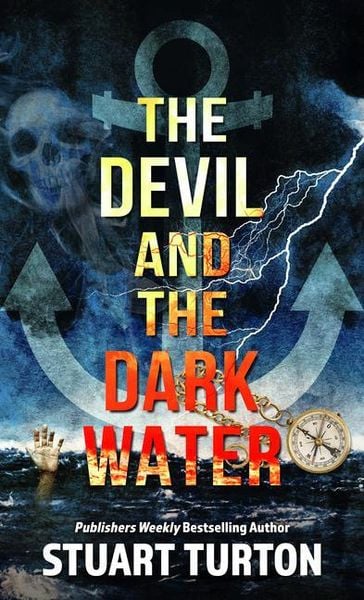
I also enjoyed, but never wrote about his second book, The Devil and the Dark Water, which is sort of a seafaring historical mystery with horror overtones.
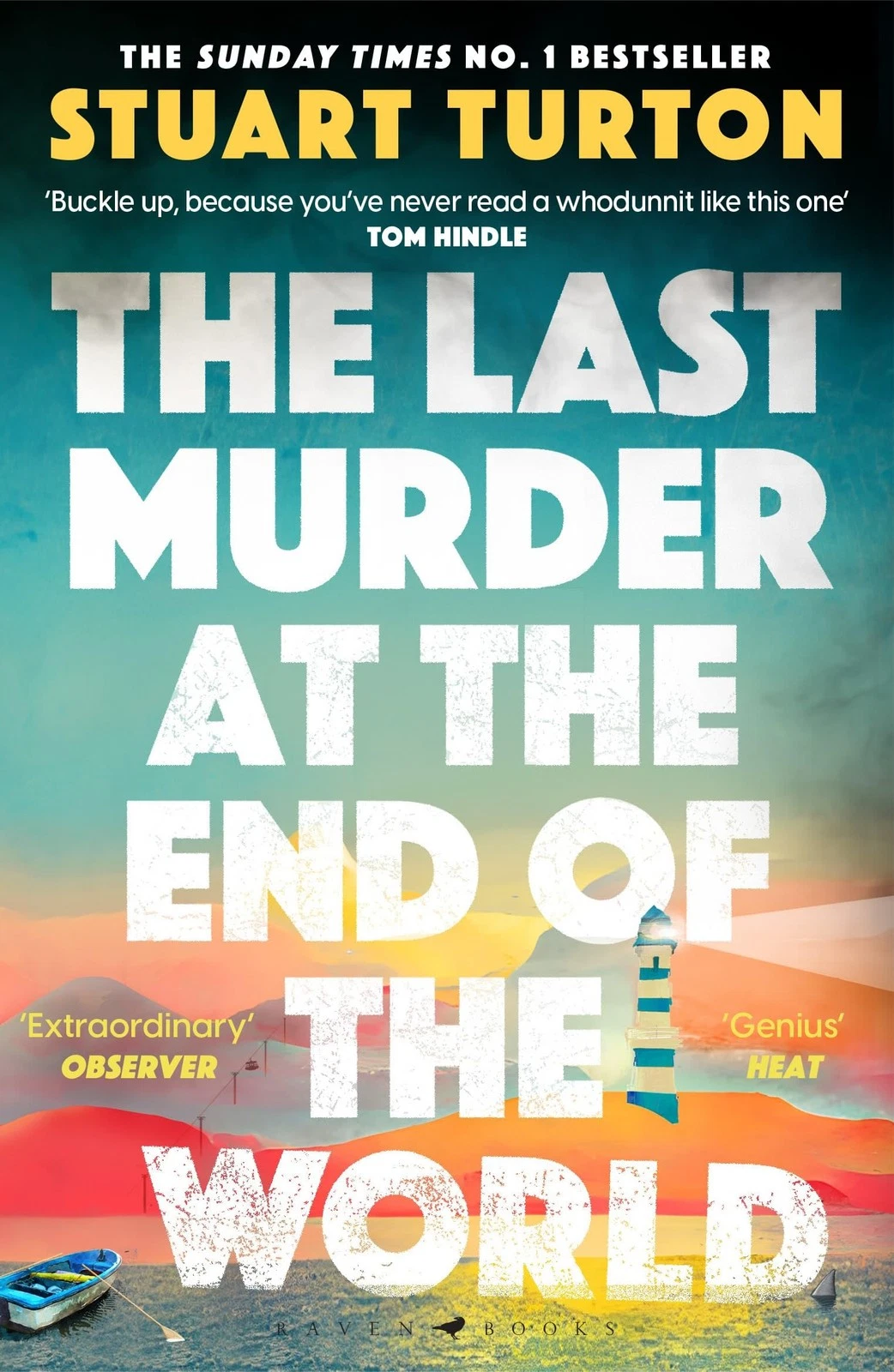
I just finished his third novel, and it's an amazing tale. The Last Murder at the End of the World is a science fiction mystery. It is set hundreds of years in the future (I had to keep reminding myself of that when futuristic technology is used) when all animal life on earth has been wiped out except on an island in the Mediterranean where a village of a few hundred people remain.
But what fascinated me most about the book is the narration style. Most of the book is in third person, the classic omniscient narrator who can tell us all the actions and thoughts of the characters. But every once in a while, well, take a look:
She remembers being out there when she was a girl, hearing this same lesson from the same teacher. She cried the entire way and nearly jumped out to swim for home when they dropped anchor.
"The children are safe with Niema," I say reassuringly.
Say what? Who is this first person narrator suddenly intruding, one who can tell us what the characters are thinking?
So, who or what is Abi? Obviously that is one of the puzzle boxes that the reader hopes will be opened before the end of the book.
But now we're getting to my main point. Abi sometimes tells us that she is lying to the villagers. But does she tell us every time she does? Can we trust anything she is telling us?
This is a terrific book but not without flaws. The last quarter is so convoluted you practically need a flowchart and map to track Who is Where When. And there is something which is described as a major clue which feels to me like an error an editor should have caught.
But it is a stunning read.


Ah, Rob! More homework!
ReplyDeleteIf I recall correctly, Turton said he mapped 7½ Deaths space and time on spreadsheets and nearly drove himself mad with alterations and error corrections. Can't say the man doesn't have a convoluted brain.
The last quarter of this book makes Hardcastle look like a straight line but you can ignore that and just ride the wave. If you enjoyed the first book you will enjoy this one.
ReplyDeleteSorry I'm showing as "anonymous." It's Anna Scotti!
DeleteWhoops... anonymous was me.
ReplyDeleteI can't get my head around unreliable narrators. I always feel betrayed in the end, because I want to like the protagonist. When I invest that much time, and find out I've been tricked by the author...well, I marvel at how other people can enjoy them! I wonder what a psychiatrist would say about me - smile - Melodie
ReplyDeleteMelodie, the one trick I detest above all are dream sequences. Except for Alice in Looking Glass / Wonderland, I don't think I've encountered one that hasn't felt like betrayal.
DeleteI used unreliable narration in an MWA story about Alzheimer's disease. The ending twist left a question— Wait! Who did what? My reason for UN was to hint at the confusion a victim experiences.
Unreliable narrators are not always there to trick the reader. Often they serve to further character/plot development, a la the old song "I Saw Mommy Kissing Santa Claus." The child's POV is expressed in the title, but the listener is well aware that it wasn't Santa Claus at all...
DeleteRob here: I wrote a piece about UNs and listed four categories: Lunatic, Liar, Self-Deluded, and Innocent. The kid in Kissed is an example of the Innocent. https://www.sleuthsayers.org/2018/04/who-do-you-trust.html
DeleteMelodie, I'm with you re unreliable narrators. I don't mind unreliable witnesses, detectives, police, criminals or victims, but I want whoever's telling the story to tell it straight.
ReplyDeleteIn working with poets and authors, I often devote a (seemingly) disproportionate amount of time to titles. They are a vital, essential part of a poem (perhaps constituting a tenth or a twentieth of the total text) but they are also extremely important in prose. A title can determine whether an editor reads a work, whether a reviewer considers it, and ultimately, whether a reader is intrigued enough to continue. The three you've pictured all strike me as having very good titles. They intrigue.
ReplyDeleteRob here.. I think the first title is the best, and the American publisher added the 1/2 which is {chef's kiss].
ReplyDelete