I was
going into the hospital in November, and I thought I’d better pack a good, big
book – think Shogun or Lord of the Rings – and Jack Vance’s Lyonesse trilogy popped into my field of
view. As it turned out, I didn’t read it
in the hospital, after all, but it was nice to make his acquaintance again just
the same, and I’m now about to sink my teeth into an earlier series, The Dying Earth.

Jack Vance is one of those guys I read quite a lot of, in the late 1970’s, and then stopped reading, I don’t remember why. This probably isn’t unusual, our enthusiasms aren’t consistent. I went through almost all of Steinbeck, for instance, in my late teens (the only one I left out was A Cup of Gold), but I haven’t picked up any of the books since. I can go back and read Irwin Shaw’s short stories, or O’Hara’s, and enjoy them – as well as learn something from them – so it isn’t the period or the fashion, just a lack of curiosity. I admire Steinbeck’s muscularity, and I think he’s an influence on me, so I can’t explain it, not at least to my own satisfaction. Jack Vance, though, falls into a different category. It’s not that he isn’t a stylist, he’s a very graceful writer, if not quite as limpid as Ursula Le Guin, say, or Sylvia Townsend Warner, but no mean shakes. The thing about Vance is that he’s an extraordinarily convincing world-builder; geography, and cosmology, yes, and politics, but language, and food, and music - ritual, in other words. This is nothing to be sneezed at. He’s right up there with Philip José Farmer and Philip K. Dick. My favorite book of Vance’s has always been The Last Castle, an odd, dystopian novella I gave or lent to many other people, some of whom got it, and some of whom didn’t.

(Speaking of Sylvia Townsend Warner, I think Kingdoms of Elfin is one of the most startling and original books I’ve ever read, but I’ve never been able to get more than half a dozen pages into anything else of hers. It’s a mystery.)

Rediscovering,
or revisiting, Jack Vance got me thinking about this question of enthusiasms,
and maybe it’s exactly that, that we
can blow so hot for a writer, that we can’t help but blow cold, at some
point. J.D. Salinger comes to mind. There’s that famous quote from Isaac Asimov,
which I’ve used before. He was asked,
When was the Golden Age of science
fiction? And he said, Fourteen.

It’s
true that we can go back to somebody we adored, in our early reading, and be
disappointed; it’s also true that we can go back, and be astonished, not only
that they can still cast the spell, but that we see things now that we of
course missed, then. Robert Louis
Stevenson is one of these. The opening
chapter of Treasure Island is a
masterful piece of compression and suspense; but

I think we sometimes outgrow writers we once liked. I don’t think it’s disrespectful. We still harbor a residual affection for them, which is in some ways a melancholy reflection on who we used to be. I don’t think any the less of Robert Heinlein, for example, I just don’t think he’s readable, any more – at least for me. (I could give The Moon Is a Harsh Mistress another shot, I guess, but I’m not that tempted to test my own bandwidth.)

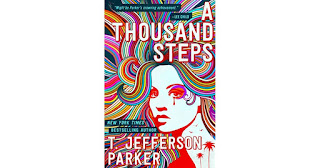
It’s refreshing, on the other hand, to find out you can be hooked again by a writer, just as thoroughly as you were the first time. Here’s an embarrassing story. I read Jefferson Parker’s Laguna Heat when it first came out, and then the next book, Little Saigon, and I liked both of them a lot. And then I had the misfortune of watching the TV movie of Laguna Heat. I’m sorry, but Harry Hamlin, for all that he seems to be a nice guy, is not a very expressive actor, and even with Jason Robards and Rip Torn and Jimmy Gammon – no. Least said, soonest mended. But here’s where I mortify myself. I stopped reading Jeff Parker. We all know the writer has zero control of what happens when they sell a book to the movies. Sure, you got Dutch Leonard, or Dennis Lehane, but the rest of us are up shit creek. You can open the oven door, and the soufflé will fall, but Jeff wasn’t even in the kitchen when it happened. It took me fifteen years, before I picked up Silent Joe, and realized what I’d been missing. I can say now, with all humility, I never would have forgiven myself, if I’d missed A Thousand Steps, or worse, The Rescue. And what about the Charlie Hood books? There’s always the satisfaction of knowing you can give yourself a second chance.

Take this as a cautionary tale. Fashions change. Our own tastes. The way a writer looks at the world, or the way we do. But don’t pass up a good book. They sneak up on you.