Back in July Joseph Walker wrote a piece on an interesting subject: Which book would you choose to introduce a new reader to a favorite author? Not which is the best novel, or which is your favorite, but which book should a reader start with?
Here is my take on it. I will start with two where I agree with Joe.
Agatha Christie. And Then There Were None. As Joe suggests, anyone who thinks Christie=Cozy has never read this book. It actually leans toward horror as you realize that 1) all the characters are nasty ranging to evil, and 2) all are doomed. It is a masterpiece.

Sue Grafton. A is for Alibi. Along with Sara Paretsky and Marcia Muller, with this novel Grafton birthed a thousand female private eyes. Few are as good as Kinsey Milhone. Grafton said she wrote this book to kill off an ex-husband, which may explain some of the passion in it.
Next we move on to authors I love but from whom I selected a different book than Joe.

Rex Stout. The Doorbell Rang. Is it his best? Maybe. It is certainly my favorite. The book lifted both Stout and Nero Wolfe to a new level with the sheer audacity of the concept. At a time when half the politicians in the country were terrified of J. Edgar Hoover our heroes announce: "On behalf of a client we're going to push his nose in. Just a routine chore, but he's touchy and will try to stop us. So futile." The nose was a metaphor, by the way. The plot is not his strongest, but plot is not why we reread this guy's books. The dialog and characterization (a bottle of milk comes to mind) are unforgettable.
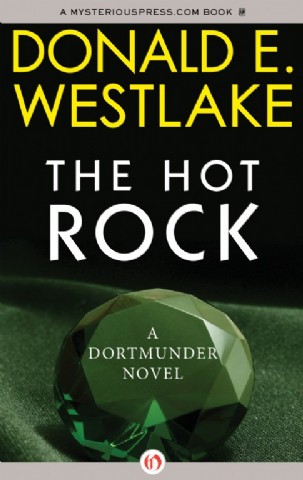
Donald E. Westlake. The Hot Rock. Joe chose Drowned Hopes and I admit that what I call the middle- period Dortmunder books are wonderfully complex, but why not start where it all began? John Dortmunder is an incredibly unlucky (don't call him incompetent!) thief and in this book he has to steal an emerald, then free the associate who got caught with it, then break into the place it was hidden it, etc. etc. As one character says "I have heard of the habitual criminal but never the habitual crime." Hilarious.

Richard Stark. Butcher's Moon. Stark=Westlake, although Westlake said the Stark books only used part of the keyboard. Dortmunder is in effect the reverse of Parker and in this novel we see a bit of the thief's philosophy. Gangsters catch Parker's associate and threaten to dismember him if our antihero won't play along. He does, but not for the reasons you might expect. A very gory introduction to the amoral thief.

I would include Ed McBain except, truth to tell, I have trouble telling the books apart in my memory. My favorites are the ones where minor character Fat Ollie Weeks - good detective and lousy human being - starts on a remarkable journey of self-discovery.
Moving on to authors Joe did not include...


Dick Francis. Reflex. This was an easy choice. It is a good example of Francis's formula while showing how a writer can create magic with a formula. Philip Nore is a jockey, grimly struggling with the fact that his career is almost over. When he reluctantly agrees to investigate a mystery in his own family he discovers a past he didn't know he had, and the possibility of a future he never imagined.

Tony Hillerman. Skinwalkers. Hillerman wrote three novels about older, modern-thinking Navaho Police Lieutenant Joe Leaphorn. Then he wrote three about younger, more traditional Officer Jim Chee. The legend says that a fan asked him why he had changed the name of the character, since she saw no other difference between the two, and that led Hillerman to writing this book, the first of many in which the two men work together. I find that hard to believe because Skinwalkers feels like he was building up to it since his first novel. And the ending... wow.
G.M. Ford. Who the Hell is Wanda Fuca? Jerry Ford (not that one) wrote a series of terrific novels about Leo Waterman, a Seattle private eye whose secret weapon is a team of homeless people (they can spy anywhere because no one ever notices them). His masterpiece is Cast in Stone, but start with the first book. Witty and gritty in equal measures.

Elmore Leonard. Bandits. Truth to tell I have the same problem with Leonard as I have with McBain. I enjoy his books but have trouble telling them a part a year after reading them. But the ex-nun in this book is a standout in his vast collection of scheming crooks and reluctant heroes.

S.J. Rozan. China Plaid. Most of Rozan's books feature young Lydia Chin and older Bill Smith, both New York private eyes and semi-partners. . Half of them are narrated by her and half by him. All are a delight. Start at the beginning.

