Showing posts with label mystery magazine. Show all posts

16 October 2026

Book DNA – is it for you?


This is my penultimate SleuthSayers post, and I hope you'll find it helpful if you have a book to promote - or if you just like to read and discuss books!

When I was seeking publicity opportunities for It's Not Even Past a year ago, Liz Zelvin steered me toward Shepherd, a "book discovery platform" similar in some ways  - but not all - to

Goodreads. In 2026, Shepherd rebranded as Book DNA, which is certainly a more informative name for a book-finding service! They've got an interesting concept. Book DNA allows readers to find curated reading lists (if you like books by Jane Doe, here's what other Jane Doe fans recommend). It categorizes books by genre, and provides "author profile pages" that let you meet an author, learn about his or her book, and explore a list of five books that author recommends.

Well, why not? At the basic level, it's free to both readers and authors, so I hit "contact" and a pleasant, enthusiastic person named Cathy got back to me quickly, inviting me to fill out a form describing my book and listing five of my own faves. I was only sixty-five percent certain she was a real person and not an AI assistant, but - she turned out to be for real.

Listing my top five books was a tough assignment, because my purpose was to steer traffic toward my book, which is gritty crime fiction, perhaps could be called noir, and is technically a story collection, though the stories are interlocked, chronological, and  - read together -  form a novel. But many of my favorite writers are entirely outside those genres:  Colson Whitehead (The Nickel Boys, The Underground Railroad), Elizabeth Strout (Olive Kittredge), Ann Patchett (Bel Canto), George Saunders (Lincoln in the Bardo), Jim Fergus (One Thousand White Women), Jeffrey Eugenides (Middlesex). And don't get me started on kids' books. I read the entire Little House, All of a Kind Family, and Miss Bianca series straight through every few years. I still dream about Lois Lenski's Indian Captive and Ruth Archer's A Candle in Her Room. So I narrowed my focus to the best books that had something in common with my own - a dark premise, one or more murders, an element of mystery - and I still had a very, very hard time narrowing the list.


I knew Elizabeth George and Ruth Rendell would make the cut. I wasn't sure which book in either case, but I finally decided by thinking, well, you love all their books, but which do you remember best?  And that gave me What Came Before He Shot Her - George's tour de force follow-up to her own With No One as Witness, in which Inspector Thomas Lynley's fiancee, Lady Helen Clyde, is murdered by a child of twelve. What Came Before He Shot Her is heartbreaking, moving, terrifying - as good as any of George's novels, but in some regards, entirely different. For Rendell, I was tempted by The Veiled One - I love Inspector Wexford - but I finally decided on a Barbara Vine title, A Dark-Adapted Eye, a masterwork of secrets and family dysfunction. (Vine is one of Rendell's pseudonyms.)


I had the same problem with Kate Atkinson, and I sort of thought I should list her twice - once for Jackson Brodie (I chose Case Histories, almost solely because it's first, but they're all great) and again for her more literary (and weird, and wonderful) Life After Life. I finally went with Jackson because it's closer to what I write - he's a semi-amateur sleuth with a predilection for trouble - and also because how do you choose Life After Life without its equally stunning companion novel, A God in Ruins? Haven't read those? Get thee to Bookshop.org. You are in for a life-changing read. I promise. 

Well, speaking of life-changing, I've listed three books and haven't gotten to Sarah Waters yet, although she's probably the best contemporary writer going. Fingersmith, remember? But I went with The Paying Guests. Oh. My. God. Just read it, if you haven't yet. It's got everything: Depression-era London, class warfare, forbidden lesbian sex, murder…

I sat up late arguing with Emma Donaghue (Room, Frog Music) and Paulette Jiles (have mercy! she has written some amazing books: Enemy Women, News of the World). Finally, I realized I cared a lot more about my list than either of them do (also, they weren't actually there) and I went with Jiles' phenomenal The Color of Lightning. It was tough because I dream about News of the World, but Lightning taught me so much about the American West and about fine, fine writing. It's the fictionalized story of Britt Johnson, a free Black cowboy who rescues his family from Comanchees during the Civil War.

When I'd turned in my list, along with a blurb about my own book, I heard back from Cathy and crew almost immediately. They'd made some small cuts for space and some edits to break up lengthy blocks of text. I didn't really notice anything missing, but I certainly appreciated being asked. 

The next step takes us to my only quibble with Book DNA - the buy button. Although readers can buy from Bookshop.org, Amazon is the default. One must click on a very small arrow on the Amazon button to see that there's an option.

I clicked through on both sales platforms to check my book, and found that there was no "preview" or "look inside" option on Amazon - something that many readers use prior to making a purchase. It turns out that Amazon doesn't post previews until a book is actually released. And once again, Book DNA came through with flying colors, offering to hold off posting until the release date - October 20.  

As Dad often reminded us, "there's no such thing as a free lunch." But no one at Book DNA had asked me for a dime. So - how do they make money? In two ways, as it turns out. One, Book DNA receives a commission on sales that accounts for about twenty percent of their revenue. The other eighty percent comes from reader and author memberships. But the "freemium" model means that the basic membership level is free for both writers and readers. Authors can - and many do - pay a bit more to get special promotion and increased visibility, but the curated lists are free for real.

There are plenty of happy writers engaging with the site, but it's always informative to know what folks don't like. So I asked Uncle Google what dissatisfied authors had to say about the platform, and the answer was revealing: authors didn't like the effort required to choose five favorite books and write a paragraph about each. These are writers.  Writers trying to promote a book. A book they have written. Go figure.  Ben Fox, co-founder of Book DNA, says that it should take authors thirty to 45 minutes to write something that will "deliver a lifetime of steady promotion. This isn't a blog where it posts and then readers never see it again; your recommendations plug into our entire platform, and every reader who visits looking for a book has a chance of bumping into your book and your book recommendations as they explore."

If you read my last SleuthSayers post, you know that I'm willing to work hard to take advantage of small promotion and publicity opportunities, and that some of these "little ponds" have really paid off for me. So I've little time for writers who claim to want to sell books but are not willing to make the effort to do so. 

I'm excited about the Book DNA opportunity, and I'm interested to see what happens on October 20th. Stay tuned.


Anna Scotti's work appears frequently in Ellery Queen Mystery Magazine. It's Not Even Past will be released by Crippen & Landru on October 20, followed by They Look Like Angels, a collection of stand-alone stories, early next year.  Scotti is the Chautauqua Journal's nominee for Best of the Net (fiction) this year for her story, The Intruder.

Scotti is also a poet, with recent inclusions in Chautauqua, Nimrod, The Women Artists Datebook, and in Women in a Golden State (Gunpowder Press).  You can read and hear some of her poems without a paywall on her site or at The New Yorker.

04 September 2026

Going After Publicity for Your (small, precious) Book


So you've got a novel coming out? If you are with one of the Big Five publishers - Penguin Random House, HarperCollins, Macmillan, Simon & Schuster, or Hachette - there will be a publicity machine at work for you. Your editor, or the publicity department, will let you know what they want your role to be. They may ask you to update your website, open social media accounts, or to provide a mailing list of friends, family, and fans.

If you are with a smaller press, say a university press or a small independent publisher - you should inquire, when you are offered a contract, what your role will be in gaining publicity for your book. Most small presses welcome your involvement and will be delighted if you submit your work to reviewers, arrange for readings and signings on your own, and so forth. But check! You do not want to overstep, duplicate their efforts, or - eek - embarrass your publisher.

I'm not familiar with every aspect of self-publishing, but I'd imagine the tips I'm about to offer will apply nicely to self-published authors as well.

If you are about to release a book, be reachable via a website. The primary purpose of publicity is to sell your book, and the secondary purpose is to get your name out there so that you can be contacted by fans, publishers, agents, and sponsors of events and projects you may find appealing.

Your website can be extremely simple - your name, your picture, your book cover, a release date, and a contact form so people can reach you (don't post your personal email address). A fuller website with lots of pictures and info about all of your publications is better, but at least have the minimum. You can hire someone to do a bang-up website, but that costs. Or you can do it yourself, nearly for free. My website is perpetually under construction and is never up-to-date, so don't come at me after you take a peek - but the point is I am findable. I do get a lot of spam. I also get fan letters, invitations to paid speaking engagements, requests for interviews, offers to contribute to journals and anthologies, and - since my novel-in-stories It's Not Even Past was orphaned last year when the publisher closed - inquiries from publishers.

You need some kind of social media. Something. Facebook has developed a reputation for being mostly for seniors, but their largest demographic (worldwide) is actually young adults 25 - 35. So you can reach young readers with a facebook page (and paid ads, if you want to go that route). But don't be too quick to write off the oldsters, either - seniors buy a lot of books! If you are already on Facebook, open a separate author page you are comfortable setting to "public." Keep this page for business. No pictures of lunch, cats, craft cocktails, precocious toddlers, thrifting expeditions or politics - unless applicable to your book.

Yes, cute. No, website.

A lot of writers promote their work on Instagram. Since the mass exodus from X (formerly Twitter), many use Threads. Bluesky is also popular. My advice is go to the websites of authors you like and admire, whose work is in some way similar to your own, and see what social media platforms they use. If you are new to all this, choose one - you don't have time to manage them all. (If you have that much time on your hands, you should spend more of it writing.)

Reviews on Goodreads and Amazon can be critical to a book's success. They are primary platforms for "book discovery." However, these platforms can be frustrating. Trolls may give your books bad reviews just for fun, or because they don't like you. If you do see negative reviews of your work - legit or troll-generated - ignore them. Remember the adage Never wrestle with a pig. You get dirty, and besides, the pig likes it.

Next up: go after publicity opportunities, large and small. Ask friends and family to help spread the word about your book by putting the book cover on their social media, and by mentioning it to their book club, local librarian, and local bookstore. Include a purchase link to make it easy for them to buy your book! Consider pushing your publisher's site and bookshop.org, which allows readers to purchase online while supporting local bookstores!

If you live in L.A. or New York, it's nearly impossible to get a reading or signing at a bookstore - there are just so many writers, most more famous than you (or I). But if you live in a smaller city or town, you've got a good shot. Walk into bookstores and greet the manager. Buy a book. Tell them you're available for a signing or a reading and that you can "fill the room." If you have a friend in college, ask them to mention your book to their English professor. But don't put people on the spot - ask once, and take no - or no answer - for an answer. No everyone will want to read your book, and not everyone who does read it will enjoy it. That's life.

Your college alumni newsletter is a great place to publicize your work. Your local newspaper editor might be interested, too. Again, highly unlikely if you live in New York or LA, but far more promising if you live in Smallburg, North Dakota or Tiny Town, Georgia. Ask!

Your publisher should provide you with ARCs, or "Advance Review Copies." These are typically electronic (PDF or epub). Some publishers will also provide hard copies, but these are expensive and must be distributed judiciously. Electronic ARCs increase the likelihood that your work will be "pirated" – that is, circulated to unauthorized readers for free… but there are worse things. No one wants to be pirated, but the truth is all circulation builds word of mouth and it could result in your finding paying readers. It's important that you discuss distribution of ARCs with your publisher. They may have a do and don't list to help control unauthorized access.

These days, when writers talk about "reviews," they are often referring to individual reader reviews on Amazon, Goodreads, or on reviewer platforms like NetGalley or Booksprout. But "real" reviews - those written by professionals that appear in journals and newspapers - are the Holy Grail, and you should go after them. Thirteen million people read The New York Times each day. You probably won't get reviewed there. But a small-town newspaper, even a freebie, can easily have 5,000 daily readers, up to as many as 13,000. That's a lot of potential to sell books!

Think about books you like that are similar in some way (e.g. genre) to your own. Figure out where the books have been reviewed using your good friend google. Then contact the reviewer and ask if you can send them an ARC. Nota Bene: the more prestigious the periodical, as a rule, the earlier they want your ARCs. Many will request them four or five months ahead of publication, and your small publisher simply may not have them ready that far in advance. Wing it! If an editor agrees to read an ARC, send them a meticulously edited PDF - along with information like release date, cover price, ISBN, and whether bookstores will carry your book.

Your publisher will probably ask you for an email list - and even if not, you should have one for your own use. Way, way ahead of time, prepare a list of every single person you know who might conceivably be interested in you or your book. Have names and email addresses current, proofread and up to date. Be sure there is a purchase link (preferably, a pre-purchase link) included so that people can order your book on impulse, while they are thinking of it. If you end up sending out the email yourself, include a request that readers review you on Amazon or Goodreads.

Go after the little guys - and the medium-sized guys, too. Before It's Not Even Past was released, I hit up everyone I could think of to run a review or at least a mention. A lot of folks ignored my request, a few said no - and quite a few said yes! My alma mater asked me to teach a class. Ellery Queen Mystery Magazine (where many of the stories first appeared) invited me to blog for Something Is Going to Happen. Art Taylor asked me to blog for The First Two Pages, too! Dru's Book Musing ran a cover reveal and A Day in the Life feature, Victoria Leigh reviewed, and Roger Johns ran an interview on Murder Books.

Paul O'Connor interviewed me for Hourglass Author, and Bonnar Spring invited me to an interview on Crime Wave Podcast (mine aired right after Anthony Horowitz's!). And there were more.

John Loyd posted a comprehensive review of the collection. Book blogger Anne Van Doorn ran a terrific review, and Ashley-Ruth M. Bernier included It's Not Even Past in a round-up of crime short story collections published on Crime Reads. Jeremy Black of The Critic accepted a review copy and gave it a stellar review! Then he passed the book along to David Brown, a book blogger who loves mysteries, and David ran a review and invited me to an interview!

Janet Rudolph of The Mystery Readers Journal offered me a spot in Mystery Fanfare, and King's River Life, a magazine that really supports mystery writers, told me they no longer run reviews of collections – but asked me to do a guest blog! Crime Fiction Lover ran a nice mention, and Killer Nashville and International Thriller Writers both invited me to contribute to their journals! Some of these outlets are small and some are huge. But they all have readers who love mysteries and buy books, and I went after every single opportunity I could. And then…

Down&Out Books closed and my book went out of print, right after it was released. So all that work was a big waste of time, right?

No! Decidedly not! Because a couple of months later, I got an email from a guy who'd tracked me down via my website. He had heard about the book but couldn't find a copy online (of course). Seemed like a nice guy, so I offered to sell him one of the six remaining author copies I'd been hoarding for posterity. That night, I sat bolt upright in bed in the middle of the night, struck by an epiphany. Doug Greene. Douglas Greene. I know that name.

Sure enough. Mr. Greene is the (semi-retired) founder of Crippen&Landru, a highly respected publisher of mystery collections, classic and contemporary. And he loved my book! I asked him to put in a good word for me with the editor-in-chief, Jeff Marks, and a couple of weeks later, we had a deal! Crippen & Landru will release It's Not Even Past with a new cover and a new introduction in October, and are currently negotiating foreign rights for the book on my behalf! They'll release a second collection, They Look Like Angels, early in the new year. This happy ending would absolutely not have happened had I not gone all out to get publicity for my book. That is how Doug Greene found me, and it's how the foreign publishers found me, too.

Christian Gibson's cover!

So you spent a year – maybe more – writing your book, and you worked hard to get it out to potential publishers. Now spend some time ensuring that your book reaches the fullest complement of readers possible! Good luck!


Anna Scotti is delighted to have the next in her "librarian-on-the-run" series, When Bright Angels Beckon, included in the 85th anniversary issue of Ellery Queen Mystery Magazine (September-October '26), along with a personal essay, Sisters Reading Sisters. Bright Angels is the thirteenth story in the librarian series, and the eleventh to appear in EQMM. The next in the series, I Shall Wear Purple, will appear in an upcoming issue. Learn more at AnnaKScotti.com . Purchase It's Not Even Past direct from the publisher, at your local bookstore, or online. It will be available from bookshop.org soon!

Everyone - Big Five kahunas, small press authors, self-published writers and "gettin' there" authors - is invited to post comments, questions, corrections and additions in the comments. Please do!

24 May 2026

The Urge to Kill


My ancestry is Scottish. I was born in New Zealand, but my family line (on both sides) is only a couple of steps out from Scottish soil. So, it wasn't random that I set a large chunk of my latest short story, Alan Duncan Did This, in Edinburgh (Alfred Hitchcock's Mystery Magazine, March/April 2026). My story is about a Scotsman, Alan Duncan, who travels down to London on Guy Fawkes night (1949) to commit a murder. A murder he's quite proud of. A murder he ranks as a work of art.

Fletcher's murder had been a work of magnificence. Alan almost wished he could have signed it. With a bold, florid flourish, like Salvador Dali. Alan Duncan did this.

Vanity? Yep. A villain's vanity was a common theme in Agatha Christie's mysteries; it was often her villain's downfall. Anyway, in this post, I don't want to chat about Scotland or a murderer's vanity, but about motive. Alan Duncan had a good, cogent reason to commit his murder. Killers in fiction should.

Detectives are always looking for means, motive, and opportunity. But in real life, motive is the lessor of these in criminal investigations. It's not required for establishing guilt or gaining a conviction. It's nice for the prosecutor to have one in their basket going into a courtroom, but it's unnecessary to prove. For writers of mysteries, however, motive is the central key to a character's actions. It's the engine on which a story is propelled.

People don't commit murders for weak reasons in fiction. Without a strong, compelling motive, a character's actions reek of implausibility. Yes, in the real world, killers can and do commit murders for no reason, but that doesn't really fly in fiction (there are exceptions, so I'm speaking in general). Spoiler: Imagine if the killers in Murder on the Orient Express had meticulously plotted and killed Ratchett/Cassetti because he stole Princess Dragomiroff's polo mallet. Weak sauce.

Strong and clear motives engage the reader. And audience. Shakespeare was a master of this.

  • Macbeth (back to Scotland) murders King Duncan through ambition; he wants the crown, and to allay the doubts of his wife and demonstrate his power. His motives are ambition and ego.
  • Richard (Richard III) needs nought from a wife to spur him to action; his ambition has no hesitation when he orders the murder of, or personally dispatches, a succession of nobility to the hereafter. His motivation is also revenge against the world. He is a man bitter with resentment.
  • Iago (Othello) is also motivated by resentment (Othello's promoting of Cassio rather than himself), and sex (the suspicion that Othello has slept with his wife). “I do suspect the lusty Moor hath leaped into my seat.” Envy is Iago's principal motivation. He envies everything about Othello. And it's true that Iago doesn't actually murder Othello, but he does systematically destroy Othello and lead him to kill his own wife. Revenge writ large.

These are all strong motivators because they are plausible in their contexts and thoroughly human. We might not condone a character's actions, but we instinctively understand their reasoning.

It's often remarked that sex or money are the most common motives for murder in crime fiction. Cherchez la femme. Cherchez la dollar. Here's my stab (see what I did there?) at a start of a murder motive taxonomy based on these two headings:

     SEX      MONEY
  • Jealousy
  • Betrayal
  • Humiliation
  • Obsession
  • Eliminating a rival
  • Inheritance
  • Insurance payout
  • Freedom from a debt
  • Property acquisition
  • Career advancement

To sex and money, as per Shakespeare above, I would add revenge.

Revenge is often egged on by sex or money. Alan Duncan's motive is revenge by way of sex – jealousy and obsession. He focuses his whole life on seeking revenge because of his jealousy. Murder is his only release from his idée fixe.

Revenge can also stand alone. Spoilers: Murder on the Orient Express is a murder of plain and simple revenge. The actions of the killers are not invoked because of sex or money (however, what they are avenging was a crime involving money (a ransom)).

This is only the tip of the iceberg of murder motives. Do you have a favourite when you write, maybe one that isn't in this list?

24 February 2026

Sixteen Lives


Launched in 2017, BCMM
lasted 16 issues.
Black Cat Mystery Magazine—not to be confused with Black Cat Weekly, though it often is—lasted sixteen issues, the final issue releasing September 16, 2025. I had hoped to convince the publisher to continue through issue eighteen, so I held onto the stories already accepted for issues seventeen and eighteen far longer than I should have, not notifying the writers of the magazine’s demise until early February of this year.

My excuse for the delay, lame as it is: I was unable to accept the magazine’s demise, especially during fall 2025 when so many other publishers and publications had announced closure, hiatus, restructuring, new ownership, and other negative news. The market for short crime fiction was collapsing and I didn’t want to share one more bit of bad news in the midst of the shit-storm.

UNOFFICIAL HISTORY

Perhaps someday someone will write the official history of Black Cat Mystery Magazine but, as someone associated with every issue of the magazine, I can share some unofficial history.

I first heard about the impending launch of Black Cat Mystery Magazine when another writer shared inside information mid-2017. I contacted the publisher for more information and was invited to submit. Carla Coupe and John Betancourt were co-editors and they accepted my stories for the first six issues.

After the fourth issue, Carla announced her retirement from the magazine (she didn’t stay retired; she now edits Sherlock Holmes Mystery Magazine and co-edits, with John and me, Malice Domestic’s annual anthology), and I joined the editorial staff. I co-edited issue five with Carla and John and became the sole editor with issue six.

Many of the stories selected for issues five and six—including mine—were acquired by Carla and John, so my influence over the content didn’t take full effect until issue seven, the special private eye issue.

While the magazine was—much like Alfred Hitchcock’s Mystery Magazine and Ellery Queen’s Mystery Magazine—open to all sub-genres of crime fiction, we produced two-more themed issues. Issue twelve was the cozy issue and issue sixteen was the historical issue.

I believe the content of the first issue was solicited, but I’m uncertain how Carla and John found the content for the next few issues. While John selected the classic reprints each issue, I acquired the original content for the issues I edited via open submission calls.

And that lead to the situation mentioned earlier. From the hundreds of stories submitted, I accepted more than I could publish in a reasonable amount of time given the magazine’s publication schedule.

BCMM's final issue was
published in 2025.
LEGACY

Though BCMM lasted only sixteen issues, it published many great stories, including several that were recognized by awards and best-of-year inclusions:

“Rhonda and Clyde” by John M. Floyd (issue 5) was selected for inclusion in The Best American Mystery Stories 2020.

“Blest Be the Tie That Binds” by Michael Bracken (issue 6) was selected for inclusion in The Best Mystery Stories of the Year 2021 and was named one of the Other Distinguished Mystery and Suspense stories by The Best American Mystery and Suspense 2021.

“Mustang Sally” by John M. Floyd (issue 7) received a Shamus Award.

“Show and Zeller” by Gordon Linzner (issue 7) was short-listed for a Shamus Award.

“The White Calf and the Wind” by Mike Adamson (issue 11) was short-listed for a Derringer Award and was included in the Honor Roll for The Best Mystery Stories of the Year 2023.

“Real Courage” by Barb Goffman (issue 14) was nominated for Agatha, Anthony, and Macavity Awards.

“El Paso Heat” by Peter W.J. Hayes (issue 14) was selected for inclusion in The Best Mystery Stories of the Year 2024.

SUPPORT 

While I am dismayed at the loss of Black Cat Mystery Magazine as an ongoing publication, all back issues are still available from the publisher and at various online booksellers. If you didn’t purchase copies when they were first published, you can certainly purchase them now.

Additionally, there are several crime fiction magazines still publishing and a few new ones have recently launched. So, while you’re picking up back issues of BCMM, spend a few dollars supporting the remaining and new publications. Your support helps ensure their continued success.

* * *

“Store-Crossed Lovers” was published February 4, 2026, in Cold Caller.

“Takes the Cake” was published February 5, 2026, in Micromance.

* * *

I’ll be at Left Coast Crime later this week and will be joining the “Short But Usually Not Sweet” panel at noon Thursday in the Seacliff CD room with Tom Andes, Vera Chan, and David Hagerty. Brian Shea will moderate.

* * *

ShortCon, the Premier Conference for Writers of Short Crime Fiction, returns to Alexandria, Virginia, on June 6. Join acclaimed crime fiction professions for an immersive one-day event and learn how to write short crime fiction, get your stories published, and develop and sustain a long-term career writing short. Session leaders include Gary Phillips, Art Taylor, and Michele Slung. Learn more and register at https://www.eastcoastcrime.com/#/.

* * *

Spend four weeks in South Carolina this summer learning to write crime fiction from some of today’s masters: Joe R. Lansdale, Cheryl Head, Michael Bracken, and Warren S. Moore. The Newberry Crime Writing Workshop is an intensive, in-person, one-month workshop focusing on fundamentals particular to the writing of crime, mystery, and suspense fiction. It takes place July 6-31, on the historic campus of Newberry College, in Newberry, South Carolina.

A different professional writer or editor conducts the workshop each week. About fifteen participants are housed in college apartments, and classes are held in seminar facilities. Lunch and dinner are provided and continental breakfasts with coffee will also be available. The writers-in-residence live nearby and are continuously available to students. Mornings are devoted to critiquing manuscripts in a workshop setting. Afternoons, evenings, and weekends are devoted to individual writing, conferences with the current writer-in-residence, social activities, and the completion of class assignments.

Learn more and apply at https://www.newberry.edu/academics/academic-experience/crime-writing-workshop.

29 October 2025

Six of a Kind


I had an unusual month recently, an experience I can only describe as almost John-Floydian.  It started on a Monday when an anthology was published with one of my stories in it.  That was actually expected.  But I was surprised on Tuesday when a second anthology appeared with one of my tales.  And then I was flabbergasted when it happened again on Wednesday.

A week later at Bouchercon I was delighted to sign copies of the conference anthology with yet another of my stories in it.  Since then, two more have appeared in magazines.


I assure you, this is not my usual publication record.  But let's take a guided tour of these six literary masterpieces.

"The Cage," in Better Off Dead Vol. 1: Crime Fiction Inspired by the Songs of Elton John and Bernie Taupin, edited by D. M Barr.  I actually wrote about this  at SleuthSayers in August.  It's a story about a high school student having a bad day, following him class by class.  IMPORTANT: This book is published by Down and Out Books, which is going out of business, so if you want a copy grab it fast! 

"Lucky Night" in The Most Dangerous Games, edited by Deborah Lacy.  The shortest of six stories.  A successful businessman goes back to his hometown and attends a poker game.  Crime deals itself in... 

"The Little Death," in Celluloid Crimes, edited by Deborah Well.  A few years ago I wrote a story for Monkey Business, Josh Pachter's anthology of stories inspired by the Marx Brothers, and my protagonist was Madame Matilda, a dwarf working in a circus in the 1940s.  By the end of the story she had solved a murder and been hired by a detective agency.  "The Little Death," in which she provides security for the prizes in an art contest, is actually her third adventure.  Numbers two and four have been purchased for anthologies but have not yet been published.  I am currently polishing up on #5.

"The Unreliable Narrator," in Blood on the Bayou: Case Closed, edited by Don Bruns.  This story  is about an actor who makes his living performing audiobooks.  He's very good at his job -- except you can't count on him to show up on time and sober.  He is, you see, an Unreliable Narrator.  I was very smug when I dreamed that up.  All the stories in the book had to be set in the Big Easy so I owe a debt to O'Neil DeNoux who helped me NOLA-fy my tale.

Shanks and the High Bidder," in Black Cat Weekly, #212.  My 24th story about Leopold Longshanks, grouchy writer of crime fiction and reluctant solver of true crime.  In this one he deals with the winner of a charity auction who is reluctant to come up with the cash.  This is my second story inspired by Not Always Right, a webpage where anonymous contributors send in true tales of horrible customers. It is a huge time sink but it does provide wild story prompts.

"The Night Beckham Burned Down," in Black Cat Mystery Magazine, #16. This one was fun to write.  It was inspired by a catastrophic fire in Oregon in 1936.  Most of the bizarre events I describe really happen.  I  just had to make one of the fire victims a murder victim.  I wrote about it  at SleuthSayers last year.

But wait! There's more!  After I wrote this I learned that a seventh story was coming out in October.

"Give the Gift of Murder," in Black Cat Weekly, #216. I worked for 31 years in a university library and for some of them a campus fundraiser had the office next door.  Her job consisted of talking people into donating moolah to the university, preferably in large amounts.  It occurred to me that someone giving away money that greedy relatives might want for themselves was an obvious premise for a crime novel.  I even had the opening ready.  But my novels have not been hugely successful so I set the idea aside.  But one day I remembered my New Choice! technique and had a new thought: What if I made it much shorter?  A novella?  And immediately the pieces fell into place.  As it turned out the story is only about half as long as a novella, but I like it.  Oh, here's that opening I dreamed up:

When she found the corpse of Howard Secton III ruining the expensive Persian rug in his study, Maggie Prince's first thought was Did he sign the papers?  Her second thought was: I hate my job.

Personally, I love mine. Hoping you the same.

29 May 2024

44 and Counting


Last month R.T. Lawton did a piece crunching the numbers on his 51 stories in Alfred Hitchcock's Mystery Magazine.  I thought it would be fun to do the same thing with my more modest collection, especially since "Professor Pie is Going to Die" arrived this week in the May/June issue.  "Pie" is #43 and there is another novella awaiting publication, so my current total is 44.

R.T. made his first sale to AHMM in 2001.  I made mine in 1981 so not only has he sold more but he did it in a much shorter time.  He has made $21,376  while my stories earned $16,415.  His stories average out to 5,065 words while mine come in at 4,280, with a meridian of 3,400 words.  (I tend to write very short, but a few novellas bump up the mean considerably.)

I am doing far worse than R.T. on percentage of stories sold: 94 rejections give me a sale percentage of 32%.  Under the current editor, Linda Landrigan, I have been hitting 54.4%, which may have to do with her preferences but I hope is also because I have improved as a writer.  

R.T. also has more AHMM reprints to his credit than I do, but that depends on how you calculate them.


Here's the easy way to figure mine:

    Black Cat Weekly: $50

    Japanese Mystery magazine:  $350

However, I also self-published a book, Shanks on Crime.  I lost a couple of hundred bucks on it, but then a Japanese publisher bought the rights to translate it and paid me $3,600. Nine of the fourteen stories were from AHMM so: 3,600 x 9/14 =   2,324.

But, wait! There's more.  The book sold well enough in Japan that the publisher decided to put out a book of my otherwise uncollected stories, five of which were from AHMM. So: $3,600 x 5/9 = 2,000.

Since those books were published they have earned some royalties and the percentage from AHMM stories turns out to be $585.


Which brings us to:

AHMM: $16,415

Reprints: $400

Japanese books: $4,909

Total: $21,714

That's for 43 years worth of work. You will notice R.T. is still ahead of me.   He would probably agree that  it's a slow way to get rich.  But I've had fun.

26 November 2023

50th


In January 2006, I attended my first MWA Board of Directors meeting at the Roosevelt Hotel in Manhattan. At the start of the meeting, the vice-president had each attendee sitting around the conference table introduce themselves and tell what they wrote.

Sitting there among several best-selling novelists, I told them I wrote only short stories, and concluded with I doubted I'd live long enough to get as many published in Alfred Hitchcock Mystery Magazine and Ellery Queen Mystery Magazine as the famous short story author Ed Hoch had. At the time, I had only eight stories published in AHMM, whereas Ed went on to have 450 in EQMM, plus I don't know how many in AHMM before he passed two years later.

My first story ("Once, Twice, Dead") published in AHMM's November 2001 issue, was set in the Golden Triangle. Kathleen Jordan was the editor and her web page said she wanted mystery stories in exotic locations. To me, Southeast Asia was exotic, I'd seen it for myself in '67, so I submitted the story and she bought it.

Elation soon turned into panic when I realized I had no second story to submit. The next story had to be high quality, else I could be considered as a one-trick pony. After much brainstorming, the Twin Brothers Bail Bond series was born. Kathleen bought the first three in the series before she passed.

Shortly after Linda Landrigan took over as editor, she sent me an e-mail requesting some changes in that third story which had already been accepted, bought and paid for, though not yet published. I figured this was probably the end of my short career in AHMM. Since the editor is the boss, I made the requested changes and went on to sell her seven more stories in that series.

I soon branched out to The Armenian series set in 1850s Chechnya; the 1660s Paris Underworld series, involving a young, inept pickpocket trying to survive in a criminal enclave; the Holiday Burglars series;  and The Golden Triangle series, involving two feuding half-brothers vying to take over their warlord father's opium empire in the mountain jungles of Southeast Asia.

In my Prohibition Era series, "Whiskey Curb" is set in a Manhattan location where actual gangsters used to sell and trade liquor. It is my 49th sale to AHMM and is published in their Nov/Dec 2023 issue. The third story in this series was rejected with the dreaded doesn't fit our needs at the moment type comment. The fourth story in the series is currently resting in the editor's e-slush pile, waiting for a verdict.

Naturally, there are some standalone stories not necessarily conducive to acquiring series status. And, there are some potential series stories which died aborning because I had already written and submitted the second story in the series before the first one was rejected.

And now, we come to my first ever P.I. series. An earlier post talks about the genesis of my first ever P.I. story, "Leonardo." Unfortunately, it will have to find a different home, since it was rejected by AHMM. Seems that the upper brass does not want any stories mentioning teens and sex. My P.I. broke up a ring of pornographers. Nothing graphic, mind you, just the rescue scene and the mention seemed to nix the story. So, put that on your list of No-Nos and save yourself the trouble.

Here's the interesting part to go with the paragraph above. On 09/24/23, I received an e-mail from AHMM accepting the second story in my intended P.I. series. Same protagonist and sidekick, different crime. In which case, "Recidivism" becomes my 50th story sold to AHMM. Thank you, thank you.

Returning to the beginning of this blog, it appears I'm a long way from Ed Hoch's 450 stories in EQMM and I don't know how many in AHMM. Furthermore, with my fading eyesight, body parts which are showing the wear of a life well lived, and a brain like that cheese made in an European country where the natives yodel at each other in their mountains, I seriously doubt my sold/accepted numbers in AHMM will make it to as high as 100, or even to the number of years in my age.

God, I wish I were 50 again.

02 August 2023

Hobo Blues


  I am delighted to have a story in the July/August issue of Alfred Hitchcock's Mystery Magazine.  "Law of the Jungle" is the second story I owe to Utah Phillips.  (Or possibly the fourth.  We'll get back to that.)

As I have written before, Bruce Phillips, also known as U. Utah Phillips the Golden Voice of the Great Southwest, was many things: veteran, pacifist, anarchist, Wobbly, singer, songwriter, raconteur, and railroad bum, to name a few.

His song about the Orphan Train movement inspired me to write "Train Tracks,"  which also appeared in AHMM. In fact, he wrote an entire album of songs about railroads and hoboes.


So when I heard about the book by Ian McIntyre it was inevitable that I bought it.  On The Fly! is a collection of literature about railroad hobos, written by the hobos themselves. The publcations run 1879 to 1941.  The most famous author included is Jack London (although, oddly enough, his piece is about a trip by boat).  The book includes everything from cartoons and poetry to a death-row interview with a serial killer.  It is utterly fascinating.

I was almost halfway through it when the part of my brain that looks for story ideas, the entity I call the Miner, finally woke up and said : "Hey! Write about this!"

So I did.  "Law of the Jungle" is set in 1910 and centers on a teenager who runs away from home and meets an older hobo named Scottsdale Hank.  They ride the rails and encounter a crime and the kid, who takes the moniker or road name Jersey White, learns about life on the bum.


Oh, why did I say I might owe Phillips for four stories?  Well, since he was the highlight of the first folk festival I ever attended I give him a lot of credit for turning me into a folkie.  And if that hadn't happened I wouldn't have written two stories about Kentucky fiddler Cleve Penny.

And I may have more reasons for gratitude because I am currently writing another story about Scottsdale Hank.  Turns out I have a lot to say about hoboing.

I also wrote an essay about a different aspect of  "Law of the Jungle" and you can read it at the AHMM blog, Trace Evidence.

05 July 2023

Old Memorials, New Choices


They come in two kinds.

The official ones look like typical road signs but instead of telling you when you can park they say something like IN MEMORY OF SO-AND-SO.  PLEASE DON'T DRINK AND DRIVE.

We used to make a trip every winter on a rural road where there were four or five of those official memorials.  Seems like there was an alcohol problem there.

The private ones are more impressive.  There's usually a poster with a photo of the loved one.  There may be balloons, teddy bears, pinwheels, religious paraphernalia.  The message is the same.

Downtown here a private display sat for years, leaning against the fence of a business's parking lot.  It was continuously refreshed.  I used to wonder how the owner of the store felt about this memento mori.

One day it occurred to me: That could be a source of conflict and conflict is the main ingredient in fiction. So could I write a story about it?

Let's raise the stakes: Say that the business is a liquor store.  What would the owner think about this warning against his product?

It seemed like a pretty solid premise but I couldn't make any progress.  My main character refused to solidify.  All I knew was that he was a grumpy small businessman.  He just wouldn't develop. 

So I tried a trick.  I have written here before about the improv comedy game called New Choice.  The idea is that two actors make up a scene and at any point the third player call yell "New Choice!" and whoever spoke last has to come up with something different to say. 

In that earlier column I had suggested this as a solution for dealing with cliches in your plot.  My problem this time wasn't a cliche but I figured it was worth a shot.  So what could I change?


How about if I made the store owner a woman?

And boom, what a difference that made.

It felt like my true protagonist had been waiting in the wings, arms folded and foot tapping impatiently, waiting for me to kick the imposter off the stage and let her make her grand entrance.  I found that I knew her name, her backstory, even her speech patterns.

The result was a story called "Memorial" which appeared in Issue #95 of Black Cat Magazine.  

By the way, the photos  were taken in Greece.  In the USA we would assume these were "little libraries" but over there they are something else.  Our guide said they are created by families and mark the spot where a loved one died - or miraculously didn't.  They range in size from a domestic mailbox to almost as large as a bus shelter.  I haven't written any stories about them.

Yet.


28 May 2023

Raising Money


A few years ago, my Huey pilot buddy and I sat down to see if we could brainstorm a short story. Something different than we had conjured up in the past. The result was a rough outline for a couple of young conmen who had come up with a new scheme to try out in the criminal world. Their basic premise went something like the following.

If criminals could purchase a "clean" gun for a job, then maybe they would also be interested in renting a "clean" car so as not to be nabbed in a stolen car on their way to the job. The result was "The Clean Car Company" published in the January 2021 issue of Mystery Weekly Magazine (now Mystery Magazine). Of course, the two young conmen, Danny and Jackson, ran into a couple of glitches in their plan. They hadn't expected a dead body in the trunk when the rented car was returned.

Now, it was time for the duo to try out a new scheme which was actually an old con from the streets of Harlem. Raising Money was the pitch. Find a not-too-smart mark with lots of money and convince him that you could raise money by increasing the denominations on U.S. currency through the use of the modern miracles of science and technology.

What's that, you don't believe such a feat is possible? Have you considered all the recent  advances in science and technology which are difficult to explain to the common layman? Well then, let's see if you can explain to both our satisfaction how that same GPS voice in your cell phone can direct thousands of drivers along various different routes at the same time and yet still tell each driver when and where to make the correct turns to get to each one's different destinations. Or is it some sort of magic?

Perhaps you should just read "Raising Money" in the May 2023 issue of Mystery Magazine and see how the con plays out.

For those of you interested in the timeline from submission to reply to publication, here are the entries in my Submission Log:

  •   03/17/23  "Raising Money" subbed to Mystery Magazine
  •   03/21/23  e-mail acceptance
  •   03/22/23  signed & returned e-contract
  •   03/23/23  paid via PayPal
  •   05/01/23  published

Oh yeah, our very own Rob Lopresti has a short story in this same May 2023 issue and his submission log entries should be about the same as mine.

17 May 2023

In Your Dreams. Or Just Prior To Them.


I have mentioned before that I am an archaeology buff (and that theme will be returning in a few weeks, methinks).  This led to me reading Inside the Neolithic Mind by David Lewis-Williams and David Pearce.

It's an interesting book but right at the edge of my brain's ability to cope.  I found some of their arguments tautological and some others about altered states of consciousness  too abstract to be convincing.  But I especially enjoyed their examination of the mound tombs of Ireland, especially since I have visited Newgrange, which is one of them.

Here is an example of an attempt to think about how neolithic (late stone age, roughly 12,000 to 6,000 years ago) people used to think.  Those mounds are decorated with abstract designs of various kinds.  Do those designs  have any meaning, or are they effectively doodles?  Is there anyway to tell?


Someone surveyed those designs and found out there is a pattern to them.   For example, spirals - like the ones I photographed at Newgrange - always appear at the entrance way to the tombs, not deeper inside. Different designs show up in the burial chambers, and so on.

So they aren't random.  Those pictures meant something to their creators; we just don't have a clue as to what.

 But what fascinated me most was a different topic the two Davids mentioned: hypnagogia.  Ever hear of it?  You may very well have experienced it, as most people have.

Little Bear

Hypnagogia is the period just before you fall asleep and especially the visions or other sensations you experience in that half-awake state.  The Davids think that the most common visions are hard-wired in our brains and tell us something about how our Neolithic ancestors would have interpreted their world.

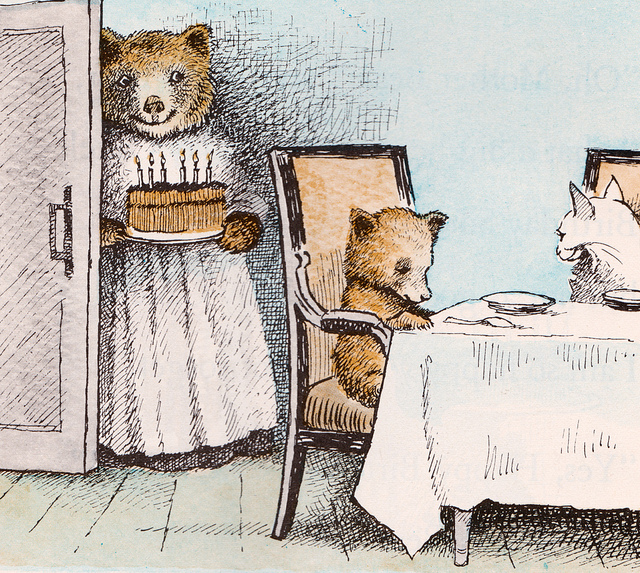
I can clearly remember the first hypnagogic hallucination I experienced (or was aware of).  I was in my thirties and one night I saw a bear, in the style of Maurice Sendak's Little Bear books, standing on his hind feet, wearing a police hat, and walking under a stone arch.  It was a non-moving two dimensional picture and it was so convincing I thought I must be remembering it from a Sendak drawing, but I have never found such a picture.  

Once I learned about  hypnagogia  my post-Neolithic brain immediately asked: Can I get a crime story out of this?

I did.  It's about a fancy dinner party where the host starts explaining the concept to his guests, one of whom seems a little too interested... "Hypnagogia" appears in the May issue of Mystery Magazine.

One more thing: R.T. Lawton and I usually swap stories for critique before sending them to editors.  In this case he told me he liked the end of the story  but the beginning was boring.

I changed the opening sentence and I think it made a difference.  Here is the old version:

"I beg you,” Karla called from the kitchen. “Do NOT tell them about your dreams.”

And here is the new, Lawton-inspired version:

"I warn you,” Karla called from the kitchen. “Do NOT tell them about your dreams or I may get violent.”

Just a tad of suspense to begin with.  

Until next time, sweet dreams.