Showing posts with label archaeology. Show all posts

18 February 2026

Pyramid Schemes


A Cairo pub

 Last month my wife and I took a tour of Egypt organized by the Biblical Archaeology Society.  It was amazing.  I'm trying to figure out what to tell you about it, since this is supposed to be about crime and writing.

So, crime. Several people worried about our trip: Was Egypt... dangerous?  

Well. It is a developing country.  Things are different there than any country I have been in before.  We never felt in any danger (except when our taxi driver decided to save time by going the wrong way up on a one-way street...  straight toward a car.  Yeesh.)

On the other hand, on several days we were accompanied on the bus by an armed man in plainclothes.  And every hotel and several museums had a metal detector..

The street sellers and beggars did make us feel harassed.  They were more aggressive than I am used to.  When my wife and I went for a walk in Luxor (against our guide's advice) we must have been met by half a dozen such folk, including a driver of a horse and wagon who followed us for blocks trying to convince us to take a ride.

And then there was our arrival at the Cairo Airport.  Our checked bag had not made it through the transfer at Frankfurt Airport (in spite of the plane being delayed for an hour there, sigh.) We were having trouble figuring out where to talk to someone about that.  I found an Information Desk and there was a woman standing in front of it.  We chatted for a couple of minutes and finally found our way to the right office.  While I was  waiting to fill out forms I said I needed to figure out where to get local money.

"Oh," said the woman, "I will take any currency."

And that's when the penny (or Egyptian pound) dropped.  She hadn't been behind the Information Desk.  She wasn't any kind of official helper.  She was another person looking to get money from tourists.  After that I didn't believe her advice, good or bad as it may have been.

None of this is a crime, of course.  But the ten men I saw fist-fighting each other in the street were definitely breaking some law.  We were on a bus, so no danger.  

But enough griping.  Let's start with the greatest highlight: I can't imagine anyone looking at  the pyramids and the Sphinx  and being disappointed.  They are stunning.    

And here is our first connection to writing.  Between the front paws of the sphinx you find what is called the Dream Stele.  (A stele is a stone notice board, usually with a curved top.)  It explains that Thutmose IV dreamed that the Sphinx told him that it was being smothered by sand and if he got it all cleared away the Sphinx would make him pharoah. So he did that and voila, he got the crown.

Modern scholars interpret this to mean that Thutmose  IV did not have a very strong claim to the throne so he made up this story as political propaganda.  

But it gets more complicated because the writing on the stele is later than that pharoah.  One guess is that the priests of the sphinx copied the text because it showed how important their statue was - a genuine kingmaker!

Most of what I knew about ancient Egypt before the trip came from Barbara Mertz.  She wrote a brilliant book called Red Land, Black Land, which shows no interest in pharoahs, mummies, or animal-headed gods.  What it does tell you about is the life of average people, the farmers, fishers, and so on.

Valley of the Kings

But Mertz did more than that, of course. Under the name Elizabeth Peters she wrote a wonderful set of mystery novels about Victorian Egyptologist Amelia Peabody.  Amelia loved pyramids but most years she and her husband dug in the Valley of Kings.  That's the desolate landscape where the pharoahs hid their tombs once they realized that building a pyramid was like hanging a neon sign that reads Hey thieves! Treasure in here! Alas, all the royal tombs in the Valley were robbed - except one - but at least they tried.

In the Valley we visited the tombs of Ramesses III and IV. Lucky for us the thieves couldn't swipe the wall decorations.   

K.T.

A minor character in Peters' novels is Howard Carter, a real-life Egyptologist.  She presents him as a nice guy and a good archaeologist, but incredibly unlucky.  Amelia often  tries to cheer him up  by promising that something will turn up.  The inside joke here is that in 1924 Carter found that only unrobbed pharoah's tomb - that of King Tutankhamun.


Ushabti


The Grand Egyptian Museum (GEM), which is magnificent and opened just a few months ago,  contains among its 100,000 plus artifacts 5,000 items from King Tut's tomb.  The tomb itself was tiny but packed like a moving van. Seems quite a lot turned up for poor Howard.  (By the way, ushabti are small figurines intended to serve the deceased in the afterlife.)

Amelia's favorite form of transport was a dahabiya, a barge-like boat for sailing up and down the Nile.  I would have considered myself lucky to have seen one but as it happened the owner of the tour company which planned our trip in Luxor arranged for the 40-plus members of our tour group to have a sunset cruise and dinner on his personal dahabiya.  Picture three decks including rooms to sleep 24.  Also one of the best meals we had in Egypt.  


Merneptah Stele

We also visited the Egyptian Museum, now known as the (Old) Egyptian Museum since GEM opened. It still has plenty worth seeing, including some written artifacts of note.  For example there is the 10-foot-tall  Merneptah Stele, containing the only mention of Israel found in ancient Egypt.  Pharoah Merneptah brags of destroying Israel, which appears to have been an exaggeration.

Amarna Letters
Those clay  pieces you see are part of the Amarna Letters, an amazing find.  Pharoah Akhenaten, arguably the first monotheist (ca 1350 BCE) forbid the worship of any gods but the sun disk and built a new capital city, Amarna.  After his death the city was abandoned and so archaeologists were able to find its untouched archive with thousands of letters to and from the monarchs of his day.

Photo by Schlanger

One more piece of writing-related history.  We visited the Ben Ezra Synagogue in Old Cairo. The fascinating thing about this beautiful building is a small window in the women's balcony (up on the left), which led to a geniza.

The rules of  Judaism state that when a text that contains God's name (such as a Torah or prayerbook) is no longer usable it must be buried in a graveyard. Until that is convenient the papers are kept in a storeroom called a geniza.  As it turns out, nobody emptied the Cairo geniza for a long time. Researchers emptied it and found over 400,000 pieces of paper, some a thousand years old. More excitingly, they weren't just religious texts: they found personal letters, merchants account books, legal documents, etc.  The result is, scholars know more about the lives of eleventh-century Cairo Jews than they do about, say, Christians in Paris during the same period.

An old friend

The written word -- or hieroglyphs -- have
power.

Oh, and in that same old section of Cairo I met an old friend in an underground bookshop.

It was quite a trip.


31 May 2023

A Thousand Stories Deep


Not the author

I mentioned last time that my wife and I are archaeology buffs.  This led to us spending part of April on the island of Crete, our second tour of Greece.  And that trip got me thinking about stories.  No surprise, right?

I wrote one story on the trip (a little piece of flash fiction) and came up with two ideas for other tales which may or may not get finished.  But what I really want to talk about is the relationship between storytelling and archaeology.

Someone in the field once told me "an archaeologist is someone who can dig a square hole and tell a story about it." The second part is important because the contents of the hole do not speak for themselves.  Whatever you find needs to be interpreted, or "read."

An Evans rebuild.

Of course, the relationship is more complex than that.  Many people enter the field because of their fascination with certain stories. Crete provides excellent examples.

No doubt you are familiar with the story of Theseus fighting the Minotaur in a labyrinth.  That story is set in Knossos, the capital of ancient Crete, but  it is not a Cretan story.  Theseus is the hero of Athens and that is where the story comes from.

But it led Sir Arthur Evans, a British archaeologist, to go to the island in hopes of exploring the legendary site of Knossos. He bought the land and spent more than three decades digging up the Minoan palace there.

Evans called them "Horns of Consecration"

I should actually say "Minoan" "palace."  Our guide put air quotes around those words every time he used them.  

You see, Evans called the civilization of which Knossos is an example Minoan because King Minos was supposedly the king who was stepdaddy to the Minotaur.  We have no idea what the people actually called themselves.

And as for palace, well, a palace is a big building where royalty live.  What Evans found at Knossos appears to have been an administrative complex with large meeting rooms and storage chambers (for food supplies?), and no sign of residential space.  As our guide said, "Nobody lives at city hall." The same holds true for the other large Minoan sites on the island.  

Evans recreates a doorway


But Evans had a story to tell and tell it he did.  He decided he knew what the "palace" looked like and he reconstructed parts of it, right there on the ruins.  Today even suggesting doing this would get you kicked out of the archaeology biz.  The pictures you see here are Evans' guesses as to what the place looked like 3500 years ago. 

Now let's move to another Minoan palace (please assume I put in the quote marks) at Phaistos.  The diggers there were careful not to rebuild it according to their dreams.  In fact, where they had to make repairs they put dates on their work to avoid confusion.

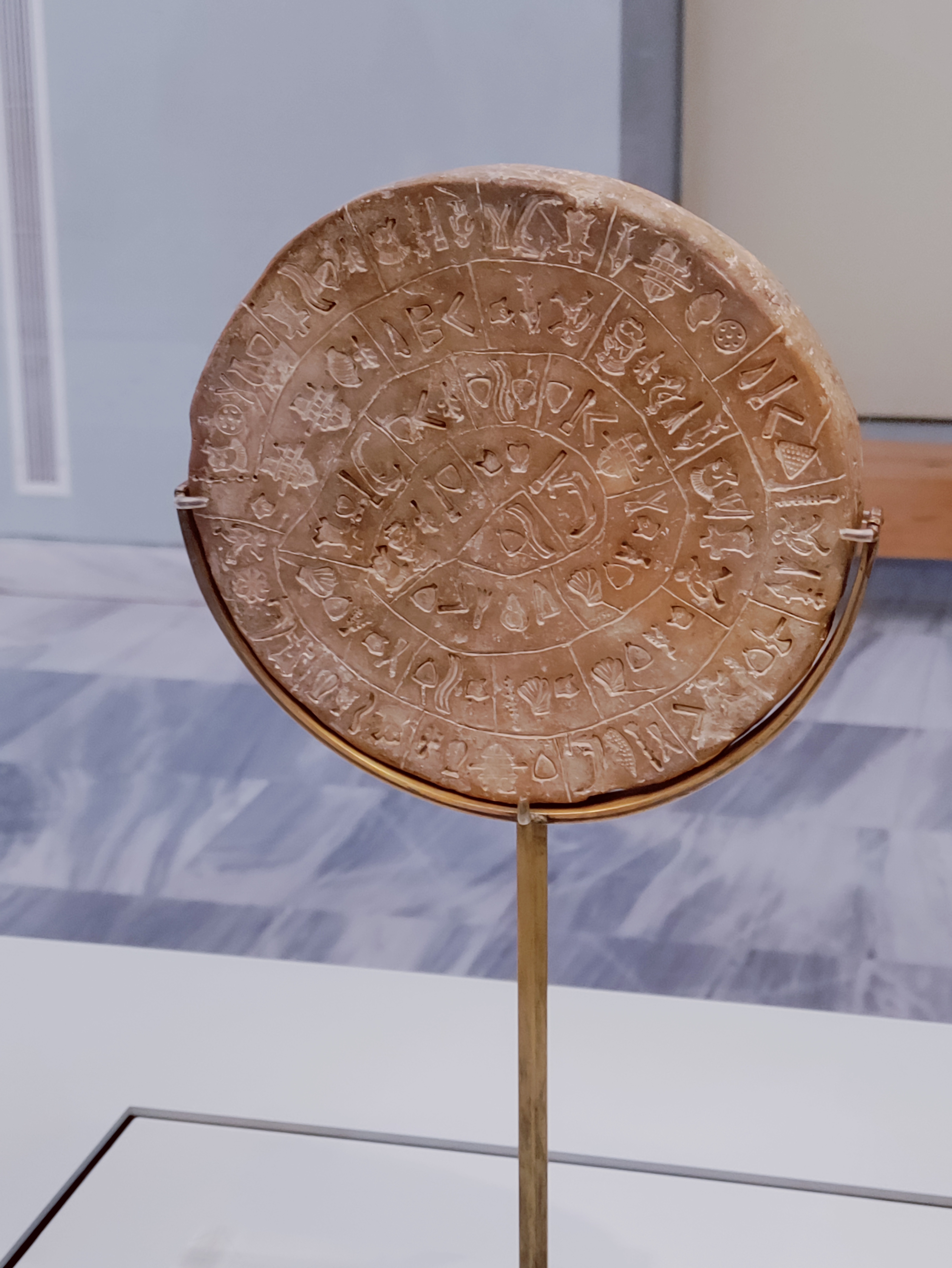
Phaistos Disc, Heraklion Museum.

Nevertheless we have a very strange story there.  Italian archaeologist Luigi Pernier was managing the site in 1908.  Here is the story the way my guide (an archaeologist) tells it.  Wikipedia has a different version.

Pernier suffered from an archaeologist's nightmare scenario: He left the site for a few hours.  When he came back his workers showed him a box they found while unsupervised, containing an assortment of objects whose origin covered more than a thousand years, from the Minoan era to the Romans.  One item was like nothing that anyone had seen before: the so-called Phaistos Disc.  It is a piece of fired clay about six inches in diameter, embossed on both sides with symbols.  No one knows what they mean.  


And notice one symbol that appears on the disc exactly once.  Tell me that doesn't look like a flying saucer!


Is the disc real?  Is it a forgery?  (And if so, a modern one or possibly dating all the way back to the Romans?)  Opinions vary. Think of all the stories you can write about that mess...

And here's one more object begging to be explained.  This kouros (boy) statue was found in a site called Palaikastro.  It's another unicorn - meaning nothing else like it has been found, but no one denies that it is authentic.  The context and condition convinces the scientists that someone grabbed it by the legs and smashed it against a stone.  In the name of the gods, why?  You could get a whole book of stories out of that.


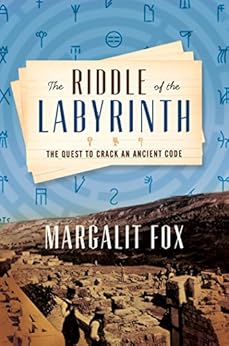
One final thought: If this sort of thing interests you I recommend you read Riddle of the Labyrinth by Margalit Fox.  It tells the true story of the three scholars who, over a forty year struggle, deciphered Linear B, a script of the Mycenean age that was first found on Crete.  Imagine translating a text when you have never before seen the symbols it is written in, and have no idea what language is being transcribed.

Now that's what I call a mystery. 


26 October 2017

The North Forty


With any luck, my husband and I just got back from a much-needed vacation, so here's an update from my friend Linda Thompson. She wrote this letter to a mutual friend of ours who lives in New York City, who likes to keep informed about life in Laskin, South Dakota... 
...Every summer as you know, a friend of mine goes on a dig with a group of archaeologists.  I've suggested that he could find really interesting things by staying in town and excavating my garden, but he just laughs.  He has no idea what can get buried in a small town.  Remember when Mary Olson killed her husband?  That asparagus bed's still pretty lush...  (I know, I know, it was never proven he was ever buried there, but you can re-read all about that here in "The Asparagus Bed".)

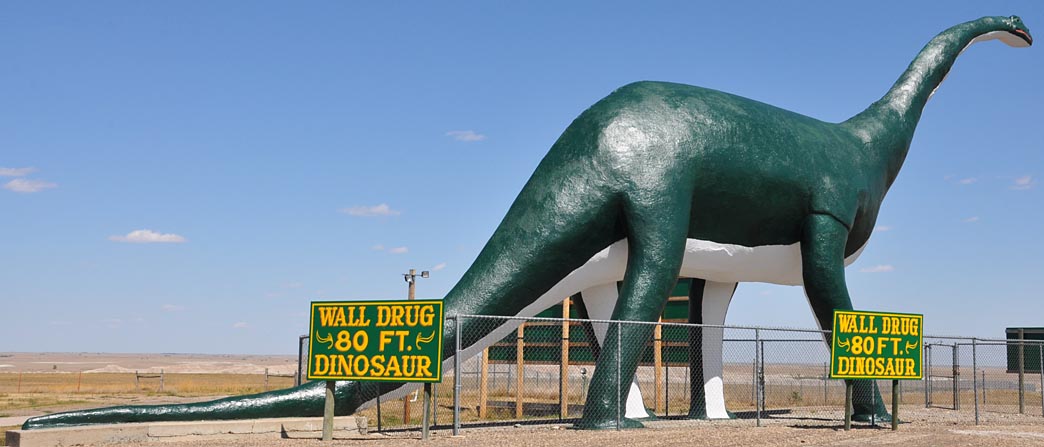
But the truth of the matter is, my friend only interested in dinosaurs.

Image result for wall drug dinosaur

Of course, America's been dinosaur-happy for a long time.  I was, too, once, but I got over it when I learned that birds were direct descendants of dinosaurs, which sounds sillier in a book than it does watching a flock of pelicans.  Pelicans are 30 million years old.  Pelicans are sharks with wings.  In flight they look like large albino pterodactyls, and I'll bet they'd whip the pants off of any leather-winged pterosaur stupid enough to not be extinct.  On the water, they patrol the lake with the same carefree approach of prison search-lights on a moonless night with bloodhounds baying in the background.  If I were a fish, they'd give me a heart attack.  As it is, they just give me the willies.


Of course, once you start observing things like that, you can't stop.  At least, I can't.  I started watching the crows and flickers stalking my yard, head cocked, one eye staring cold and unblinking down at the ground until they spot their prey.  Maybe I saw "The Birds" too young, along with "Psycho" and "Marlin Perkins' Wild America", but I believe birds spook more people than me:  why else would carry-out fried chicken be available in every convenience store in America?  It's our way of reassuring ourselves of our place on the food chain.


The reason I'm able to make all these observations is that my yard is the neighborhood wildlife sanctuary.  Besides the birds, a tribe of rabbits comes and frolics on my lawn every night.  This isn't because I leave out little nubbins of carrots and pretend that I'm Beatrix Potter.  It's because I have the only chemical-free lawn on my block, full of dandelions, clover, and creeping charlie.  (You can imagine how popular I am with my neighbors.)  The rabbits love it.  They eat and gambol and do all the things that rabbits do.  They must stay up all night doing it, too, because morning always finds a couple of them sprawled out on the grass like limp cats.  Sometimes a cat is sprawled out like a limp rabbit, not five feet away.  Who's imitating whom, I don't know.  All I know is that they're all too tuckered to move.

Now I don't mind the rabbits eating all the clover they can hold.  I'm certainly not going to eat it.  Nor do I mind them fraternizing with cats, although I think it proves the truth of the phrase "hare-brained".  What I mind is this Roman-orgy atmosphere they give the place.  The way some of them look, I expect to see little togas and vine-wreaths lying under the marigolds and zucchini.

Solanum melongena 24 08 2012 (1).JPGAnd there's the problem.  You see, my garden is in my front yard because it's the only place that gets enough sun to grow anything but moss.  In any major urban center - say 12,000 and up - I would have been run out of town on a rail for plowing up perfectly good sod to grow vegetables.

But here in Laskin, it's a tourist attraction. Every walker in town stops at my chicken-wire fence and comments freely about the condition of my soil.  My neighbors bring their out-of-town visitors over for the afternoon, which tells you something about the entertainment options of Laskin.  I stepped outside one day and found a dozen people, none of whom I knew from Adam's off-ox, standing around wondering why I put the beans there, why my peppers weren't blooming, and what in the world was THAT?  (Eggplant.)

No my North Forty is good clean family fun.  It's also a lot of hard work.  Note to Martha Stewart:  the real key to a perfect garden is to put it in the front yard, where every weed becomes public knowledge.  God knows that after years of this, my character has been thoroughly shredded, and what I should do is just quit, but that would start even more rumors...

I need an excuse, a reason, like an excavation.  I believe there's something under the potato patch.  We just haven't looked properly.  I need professional archaeologists.  After all there are dinosaurs on the property already, and it's not my fault if they've evolved to the point where they have feathers...

30 November 2011

Digging Up Old Crimes


by Robert Lopresti

We just got back from San Francisco, which felt like deja vu all over again, since we were there last fall for Bouchercon.   Even stayed at the same hotel.  But this time we were attending a very different conference: the fourteenth annual Biblical Archaeology Fest.

I discussed this event the last time my wife and I attended it.  I won't repeat myself except to explain that this is not a religious event, but a chance for archaeology buffs and wannabees to learn from the experts (who are actually meeting together across town).

And I heard a lot of wonderful lectures on subjects ranging from the horned altar of Gath to misconceptions about second Temple-era Judaism, but I will stick to two lectures that I can reasonably tie to crime.

Dr. Robert R. Cargill's talk was titled "No, No, You Didn't Find That."  He is an archaeologist and since he is willing to face cameras and was for several years working in Los Angeles, he became a go-to person when someone made an outrageous claim about archaeology.  This happens with depressing regularity.  (Does anyone keep track of how many times Noah's Ark has been discovered in the last century?  Or the Ark of the Covenant?)

A pseudoarchaeological claim is generally made by an amateur (who will often argue that the elitists - e.g. those with training - are conspiring against him).  There are a lot of possible motives: money, fame, religious or other ideology.  Cargill offered his "magic formula" for success in pseudoarchaeology:  start with a media blitz (as opposed to attempting publication in a scholarly journal or conference), misinformation dump (forcing critics to go through piles of irrelevant stuff, disproving it all), and attacking the critics.

One fun example: Glenn Beck claiming that the Dead Sea Scrolls were texts being hidden from Emperor Constantine.  What's a difference of three centuries between friends?

Law and Order: Ancient Canaan
Rami Arav has had an interesting career.  With his fresh doctorate in hand he moved back to Israel and began searching for a place to excavate in his native Galigee.  Aware that no on e had determined the site of  Bethsaida (the third most mentioned place in the Gospels).he set out to find it, and in ten days he did.


He duly reported this at a conference in front of an audience of about ten people (the air conditioning had broken down).  One of them happened to be a reporter who wrote that the site of  the miracle of loaves and fishes had been discovered.  Two days later everyone in the world wanted to interview Rami Arav.  The result is 25 years later he is still digging at Bethesda - or more accurately at Geshur, the huge ancient city whose ruins Bethesda was built on.  Arav estmates he has dug up about 4% of the site's 25 acres.

Amazing story, but what does this have to do with crime?  Well, Arav explains that archaeologicists "are like C.S.I.  First we take thousands of pictures.  Then we bring in experts.  Geologists, biologists,  chemists, computer experts, paleozoologists," and so on. (Quotation is approximate.)   He says archaeologists only deal with mute witnesses (texts get passed on to other scholars, but ruins can nonetheless provide remarkable evidence.

For example, one issue about the Geshur era (say, 3.000 years ago) is the question of law and order: was there a reliable system of justice, or something more like anarchy?  Is there anyway to find out without written texts?

Well, one of the things Arav's workers found was a four-meter wide paved road outside the city.  Nobody builds a paved road that wide for pedestrians or people on horseback.  That road was for wheeled wagons.  Now, think about that.  The merchant wouldn't bring a wagon pulled by animals to the city if he wasn't fairly comfortable that it would be there the next time he looked for it, and that someone would take an interest if it disappeared.  So there was law and order in Geshur.  Cool, huh?

I have 19 pages of notes from the conference, but I'll be merciful.  Meanwhile, keep digging.