Showing posts with label Alec Guinness. Show all posts

23 September 2026

John Irvin's TINKER TAILOR


“In my jungle, you’d be just another asshole.”

The director John Irvin died last month.  He wasn’t a brand name, and he wasn’t identified with any particular genre.  His best-known picture is probably Hamburger Hill, from 1987.  But he made two indelible stories: le Carré’s Tinker Tailor Soldier Spy, and Frederick Forsyth’s Dogs of War.

The Dogs of War was Forsyth’s third novel, and it has a convoluted back story.  The plot involves a mercenary-led coup against a corrupt African dictatorship, and Forsyth created a legend that he was prepping a coup himself, against Equatorial Guinea – which got him inside the world of guns for hire, and gives the book its nuts-and-bolts authenticity - but also suggested to the wrong people that Forsyth’s invented coup was the real deal, and there was later an actual coup in Guinea, similar in many ways to the paramilitary operation mounted in Forsyth’s novel. 

The movie streamlines the story considerably, without making it less morally ambiguous or any less savage.  The preparation is in itself fascinating – Bill Goldman once said the trick to a good heist movie is that you show the audience how it’s done, and the story arc is much like a robbery picture, the pitch, the recon, the score – and then the moral reckoning.  Forsyth is said to have disliked the picture, which may be because of the necessary compressions in the script, but there’s no wasted motion.

The mini-series adaption of Tinker Tailor takes a far more circular approach, with a lot of breathing room, none of which lets any of the air out of its tires.  It’s consistently nerve-wracking.  Le Carré, it should be admitted, doesn’t suffer from the long-form.  The Spy Who Came in from the Cold and The Deadly Affair (Sidney Lumet’s 1967 movie of Call for the Dead) are very good pictures, both with a runtime of just under two hours, but generally speaking, le Carré is better when you don’t cut corners.  The Little Drummer Girl is a terrific book, and it turns in on itself, winding the clock.  The 1984 movie with Diane Keaton is an honorable attempt, but the 2018 adaption, with Florence Pugh, is a masterpiece.  The same can be said of Tinker Tailor and its sequel, Smiley’s People.  Each of the television versions run a full six hours. 

Tinker Tailor is very much script-driven, and Arthur Hopcraft’s screenplay is labyrinthine without becoming unnecessarily tortuous.  It also has an extraordinary cast, beginning with Guinness, but with Bernard Hepton as Toby Esterhase and Beryl Reid as Connie Sachs, Joss Ackland, Ian Bannen, Hywel Bennett, Patrick Stewart (in a cameo), Nigel Stock, Sian Phillips, and the incomparable Ian Richardson as Bill Haydon.

Tony Pierce-Roberts’ other cinematography credits include The Remains of the Day and one of my own secret enthusiasms, A Private Function.  But managing this herd of cats was John Irvin’s job description.  It was a five-month shoot, complicated by logistics issues and the threat of strikes.  Alec Guinness reportedly had cold feet about playing Smiley, at the outset, but Irvin wouldn’t humor him.  Asked later what he thought about the director, Guinness said, “Balls behind the camera.”

“Being a director is the most privileged existence there is,” Irvin remarked of his career.  "It's the best table in the restaurant."

06 June 2019

A Foreign Field


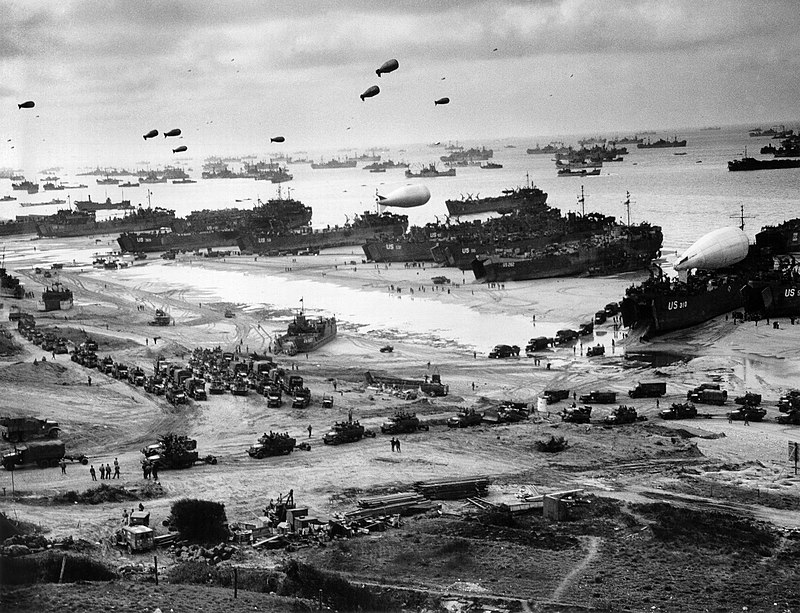
Yes, today is exactly 75 years after the landings of the Allies in Normandy, D-Day, a/k/a Operation Overlord a/k/a Operation Neptune.


First, the facts:  It was the largest seaborne invasion in history, with nearly 5,000 landing and assault craft, 289 escort vessels, and 277 minesweepers participating.[186] Nearly 160,000 troops crossed the English Channel on D-Day,[27]with 875,000 men disembarking by the end of June.[187] Allied casualties on the first day were at least 10,000, with 4,414 confirmed dead. (Wikipedia)


Secondly - Blessings and thanks to all the survivors!  Blessings and thanks to all who died.

Image result for remains of d-day at normandy beach
Relics left over from D-Day at Omaha Beach
D-Day still remains in the actual physical landscape of Normandy.  And in the memories of the soldiers, the Normandy citizens,  and of course the books and movies that have been made about it.  "The Longest Day", book by Cornelius Ryan, was made into a 3 hour movie (written by Ryan with "additional material" by Romain Gary and James Jones, among others) with a cast including (apparently) every male star they had on the  Hollywood lot.  And some that weren't.
Trivia:  According to the 2001 documentary, "Cleopatra:  The Film That Changed  Hollywood", Richard Burton and Roddy McDowall were sitting around, not having been used for weeks, and bored senseless in Rome (I find the latter hard to believe - Burton always had drinking), but anyway, they phoned Zanuck, the director, begging to for something to do.  So they flew themselves to location and did a day's worth of cameo work for free.  (Wikipedia)
D-Day is also recreated in both "Saving Private Ryan" and "Band of Brothers."

But the most touching movie about D-Day takes place long after the event.  1994's "A Foreign Field" is written by British screenwriter Roy Clarke (who also wrote two of my favorite comedies, the miniseries "Flickers" and the longest running comedy series ever, "Last of the Summer Wine").  It stars Leo McKern as Cyril and Alec Guinness as Amos, two elderly British veterans, John Randolph as Waldo, an old American vet, and Geraldine Chaplain and Edward Hermann as Waldo's daughter and son-in-law.  These five gather for the 1994 D-Day anniversary, where they also look up Jeanne Moreau's Angel, the good-time girl who apparently took care of all the soldiers in 1944.  Let me assure you, even at 65, Moreau makes you believe she was worth remembering - and perhaps still worth fighting over.  Here's the original trailer:


With Lauren Bacall as the mysterious alcoholic who tags along.  BTW, Alec Guiness does a master turn as Amos, permanently brain-damaged by shrapnel at D-Day, who (as one reviewer put it) "brings more meaning to a flip through the channels on a French TV set than most actors find in a Shakespearean soliloquy."   (New York Magazine)  It's funny, it's touching, it's moving, it's full of memory and meaning.  Wonderful.   (It's also available on Netflix on DVD or at Amazon.)

Part of what works in "A Foreign Field" is the relationship between Cyril and Amos.  Which, in turn, is based on the great chemistry of Alec Guinness and Leo McKern.  That relationship also worked in "Monsignor Quixote", which starred Alec Guinness as parish priest Quixote, whose best friend is the Communist ex-mayor of El Toboso.  When Father Quixote is elevated - by a sheer fluke - to Monsignor, things get complicated.  Based on a short novel by Graham Greene (who also worked on the screenplay!) it's, funny, touching, moving, with one of the greatest endings (imho) of any film.  It's available here, on YouTube, in its entirety:


I wish that Guinness and McKern had made more movies together, but then I also wish that Paul Newman and Robert Redford had made a couple of more.  But "Butch Cassidy and the Sundance Kid" and "The Sting" are good enough.  So are "Monsignor Quixote" and "A Foreign Field."

We're going to watch "A Foreign Field" tonight.  It seems the perfect tribute to D-Day, and to all those who fought, and fought, and would not shift.  Watch, and you'll understand.